Zhejiang ZUCH Technology Co., Ltd.
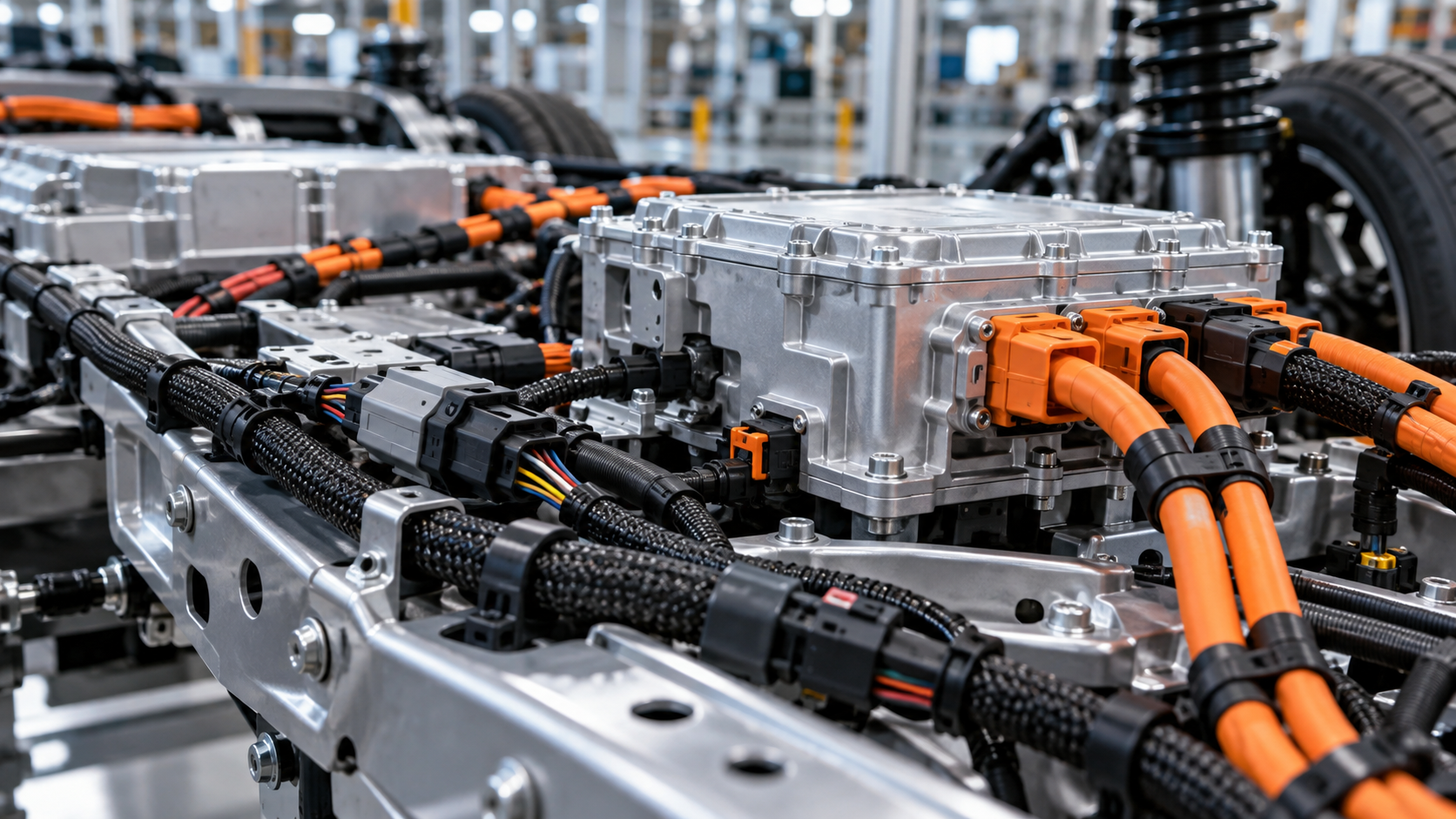
When an automotive sourcing manager reviews a 2026 connector forecast, the visible question is usually how much demand will grow. The more useful question is what the program is asking the connector to do: carry power, preserve a high-speed signal, survive a new thermal zone, or support a more complex harness. EV adoption, driver-assistance electronics, software-defined architectures, and manufacturing localization can change the interface before a market report changes its headline. This buyer guide turns the automotive connectors market trends 2026 discussion into a verification checklist for engineering and procurement teams.
Resumen: The most actionable automotive connector industry trends in 2026 are rising electrical and electronic content, more differentiated power and signal interfaces, tighter evidence expectations, and supply-chain decisions linked to vehicle platforms. Public sources such as the IEA Global EV Outlook, supplier annual reports, and connector-industry research from Bishop & Associates and Grand View Research describe directional change, but they do not replace a program specification. Track architecture, application environment, validation, material evidence, manufacturing location, and change control; do not make a nomination decision from an unverified market-size or growth figure.
What is changing in automotive connector demand?
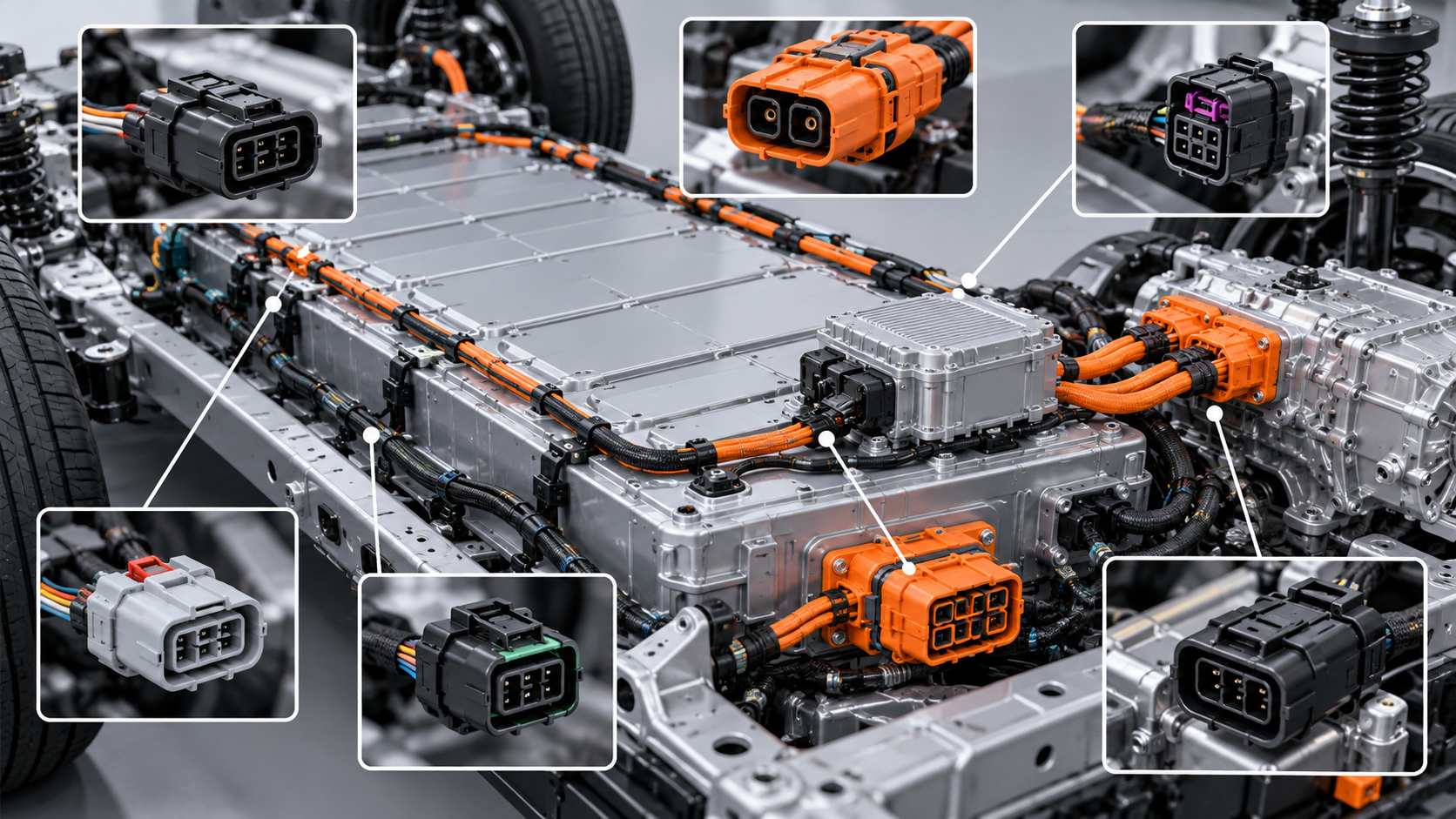
Vehicle electronics are becoming more distributed and more capable. EV platforms add battery, inverter, charging, thermal-management, and high-voltage service interfaces; advanced driver-assistance systems add sensors, cameras, radar, compute, and communications links. The practical connector implication is not one universal “next-generation” part. It is a broader mix of low-voltage signal, controlled-impedance or high-speed data, high-current, and high-voltage interfaces, each with its own validation boundary.
IEA reporting provides public evidence of continued electrification activity, while supplier annual reports show how major connector companies describe investment in automotive and data-intensive applications. These sources are useful for direction and vocabulary. Buyers still need to translate a trend into a drawing, a test plan, and a supply decision for the specific vehicle program.
How are EVs and ADAS changing connector requirements?
EV systems make voltage class, isolation, touch protection, mating sequence, thermal behavior, and service procedures central engineering questions. ADAS and centralized computing make signal integrity, shielding strategy, routing, retention, and diagnostic access more important. A low-voltage connector used in a sensor branch should not be evaluated with the same assumptions as a high-current battery or charging interface.
Begin by identifying the circuit role and hazard boundary. Define current or signal requirements from the system owner, then select the contact, housing, seal, keying, and secondary retention features that match the application. Any claim about voltage, current, temperature, IP performance, or data rate must come from the selected configuration’s controlled documentation and test evidence.
Which market signals are useful to procurement teams?
Procurement teams should use trend reports as prompts for better questions, not as substitutes for technical evidence. Bishop & Associates and Grand View Research can help frame connector-industry categories; IEA can frame electrification context; supplier annual reports can reveal public investment priorities. None of these sources proves that a supplier’s specific housing or terminal is approved for a buyer’s vehicle program.
| Trend signal | Buyer question | Evidence to request | Decision risk if ignored |
|---|---|---|---|
| Electrified power paths | What voltage, current, isolation, and service conditions apply? | Controlled interface data and configuration-specific validation | Wrong contact system or an incomplete safety review |
| ADAS and sensor density | Is the interface carrying power, low-speed signals, or high-speed data? | Signal, shielding, retention, and environmental requirements | Intermittent signals, rework, or a late architecture change |
| Centralized electronics | Will harness length, routing, service access, or connector count change? | Packaging drawings, keying, mating access, and service assumptions | Assembly and maintenance constraints discovered too late |
| Localized production | Can the supplier maintain revision, lot, and change control across sites? | Manufacturing-site scope, traceability, packaging, and notification process | Uncontrolled substitution or line-side disruption |
| Material and compliance scrutiny | Which material, flammability, and customer-specific requirements apply? | Material grade, declarations, test methods, and applicable certificates | Approval delay or unsupported compliance claim |
What should buyers track beyond market size?
Market size is difficult to compare when reports use different definitions, geographies, and connector categories. A buyer’s dashboard should instead track technical and operational leading indicators that can be tied to a program gate.
| Dashboard area | Track | Useful review cadence |
|---|---|---|
| Architecture | New power, signal, charging, sensor, and compute interfaces in platform drawings | At concept and design-release gates |
| Validation | Open test items, sample revisions, deviations, and configuration changes | At sample, DV, and PV reviews |
| Supplier capability | Tooling readiness, lab access, process controls, and documented change management | Before nomination and during launch |
| Materials | Material grade, flammability evidence, declarations, and restricted-substance requirements | At design freeze and change notices |
| Continuity | Site, capacity assumptions, lead-time exposure, packaging, and lot traceability | Quarterly and on major program changes |
Which standards and compliance distinctions matter?
IATF 16949:2016 is a quality-management-system standard for the automotive supply chain; it is not a universal product-performance certificate. ISO 8092 covers applicable road-vehicle wiring-harness connection dimensions and characteristics. Depending on the interface, buyers may also need customer-specific requirements, electrical safety tests, environmental testing, material declarations, or evidence tied to a particular terminal and housing configuration.
PA66 and PA66 glow-wire statements should identify the material grade and applicable test evidence. UL/CUL coverage should be checked against the relevant product, file, and intended use. A standard or certificate has commercial meaning only when its scope, edition, sample, and configuration are clear. Unsupported trend language can become an unsupported product claim when copied into an RFQ or marketing page.
How should a supplier support a trend-driven connector program?
- Translate the trend into an interface: identify circuit role, voltage or signal conditions, environment, packaging, and service boundary.
- Keep configuration control: connect every sample, drawing, test report, and quotation to a part number and revision.
- Make evidence searchable: provide a document index for dimensional, electrical, mechanical, environmental, and material records.
- Plan for change: define tooling ownership, site changes, material substitutions, engineering-change notices, and escalation contacts.
- Review total approval effort: compare validation readiness, line-side support, traceability, and continuity assumptions alongside unit cost.
ZUCH is a connector manufacturer offering rectangular connectors, RAST, FASTON terminals, terminals, and motor/compressor connectors. Its stated capabilities include IATF 16949:2016, a CNAS laboratory, a UL witness laboratory, and UL/CUL coverage for relevant products. The ZUCH product directory is a useful starting point after the vehicle program defines its interface and evidence requirements.
Frequently asked questions about automotive connector industry trends
What are the main automotive connector market trends in 2026?
Public sources point to continued electrification, higher electronic content, more differentiated power and signal interfaces, and stronger attention to supply-chain and quality evidence. The exact effect depends on the vehicle platform, circuit role, and destination market. Use the trend as a prompt to update the program’s interface and validation checklist.
How are EVs and ADAS changing connector requirements?
EVs can introduce high-voltage power, charging, thermal, and service interfaces; ADAS can add dense sensor and high-speed data connections. These applications require different contact, housing, shielding, retention, isolation, and environmental decisions. Do not reuse a low-voltage connector assumption for a different hazard or signal boundary.
What should procurement teams track beyond market size?
Track platform architecture changes, open validation items, supplier tooling and lab readiness, material evidence, change notices, manufacturing sites, packaging, and lot traceability. These indicators connect directly to nomination and launch risk. A terminal supplier quality control checklist can help structure the evidence review.
How can a supplier support trend-driven connector programs?
A useful supplier supports interface definition, controlled drawings, configuration-specific testing, material documentation, sample revisions, and change control. It should explain which claims are supported by a certificate, a test method, or a customer-specific requirement. Buyers can also use the connector manufacturer selection guide when comparing evidence and continuity capabilities.
References
- International Energy Agency, Global EV Outlook 2025.
- Grand View Research, Automotive Connectors Market report page (market definitions and methodology should be reviewed before using any figures).
- Bishop & Associates, public connector-industry research source.
- IATF Global Oversight, IATF 16949 resources.
- ISO 8092, Road vehicles — Connections for on-board electrical wiring harnesses.
Conclusion
The useful meaning of automotive connectors market trends 2026 is not a single forecast number. It is a change in the questions a buyer must ask: what circuit role is growing, what environment will it face, what evidence will release it, and how will the supplier control revisions across production sites? Start with the vehicle architecture and interface, then select the contact and housing system, validate the exact configuration, and compare continuity and approval effort before price. Do not copy a market report’s category definition into a product claim, and do not treat a quality-system certificate as proof of every connector characteristic. ZUCH can be evaluated at the point where a trend becomes a controlled connector requirement, with its stated product lines, laboratory resources, and quality-system credentials available for review. Send the program drawing and evidence checklist to begin a focused discussion.