Zhejiang ZUCH Technology Co., Ltd.
A damaged Toyota lighting or sensor connector may be sold as a loose shell, a terminal kit or an assembled repair pigtail. These options solve different problems, and a listing that mentions the vehicle model does not explain whether the existing wires and contacts can be retained. The replacement also needs the right circuit assignment, even if it physically connects to the component. This guide explains how to identify Toyota automotive electrical connectors using vehicle and wiring references, assess corrosion or latch damage, and choose a repair scope before disturbing the harness. It also shows how to record the connector view so replacement wire colors do not cause the original cavity map to be lost.
Use the VIN and component location to establish the vehicle application, then confirm the connector reference and view in the relevant electrical wiring information. Toyota’s Technical Information System includes wiring diagrams and repair information for Toyota-produced vehicles marketed in North America, with access depending on subscription. Other markets need the corresponding service information. The official Toyota parts store supports vehicle and VIN-based selection. Neither resource creates universal interchangeability across models: the housing, contact system, wire specifications and permitted repair method must still be checked for the particular installation.
How do the vehicle and component references narrow the part search?
Record the model year, VIN, powertrain, market and exact component location. The same vehicle can contain several similar-looking connectors serving different circuits. A left-side lamp interface, a sensor interface and a harness junction should not be grouped into a single “Toyota plug” description when requesting a replacement.
Photograph any readable housing mark and the mating component reference. Ask whether a proposed part number identifies a shell, a service kit or a complete pigtail. An original connector may contain separately specified terminals and seals, so matching its housing is only one stage of identifying the assembly. Confirm any supersession or application distinction through the relevant parts reference rather than interpreting a seller’s photograph as an official cross-reference.
How should the connector view and wire positions be recorded?
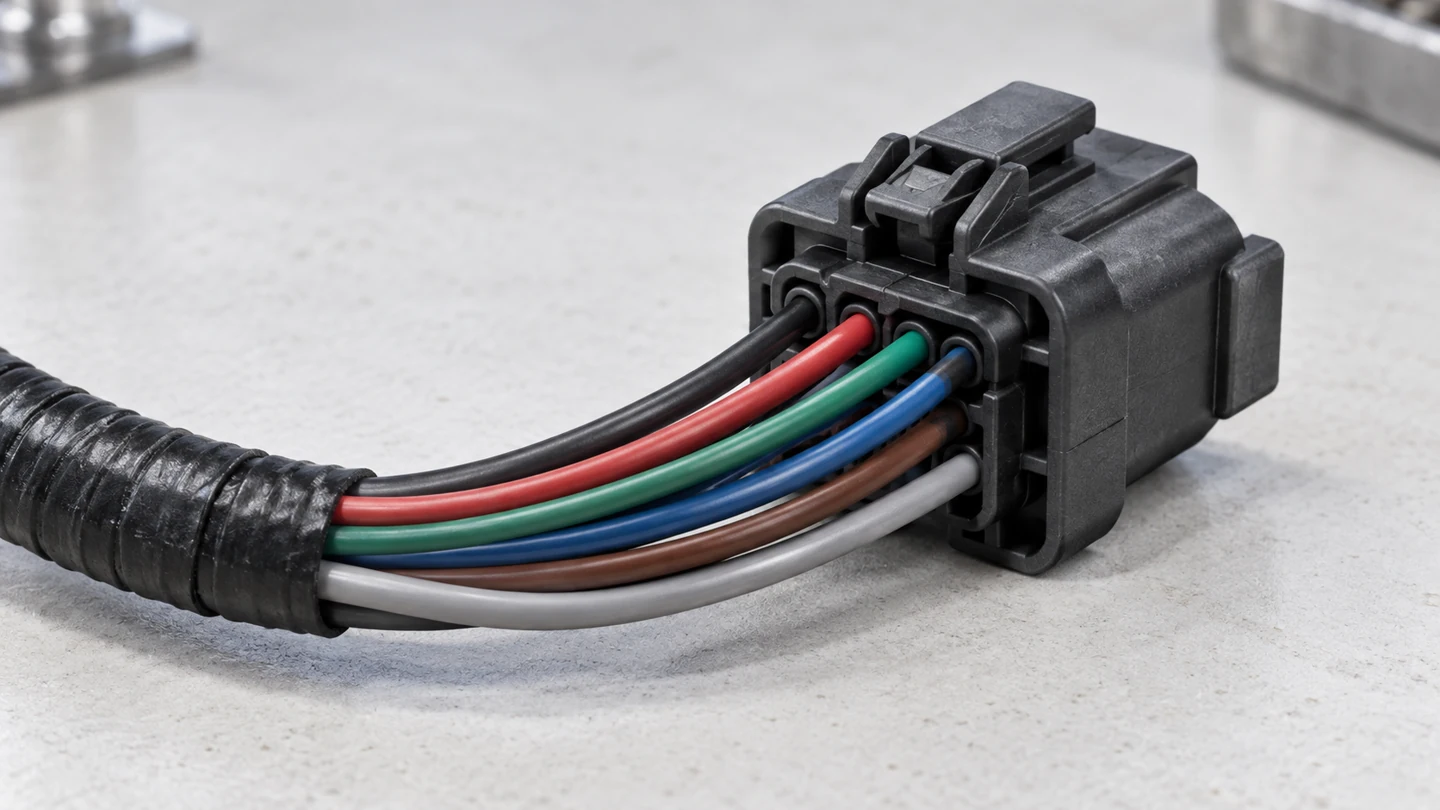
Record the cavity arrangement before releasing contacts or cutting wires. The wiring information should identify the viewing direction, which must remain consistent when comparing the removed connector and its replacement. A mating-face view and a wire-side view can appear reversed. Do not transpose the map because one is easier to photograph.
| Reference | What to record | Error it helps avoid |
|---|---|---|
| Vehicle application | VIN, market, powertrain and component position | Ordering a part for another application |
| Connector view | Mating-face or wire-side orientation | Reversing the cavity map |
| Cavity assignment | Circuit function and documented cavity number | Matching replacement wires by color alone |
| Assembly references | Housing, mating part, contacts and seals | Treating the shell as the complete specification |
Connector pinouts remain vehicle- and component-specific even when two housings have the same number of cavities.
When can a housing repair retain the original harness?
A housing repair can be considered when the shell or latch is damaged but the retained contacts, seals and wires remain serviceable, and the vehicle procedure permits the transfer. A replacement pigtail changes the connector and a short section of wire. It may remove damage at the wire entry, but it also requires suitable splice locations and an approved joining method.
| Repair approach | Potential use | Required boundary check |
|---|---|---|
| Housing replacement | Localized shell or latch damage | Terminal release and reuse are permitted |
| Individual terminal repair | Limited contact or termination damage | Exact contact and tooling are available |
| Repair pigtail | Connector and nearby wire need replacement | Wire specification, splice location and routing are suitable |
| Larger assembly replacement | Extensive damage or restricted local repair | The applicable service procedure defines the scope |
The housing-only repair decision should follow inspection. A lower component price does not justify retaining damaged contacts or ignoring a restricted repair method.
What should be inspected when a terminal is corroded?
Inspect both mating halves, the seal arrangement and the conductor close to the damaged contact. Determine how water or contamination reached the interface. A new terminal cannot resolve a continuing leak, an unsuitable wire-entry seal or strain that prevents the assembly from seating correctly. Avoid assuming that cleaning has restored damaged contact surfaces.
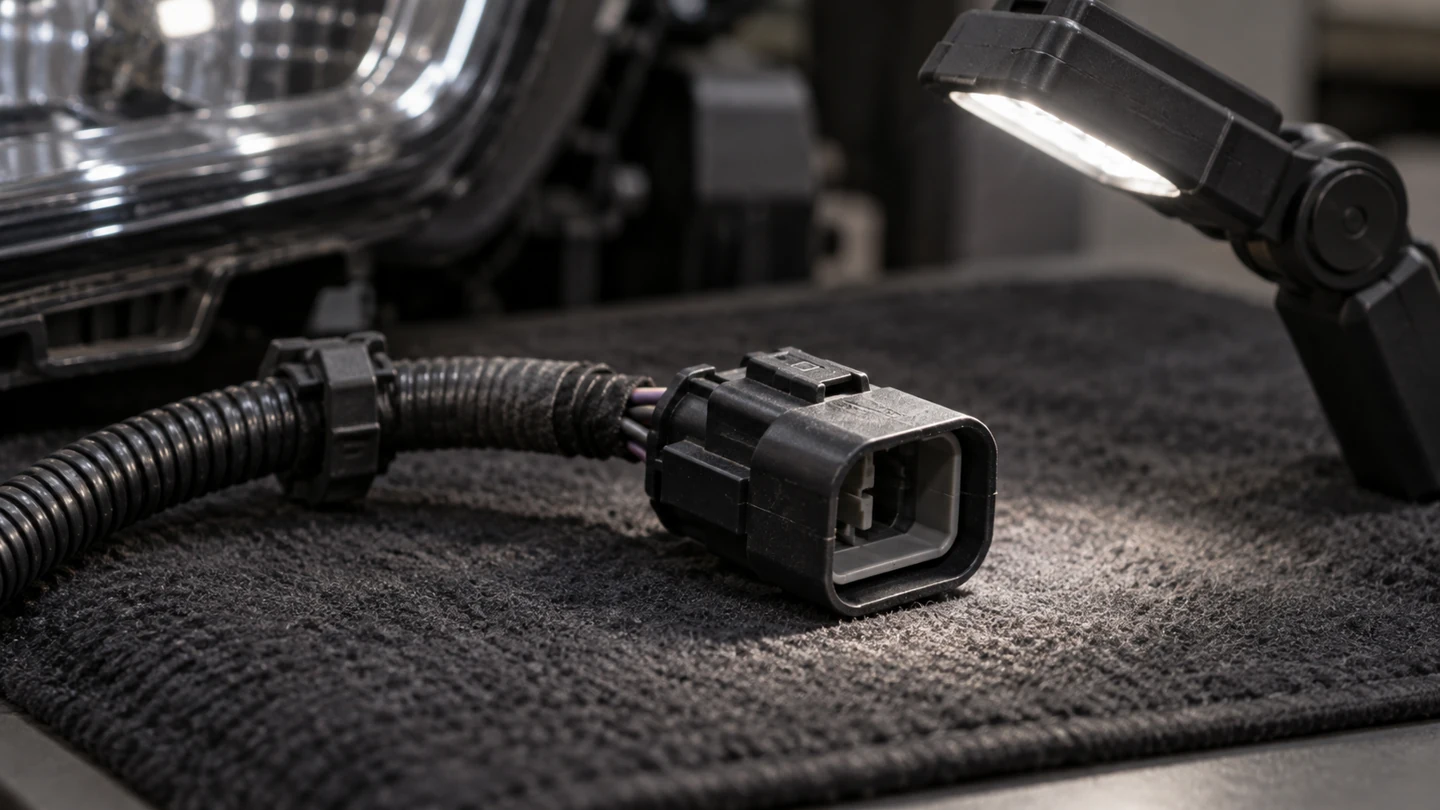
The Sumitomo Wiring Systems components catalog distinguishes housings, terminals, wire seals and dummy plugs. It provides a useful identification structure, without proving that a particular catalog part belongs in a Toyota vehicle. The contact must match its intended housing and conductor range; the seal must match its specified insulation range. Confirm every part against the actual application.
How should a sealed replacement be accepted?
Require the mating reference, component list, wire specification and assembly instructions. Check terminal retention, secondary locks, sealing components and harness support after assembly. Where an ingress rating is relevant, identify the tested configuration and conditions. IEC 60529 classifies enclosure protection; it does not approve every repaired connector that contains a rubber seal.
Complete the electrical and functional checks required by the vehicle service information. Do not apply an improvised probing method to an unidentified circuit. ZUCH’s connector catalog can support a documented inquiry, but the product range does not imply Toyota authorization or verified fitment for every model.
Preguntas frecuentes
How do I identify a Toyota automotive electrical connector?
Combine vehicle and component details with the connector reference in the relevant wiring information. Compare housing markings, keying, cavity layout and the specified mating part.
Can I replace a Toyota connector with a repair pigtail?
It may be possible where the vehicle-specific procedure permits it. Verify the exact application, supplied wires, splice requirements and available harness routing before making the repair.
How do I find the correct Toyota connector pinout?
Use electrical wiring information for the actual vehicle and component. Confirm the diagram’s viewing direction and cavity numbering rather than assuming a universal pinout or relying on wire colors.
Are Toyota connectors the same across different models?
No general interchangeability rule applies. Similar housings can have different keying, contact systems, applications or cavity assignments. Verify the exact references before substituting a part.
What should I do if a Toyota connector terminal is corroded?
Identify the exposure source and inspect the mating contact, sealing components and adjacent conductor. Use the applicable service instructions to decide whether a terminal, pigtail or larger assembly needs replacement.
How do I choose a sealed replacement connector for a Toyota?
Match the application and mating interface first. Then confirm the contacts, wire and seal ranges, unused-cavity treatment and environmental requirements for the complete assembly.
References
- Toyota Technical Information System — North American service information, including wiring diagrams; subscription may be required.
- Toyota official parts store — vehicle and VIN-based parts selection.
- Sumitomo Wiring Systems automotive components catalog — housing, terminal and seal identification.
- IEC 60529 consolidated edition — ingress-protection classification scope.
What should determine whether the Toyota replacement is ready?
A replacement is ready when its documented application, mechanical interface and circuit mapping agree with the repair requirements. Identify the vehicle and component first, preserve the cavity map, and then inspect the removed parts before deciding how much of the harness to replace. Confirm the contact and seal references as carefully as the housing number, especially when the replacement arrives as an assembled pigtail with different wire colors. Do not skip the vehicle-specific repair restrictions or the final retention and functional checks because the plug appears to fit. For repeat purchases, keep the accepted assembly references with the application record. ZUCH can review an inquiry against its published connector range when those details are supplied, while the relevant Toyota information governs vehicle-specific suitability.