Zhejiang ZUCH Technology Co., Ltd.
A sensor advertised as Bosch-compatible may arrive with a connector that looks familiar but does not match the vehicle harness. The sensor manufacturer, housing manufacturer and vehicle application are separate pieces of information. Searching for Bosch automotive electrical connectors therefore needs more precision than finding a matching latch in a product photograph. The replacement must suit the exact device and circuit, including its contact arrangement, terminal system and sealing components. This guide explains how to separate a Bosch device reference from a harness connector reference, evaluate an aftermarket replacement and verify the circuit before a repair. It covers ordinary low-voltage harness identification rather than high-voltage, airbag or other systems with dedicated service restrictions.
Identify the device part number and vehicle application first, then obtain its connector or wiring documentation. Match the harness housing to the specified mating interface and verify cavity assignments separately. Bosch Motorsport’s product catalog provides a component-led route to motorsport product information; those applications should not be assumed interchangeable with production-road vehicles. For the latter, use the relevant vehicle service information. IEC 60512-1:2018 provides a framework for connector tests and measurements, but it does not define a single “Bosch pinout,” approve a substitute housing or supply application-specific acceptance limits.
What does a Bosch part number actually identify?
A number on a sensor or actuator may identify that device rather than the loose harness plug. A separate molded mark on the housing can identify another supplier’s component. Keep these references in separate fields in the repair record. Otherwise, a buyer may order a complete sensor when the needed item is a housing, or buy an apparently correct shell without the required terminals.
Record the device number, vehicle and engine application, installation location, connector photographs and any readable housing markings. If a supplier proposes a cross-reference, ask what it covers: the device, the mating shell, the contact set or a complete repair pigtail. A cross-reference without that scope is difficult to validate and cannot establish electrical interchangeability.
Why does Bosch-style appearance not prove compatibility?
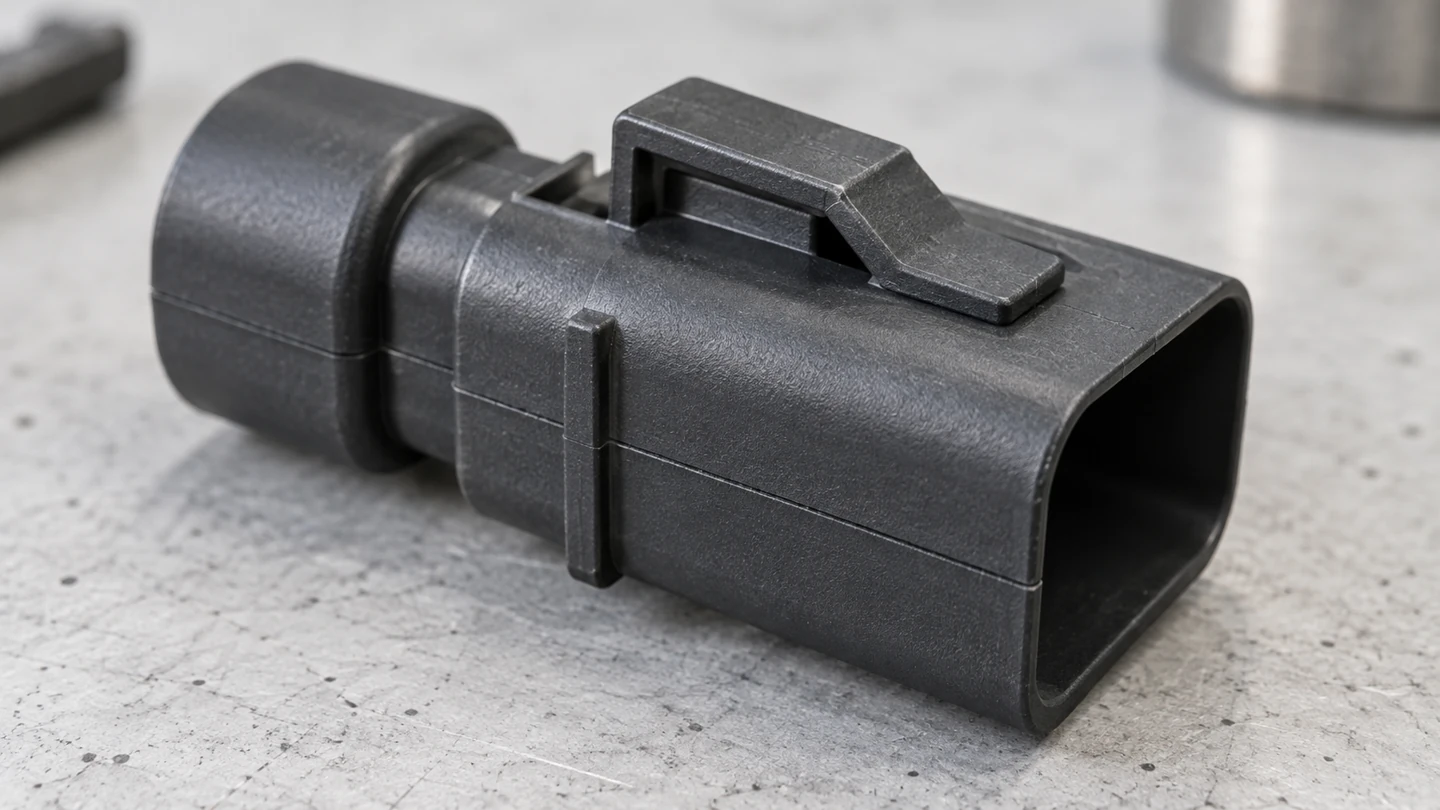
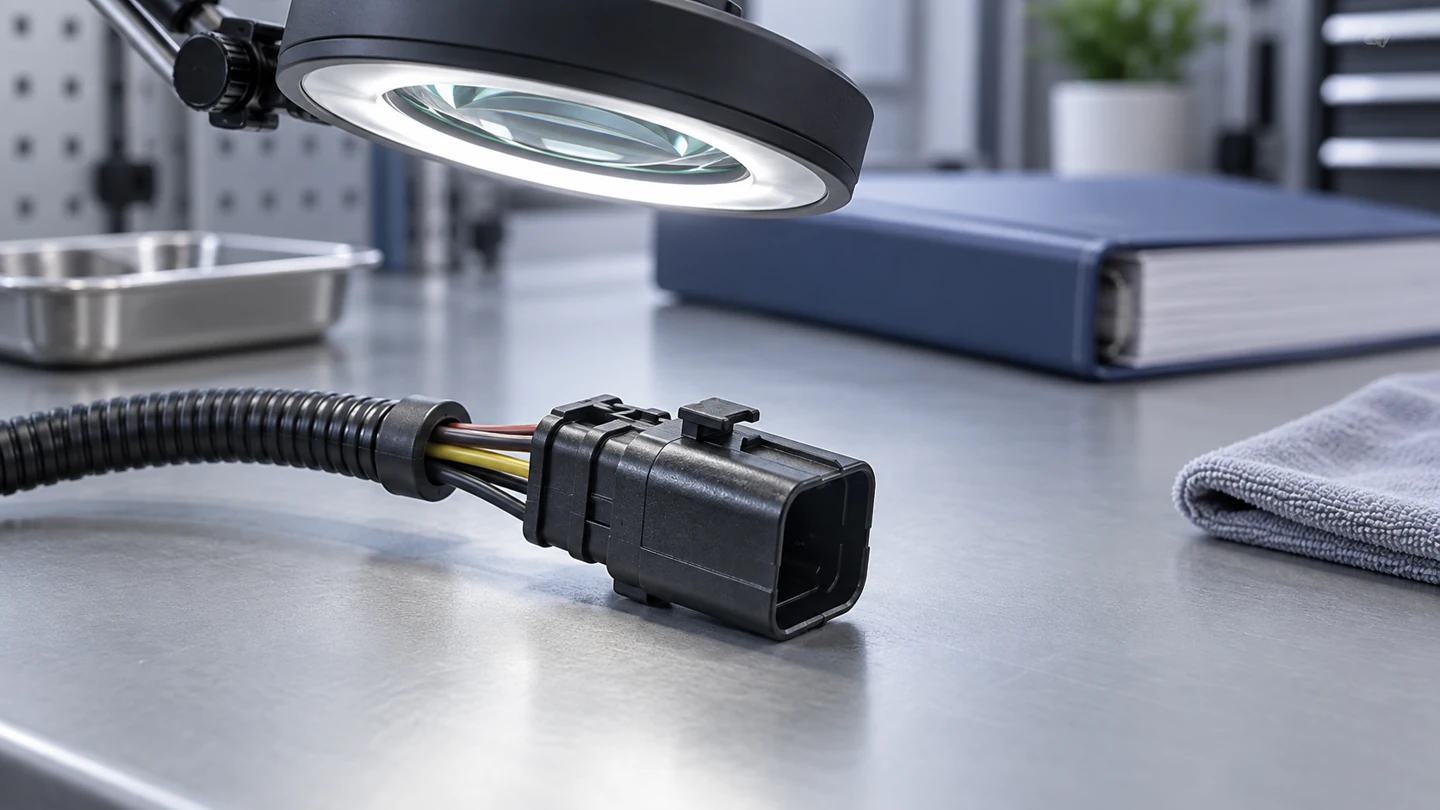
“Bosch-style” is a broad retail description. It does not identify every keying variant, wire range or contact design. The latch location, polarization and terminal interface must match the mating component drawing. Similar outer dimensions can conceal differences in the contact system or seal support. Never remove a locating feature to make an uncertain plug fit.
| Claim or reference | Useful evidence | Remaining question |
|---|---|---|
| Bosch device part number | Identifies a candidate sensor or actuator | Which connector interface belongs to that device revision? |
| Housing supplier number | Identifies a shell or connector family | Which contacts, seals and mating part are specified? |
| Vehicle fitment listing | Provides an application lead | Does it cover this exact model, engine and component? |
| “Bosch-style” photograph | Helps compare visible features | Has any mechanical or electrical equivalence been documented? |
How should the circuit be verified before a sensor repair?
Locate the connector view and circuit description for the exact device and vehicle. Record whether the drawing shows the mating face or wire-entry side. A three-position connector does not automatically mean a universal supply, ground and signal arrangement. Even where a device has those functions, their positions and electrical requirements still require its documentation.
Keep pinout verification separate from physical matching. Do not discover an unknown circuit by applying power to possible terminals. Use the prescribed test equipment and method, including any restrictions on probing or disconnecting the device. Access to the correct service information is more useful than an unverified diagram for a visually similar sensor.
Which parts need to be specified together?
Specify the shell, mating reference, contact part numbers, conductor range, insulation range, seals and secondary retention components. The Aptiv connection-systems portfolio distinguishes connectors, terminals and seals within its low-voltage range. That separation illustrates why a housing description alone cannot define a complete harness assembly; it is not evidence that an Aptiv part fits a particular Bosch device.
| Selection dimension | Information to obtain | Practical consequence |
|---|---|---|
| Mechanical mating | Exact interface and keying reference | Avoids forced or incomplete engagement |
| Contact and wire | Contact specification and permitted conductor range | Determines the correct termination and tooling |
| Seal and insulation | Seal part and permitted insulation diameter | Checks the wire-entry sealing arrangement |
| Environment | Temperature, vibration, fluids and exposure requirements | Defines which assembly evidence is relevant |
A “waterproof” listing needs a documented test condition and assembly configuration. IEC 60529 defines enclosure protection classifications, not fuel resistance, vehicle fitment or approval of a repaired connector. A rating associated with one assembly cannot be assumed for a different wire, seal or mating state. The same distinction applies to wire seals and cavity plugs.
When is an aftermarket connector a reasonable replacement?
A replacement is a candidate when its exact mating reference and component specifications can be checked against the application. Ask for drawings, contact and seal references, tooling guidance and traceability. If the supplier only confirms that the shape is popular with Bosch sensors, the important questions remain unanswered.
For repeat purchasing, retain the approved assembly description rather than a marketplace title. Include the device revision and vehicle application in the sample-approval record. ZUCH’s connector product range provides an inquiry starting point for documented requirements; a product listing does not imply Bosch authorization, compatibility or a vehicle manufacturer’s repair approval.
Preguntas frecuentes
What are Bosch automotive electrical connectors used for?
They are commonly searched for harness connections associated with Bosch sensors, actuators and other vehicle components. The exact device and vehicle documentation determines the actual circuit and connector requirement.
How do I identify a Bosch-style automotive connector?
Record the device number and housing markings, then compare the cavity arrangement, latch, keying and terminal interface with the relevant drawing. Treat “Bosch-style” as a search description, not a confirmed part identity.
Can I replace a Bosch connector with an aftermarket equivalent?
Only after verifying the application, mating interface, contacts, seals and repair requirements. A supplier should document the claimed equivalence rather than rely on appearance.
How do I find the pinout for a Bosch sensor connector?
Use the exact sensor reference and vehicle service information. For a motorsport product, consult that product’s Bosch documentation. Confirm the viewing direction before mapping any wire.
Are Bosch connector terminals interchangeable between applications?
No universal interchangeability rule applies. Terminals must match the specified housing and contact interface, wire range, plating and retention arrangement.
What should I check before replacing a Bosch electrical connector?
Check the root cause, mating-device condition, circuit reference, connector identity and approved repair method. Verify terminal seating, seal placement and electrical operation using the applicable procedure afterward.
References
- Bosch Motorsport product catalog — component-specific motorsport product information.
- Aptiv Connection Systems — separate connector, terminal and seal categories.
- IEC 60512-1:2018 — connector tests and measurements framework.
- IEC 60529 consolidated edition — enclosure protection classifications and scope.
What makes the replacement ready for installation?
The decisive evidence is a documented match between the device, connector assembly and vehicle circuit. Establish the device identity first, confirm the mating interface second, and then verify each contact, wire and seal in the proposed repair. Keep electrical assignment separate from mechanical fit, especially when a replacement pigtail uses different wire colors. Do not substitute a familiar housing shape for an exact pinout or treat a broad protection claim as proof of suitability for the installation environment. Before approving a repeat order, retain the accepted part references and repair requirements so subsequent batches can be checked against the same specification. ZUCH can assess a component inquiry against its published range when those requirements are available, without implying that a generic connector is an authorized Bosch replacement.