Zhejiang ZUCH Technology Co., Ltd.
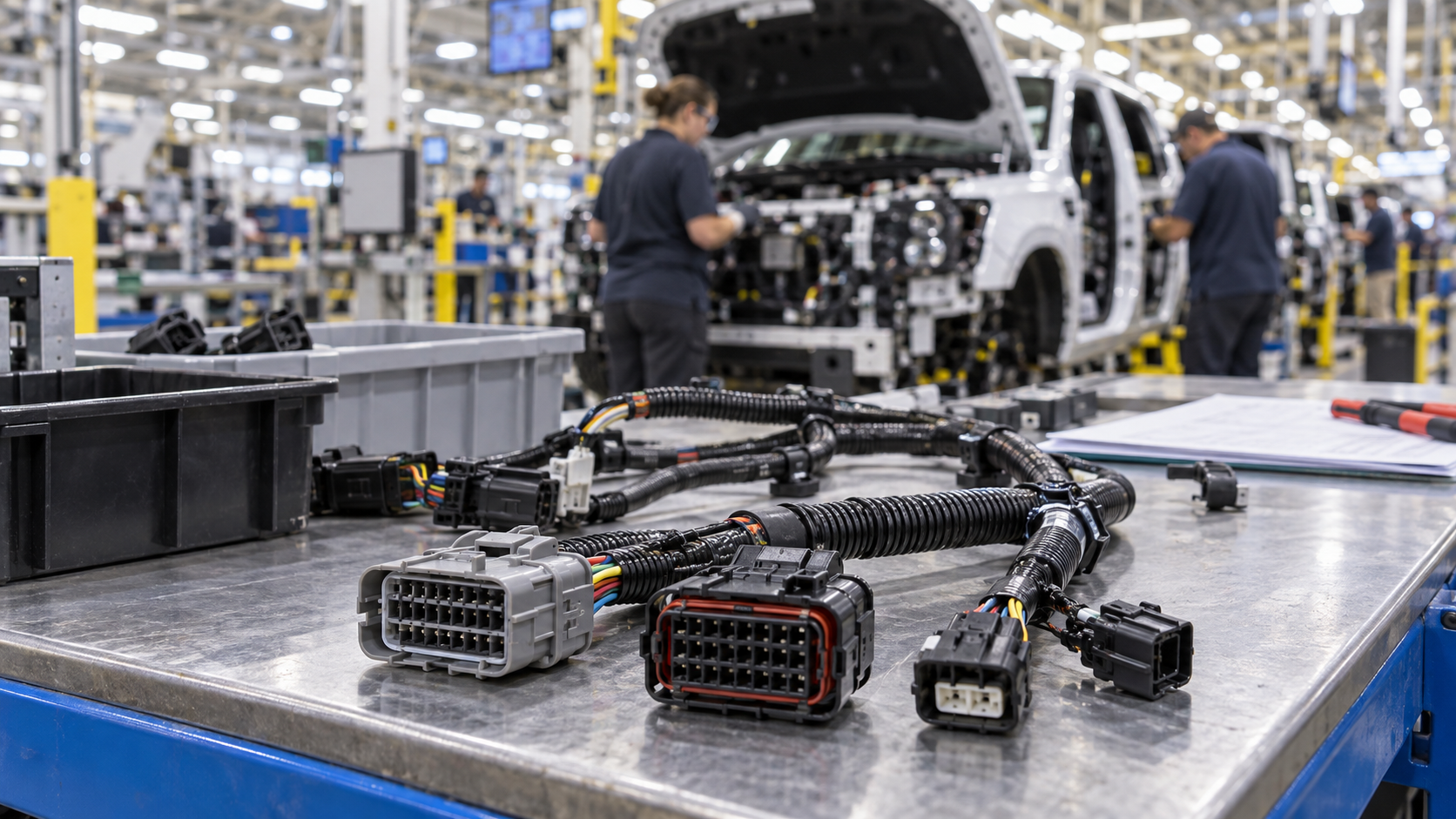
When a US program engineer releases an automotive connector RFQ, a team can lose time quickly if a housing is selected by pin count alone: the first build may show incomplete mating, terminal retention problems, or a harness that cannot be serviced in the intended vehicle zone. The visible failure looks like a bad connector, but the root cause is often a missing definition of current, wire range, sealing, polarization, CPA, validation, or change control. This guide explains what buyers should verify in the US automotive connectors market, how to structure an RFQ, and how to compare evidence before nomination. It uses public regulatory and industry sources and avoids unsupported market-size or growth claims.
Summary: The short answer is that a US buyer should verify the complete interface and its evidence trail, not a catalog label. Separate the electrical load and circuit protection from the connector’s published ratings; define temperature, vibration, fluids, mating cycles, and service access; then request drawings, material declarations, test plans, and production controls. FMVSS requirements apply to the vehicle or component context, while SAE and USCAR documents provide engineering or test frameworks rather than a universal “automotive-grade” badge. Start with a controlled RFQ, map every requirement to a verification record, and keep a change-notification path through production.
What is the US automotive connectors market asking buyers to verify?
The market is a supply ecosystem rather than one standard product category. It includes wire-to-wire, wire-to-board, sealed and unsealed housings, terminals, sensors, power distribution, infotainment, and service parts. A connector that is appropriate for an interior signal circuit may be unsuitable in an engine-bay environment even when the terminal family looks similar.
For US programs, the requirement set normally combines the vehicle maker’s drawings and PPAP expectations with applicable US regulations, customer-specific specifications, and recognized test methods. NHTSA’s Federal Motor Vehicle Safety Standards (FMVSS) are performance requirements for vehicles and equipment; they do not certify every connector design. Buyers should therefore ask which vehicle-level requirement the connector supports and which component-level tests demonstrate robustness.
How should a US buyer structure an automotive connector RFQ?
Which interface facts belong in the first revision?
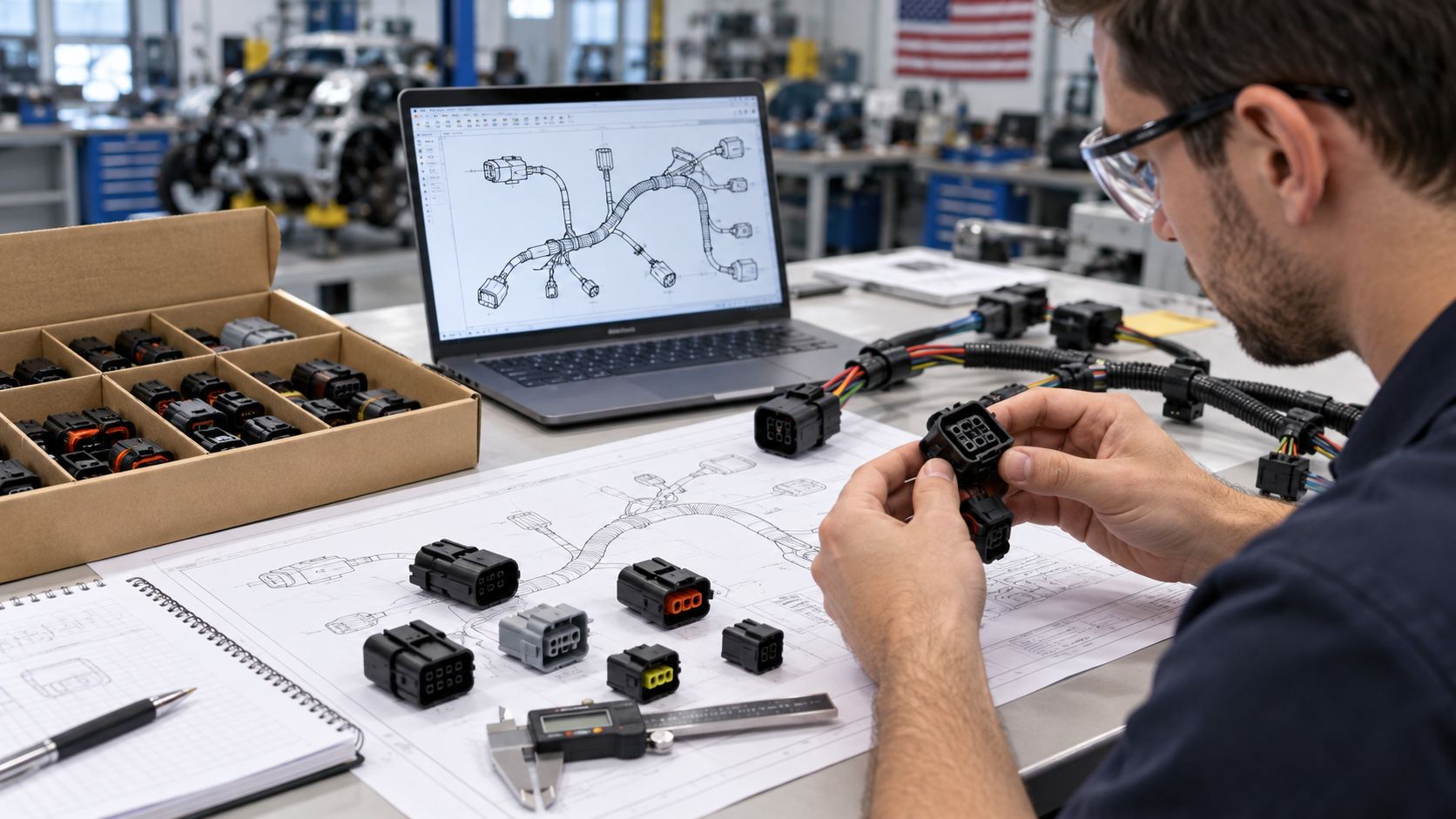
State the circuit function, number of positions, signal or power role, nominal and peak current, voltage, wire size range, insulation diameter, terminal plating requirement, mating direction, keying, polarization, secondary locks, CPA or TPA features, and whether terminals are supplied loose, on a strip, or preassembled. Include the mating connector and the harness datum; a housing cannot be validated in isolation from the terminal, seal, wire, and crimp.
Which environment and service facts prevent late redesign?
Identify the installation zone and exposure profile: temperature range, splash or immersion, dust, chemicals, salt, vibration, shock, pressure washing, and expected mating or service cycles. Ask for the supplier’s test conditions and acceptance criteria instead of copying an IP claim into the RFQ. If a connector is near a restraint, lighting, or high-voltage system, document the vehicle-level safety and isolation requirements separately.
| RFQ dimension | Evidence to request | Decision if evidence is missing |
|---|---|---|
| Electrical interface | Controlled drawing, terminal specification, derating curve or stated test basis | Hold approval; do not infer current from contact size |
| Mechanical fit | 2D/3D data, mating part number, keying and retention definition | Run a stack-up and hand-mating review before tooling |
| Environment | Test plan for temperature, vibration, fluids, sealing and corrosion as applicable | Classify as an open risk and define a qualification gate |
| Manufacturing | Crimp window, control plan, traceability and change-notice process | Escalate supplier quality review before nomination |
| Compliance | Material declarations, applicable UL/CUL records and customer-specific reports | Separate “component recognition” from vehicle compliance claims |
Which standards commonly appear in US connector programs?
Standards have different jobs. SAE documents can define terminology, performance practices, or test approaches; USCAR specifications are widely used industry test references for automotive components; and FMVSS rules establish vehicle safety requirements administered by NHTSA. A standard or method is not automatically a product certification, and a test report is not proof that every production configuration is covered.
Ask the supplier to identify the exact document revision, sample configuration, conditioning sequence, number of specimens, acceptance criteria, and deviations. For material claims, confirm the polymer grade and flammability evidence. ZUCH states that its connector portfolio is supported by IATF 16949:2016, a CNAS-accredited laboratory, a UL witness laboratory, UL/CUL coverage, and PA66/PA66 GWT material options; the buyer should still verify the product-specific scope and current records for the nominated part.
How should buyers compare connector options and total cost?
Unit price is only one cost driver. A connector with a lower quoted piece price can create additional tooling, crimp-applicator, inspection, service, or line-balance work. Compare the complete system and document what is included in the quotation.
| Dimension | Option A: established mating system | Option B: alternative supplier or family | Buyer check |
|---|---|---|---|
| Interface compatibility | Known mating parts and service tools | May require new housing, terminal or tooling | Verify drawing control and interchangeability; never assume it |
| Validation burden | Existing reports may reduce duplicate work | New samples and test correlation may be required | Compare exact configuration and test scope |
| Assembly process | Current crimp and inspection setup | Different applicator, strip pitch or work instruction | Review process capability and operator ergonomics |
| Supply resilience | May have a qualified multi-region footprint | May offer a second source or different lead-time profile | Check capacity evidence, change control and logistics terms |
| Service and lifecycle | Existing service part numbers and tools | New service documentation may be needed | Confirm repair, replacement and obsolescence plans |
Which application details change the buying decision?
| Application zone | Primary risk to define | Useful evidence |
|---|---|---|
| Cabin and body electronics | Packaging, serviceability, noise and retention | Mating-force data, terminal retention, keying and service procedure |
| Engine bay or underbody | Heat, fluids, vibration and contamination | Environmental sequence, sealing design and material compatibility |
| Power distribution | Temperature rise, derating and fault protection | Current/temperature test basis, conductor range and circuit protection assumptions |
| Sensor and data circuits | Signal integrity, shielding and assembly variation | Interface control document, harness layout and applicable signal tests |
| Service parts | Incorrect field mating or replacement errors | Visual keying, repair terminal controls and service instructions |

What should procurement teams verify before nomination?
- Freeze the interface definition and list every mating component, terminal, seal, wire and tool.
- Ask for a requirement-to-test matrix that names the revision, conditions, acceptance criteria and deviations.
- Review production controls: crimp monitoring, cavity and terminal traceability, incoming material checks, and engineering-change notification.
- Run a sample build with the intended harness process; record insertion, locking, pull, visual and electrical checks.
- Keep a commercial caveat in the sourcing record: supplier relationships, distribution arrangements and future volumes can change, so re-validate evidence at each design or source change.
ZUCH is a connector manufacturer with rectangular, RAST, FASTON, terminal, motor and compressor connector lines. Its stated IATF 16949:2016, CNAS laboratory, UL witness laboratory, UL/CUL and PA66/PA66 GWT capabilities can be reviewed alongside part-specific drawings and reports. Buyers can browse the ZUCH product catalog and use the rectangular connector or RAST connector filters when those interfaces match the application.
Frequently asked questions
What is driving the US automotive connectors market?
Demand is shaped by vehicle electrification, electronics content, distributed control, sensing, and the need to package more functions in constrained spaces. The practical buying implication is not a single market-growth number; it is a broader range of electrical, environmental and documentation requirements. Buyers should define the vehicle zone and interface before comparing suppliers.
What should US buyers include in an automotive connector RFQ?
Include the complete mating interface, electrical load, wire range, packaging, environment, service cycles, validation expectations, materials, tooling and change-control requirements. Attach controlled drawings and identify which requirements are customer-specific. A supplier should be able to return a requirement-to-evidence matrix, not just a catalog page.
Which standards commonly appear in US connector programs?
SAE and USCAR documents are common engineering and test references, while NHTSA FMVSS rules apply to relevant vehicle and equipment safety requirements. The applicable set depends on the vehicle system, destination, and customer specification. Ask for the exact revision and test scope, and distinguish a test method from a certification.
How should a supplier document automotive connector validation?
The package should identify the part revision, materials, mating components, samples, conditioning sequence, test methods, acceptance criteria, deviations and approvals. It should also show production controls and change notification. If any report covers a similar but different configuration, mark the gap and agree on supplemental testing before release.
References
- NHTSA, Federal Motor Vehicle Safety Standards (FMVSS).
- NHTSA, Vehicle Safety resources and compliance information.
- USCAR, United States Council for Automotive Research.
- SAE International, Automotive standards catalog.
- U.S. International Trade Administration, Automotive industry resources.
Conclusion
The most reliable way to evaluate the US automotive connectors market is to separate interface fit, environmental duty, validation evidence and production control. First freeze the mating system and circuit assumptions; next map each risk to a named test, drawing or process record; then compare lifecycle and service implications with the quotation. Do not treat a familiar brand, a generic “automotive-grade” label, or a component certificate as a substitute for configuration-specific evidence. Recheck the applicable FMVSS, SAE, USCAR and customer requirements whenever the vehicle zone or source changes. ZUCH can be considered where its rectangular, RAST, FASTON, terminal, motor or compressor families match the defined interface, with product-specific scope verified through its product catalog. Contact the supplier only after the RFQ and evidence checklist are ready.