Zhejiang ZUCH Technology Co., Ltd.
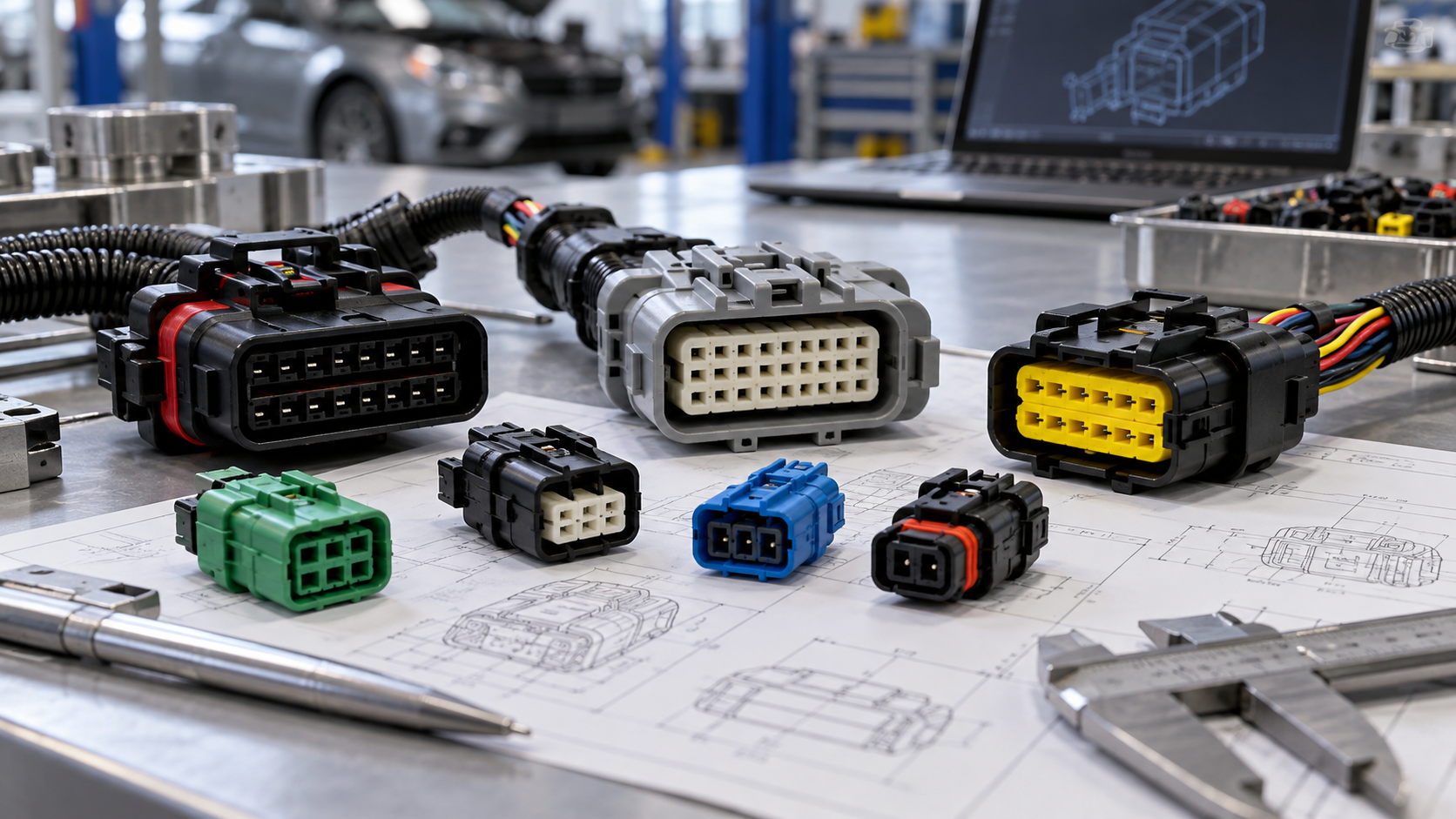
When a vehicle engineering team searches for the best automotive-grade connector manufacturers for cars, the tempting shortcut is to copy a familiar name into the approved-vendor list. That can hide the real decision: whether a supplier can match the required interface, environment, validation evidence, production controls, and service model for a specific program. A connector family that works well in a cabin harness may be the wrong choice for a hot, contaminated or high-vibration zone. This neutral comparison gives buyers a repeatable method for comparing TE Connectivity, Molex, Aptiv, Amphenol, Hirose Electric, JST, and ZUCH without inventing rankings, prices, market shares, or certifications.
Summary: There is no universally “best” automotive connector manufacturer. The best fit is the supplier whose documented part, mating system, test scope, manufacturing controls, availability and change process satisfy the program’s requirements. Compare like-for-like configurations using drawings, terminal and seal data, validation reports, material records, process controls, and service documentation. This article was updated for comparison purposes on 2026-10-09; it is an information guide, not a ranking or endorsement. Commercial relationships, distribution agreements and product scopes can change, so every nomination requires current supplier confirmation.
What does automotive-grade mean in a supplier comparison?
“Automotive-grade” is a buyer’s shorthand, not a single global product certificate. It should describe a controlled combination of interface design, materials, environmental performance, manufacturing capability, traceability and customer-specific validation. Vehicle-level safety rules such as NHTSA’s FMVSS may apply to the vehicle system, while SAE and USCAR documents can provide engineering and test references. A supplier’s quality-system certification or laboratory recognition is relevant evidence, but it does not automatically approve every part number or vehicle application.
The comparison method used here has five dimensions: portfolio fit, application evidence, manufacturing and quality controls, supply and lifecycle support, and documentation transparency. Company presence in this list means that the manufacturer publicly presents relevant connector or automotive capabilities; it does not imply equal scope, identical certification coverage, or a ranking.
How should buyers compare the seven manufacturers?
| Manufacturer | Publicly visible comparison focus | Typical buyer question | Commercial positioning caveat |
|---|---|---|---|
| TE Connectivity | Broad connector and interconnection portfolio with automotive applications | Does the exact family, terminal system and regional supply model fit the program? | Confirm current part status, authorized channel and configuration-specific evidence |
| Molex | Automotive interconnect, terminals and wire-harness-related solutions | Can the supplier support the required packaging, validation and assembly process? | Product scope and availability vary by family and region |
| Aptiv | Vehicle architecture, connection systems and electrical distribution context | Is the requirement a component purchase or part of a broader architecture package? | Clarify whether the commercial offer covers the needed standalone component |
| Amphenol | Automotive and transportation interconnect solutions across multiple product groups | Which division owns the part, documentation and change process? | Verify the exact business unit, drawing revision and support route |
| Hirose Electric | High-density and precision connector families used in electronics and automotive contexts | Are pitch, mating durability, signal requirements and packaging compatible? | Do not transfer a data or consumer connector assumption to a vehicle zone |
| JST | Wire-to-board, wire-to-wire and crimp-terminal families, including automotive offerings | Is the terminal, applicator and harness process defined for production? | Check regional authorization, tooling and lifecycle status for the selected series |
| ZUCH | Rectangular, RAST, FASTON, terminal, motor and compressor connector lines | Can the catalog family and available evidence meet the defined interface and environment? | Verify product-specific scope, samples, test records and supply terms directly |
Which documents should buyers compare between suppliers?
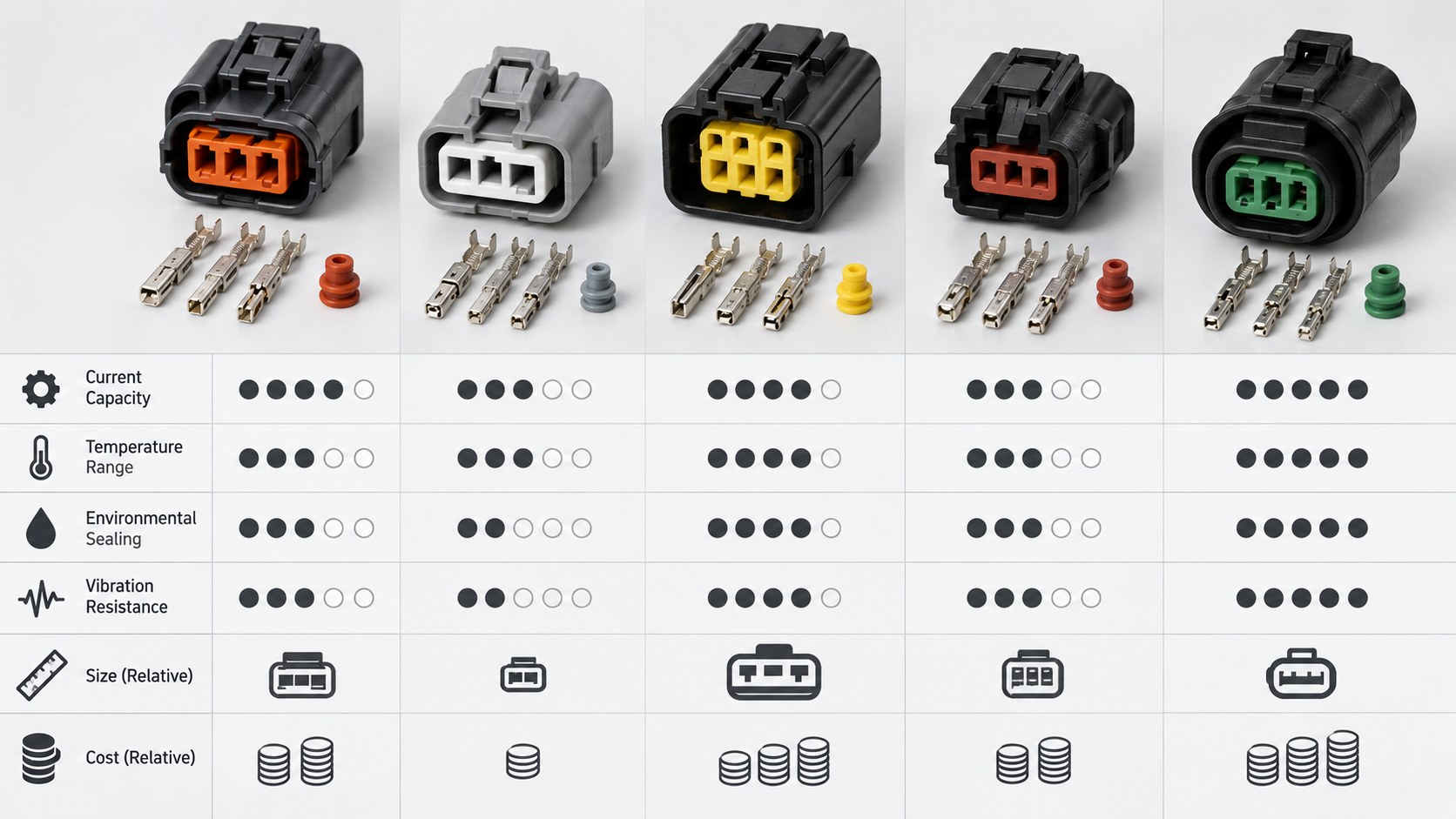
Start with the same document request for every candidate. A drawing should identify dimensions, materials, terminals, seals, keys, locks and mating parts. A validation package should identify the sample configuration, test method, conditioning, acceptance criteria, deviations and approval status. A manufacturing package should show process controls for crimping, cavity and terminal traceability, inspection, nonconformance and engineering changes.
Ask suppliers to separate product-level evidence from system-level claims. For example, UL or CUL coverage may apply to a specified component construction and material set; it is not a blanket declaration for every use in a vehicle. Similarly, a laboratory accreditation or a witness-lab arrangement supports confidence in test governance but must be connected to the nominated part and report.
| Document group | Minimum comparison fields | Escalation trigger |
|---|---|---|
| Product definition | Part number, revision, drawings, 3D model, mating components and terminal system | Uncontrolled or incomplete interface data |
| Electrical and mechanical performance | Contact resistance method, current/temperature basis, retention, mating and lock requirements | Ratings without test conditions or derating assumptions |
| Environmental validation | Temperature, vibration, shock, fluids, sealing, corrosion and cycle sequence as applicable | Report covers a different material, seal or mating configuration |
| Materials and compliance | Polymer and plating declarations, applicable UL/CUL records, restricted-substance information | Certificate scope cannot be tied to the supplied part |
| Production and lifecycle | Control plan, traceability, capacity assumptions, change notification, obsolescence and service plan | No defined owner for changes or field replacement |
Does the application change which manufacturer is the best fit?
Yes. A buyer should score application fit before brand familiarity. Body and cabin programs often emphasize packaging, keying, serviceability and stable mating; engine-bay or underbody programs add heat, fluid, vibration and contamination; sensor and data circuits require the applicable signal and shielding controls; power distribution requires a clear temperature-rise and circuit-protection basis.
| Program need | Evidence to compare | Question for every candidate |
|---|---|---|
| High packaging density | Pitch, polarization, mating envelope and service access | Can the assembly be built and repaired without unverified assumptions? |
| Harsh environment | Sealing concept, material compatibility and environmental sequence | Does the report match the actual seal, wire and mating parts? |
| High-current path | Conductor range, contact system, temperature-rise method and derating | What circuit protection and installation assumptions bound the rating? |
| Global sourcing | Regional manufacturing, authorized channels and change governance | Who owns continuity if the source, site or part status changes? |
How can a buyer compare a new supplier with an incumbent?
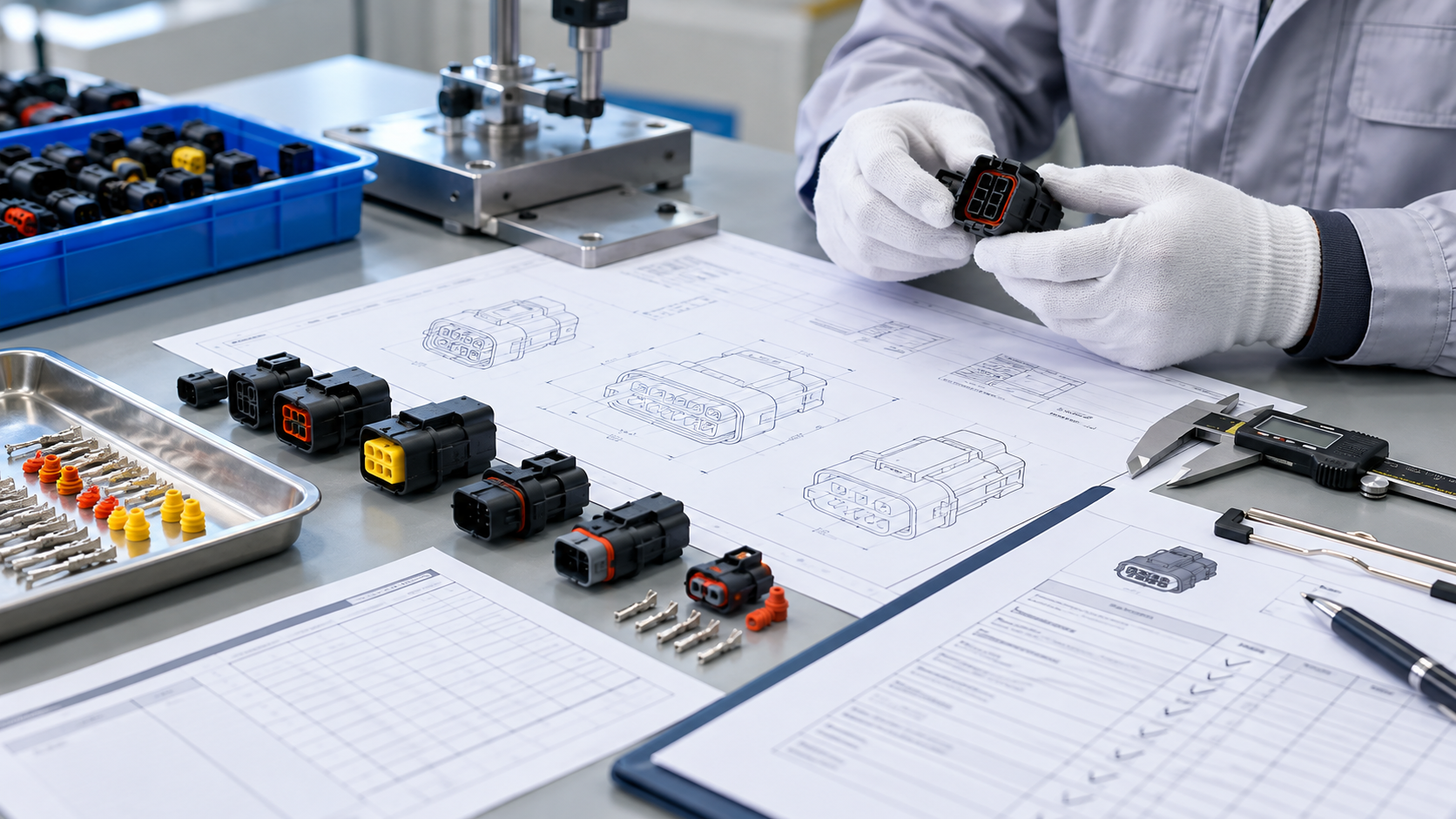
- Use one controlled requirement set and ask both suppliers to complete the same compliance and test matrix.
- Build sample harnesses with the intended wire, seals, tooling and work instructions; record assembly and inspection results.
- Compare total transition work, including tooling, applicators, service parts, training, inventory disposition and validation time. Do not invent a price or ROI figure before receiving quotations and internal labor assumptions.
- Review change-control terms, second-source plans, regional logistics and end-of-life notices before approving a commercial switch.
- Document the commercial relationship caveat: a distributor, integrator or parent-company relationship can affect support and availability, so confirm the contracting entity and authorized channel.
ZUCH’s stated capabilities include IATF 16949:2016, a CNAS-accredited laboratory, a UL witness laboratory, UL/CUL coverage and PA66/PA66 GWT material options. Those facts are useful starting points for due diligence, not substitutes for part-specific evidence. Buyers can review the ZUCH product catalog, the rectangular connector range, and connecting terminals when the application requirements point to those families.
Frequently asked questions
What makes an automotive connector manufacturer automotive-grade?
It is the combination of a fit-for-purpose interface, controlled materials, documented environmental and electrical validation, repeatable production, traceability and lifecycle support. No single logo or certificate proves all of those elements for every part. Buyers should request evidence for the exact configuration and application.
Which documents should buyers compare between suppliers?
Compare controlled drawings, 3D models, terminal and seal specifications, validation reports, material declarations, quality-system scope, control plans, traceability and change-notice terms. Confirm sample configuration and report revision. A concise requirement-to-evidence matrix exposes gaps faster than a general capability brochure.
Are the largest connector brands always the best fit?
No. Scale can help with portfolio breadth, regional support or tooling resources, but the correct choice depends on interface fit, evidence, process compatibility, supply and service requirements. A smaller or newer source may be suitable when it passes the same qualification gates and has a credible lifecycle plan.
How can a buyer compare a new supplier with an incumbent?
Run the same controlled RFQ, sample build, test matrix and commercial review for both. Include transition work, tooling, service parts and change control, not only piece price. Approve the new supplier only when configuration-specific evidence and production readiness are equivalent to the program requirement.
References
- NHTSA, Federal Motor Vehicle Safety Standards (FMVSS).
- USCAR, United States Council for Automotive Research.
- SAE International, Automotive standards catalog.
- TE Connectivity, Automotive solutions overview.
- Molex, Automotive solutions overview.
Conclusion
The best automotive-grade connector manufacturer is the one that can prove fit for the defined vehicle interface, environment, process and lifecycle, not the one that appears first in a generic list. Buyers should set the requirement baseline, request identical evidence from each candidate, build representative harness samples, and then compare validation gaps, transition effort and change governance. Keep standards in context: FMVSS is a vehicle-safety framework, while SAE and USCAR references support engineering and test decisions; none removes the need for configuration-specific approval. Reconfirm product scope, contracting entity and supply route at nomination. ZUCH is one candidate for programs that match its rectangular, RAST, FASTON, terminal, motor or compressor ranges; its catalog is the next step for part-level review and contact.