Zhejiang ZUCH Technology Co., Ltd.
A Ford connector search can produce several nearly identical repair pigtails for the same general component description. The important difference may be the model application, an interface key, the terminal system or the supplied wire. Ordering the first plug that resembles the broken one can leave a workshop with a part that cannot be installed correctly. This guide explains how to identify Ford automotive electrical connectors, distinguish a service reference from a molded housing mark, and choose between a housing repair and a pigtail. It also sets out what should be recorded before cutting an existing harness, so a replacement does not lose the original circuit mapping or leave unsupported splices near the component.
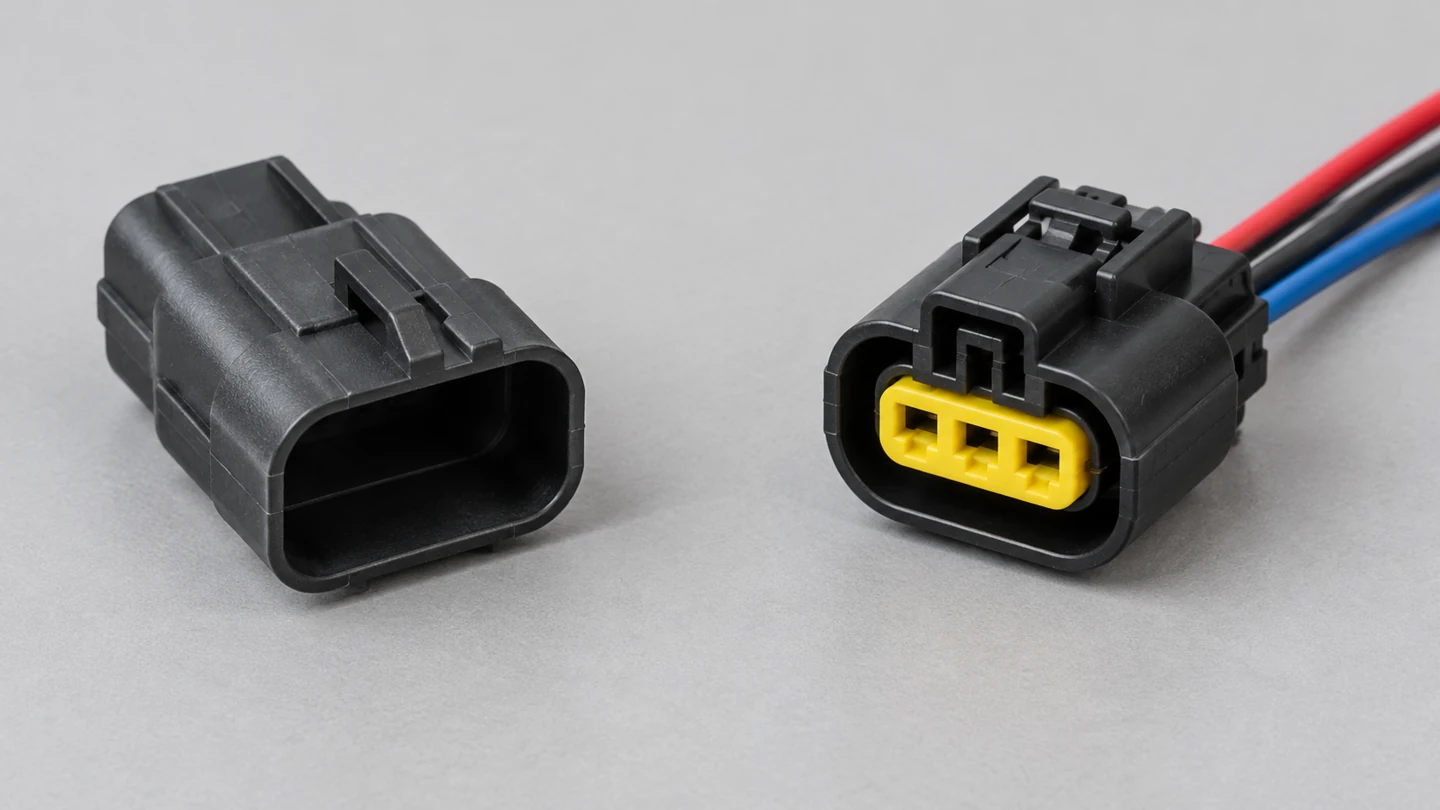
Start with the VIN, component location and the connector reference in the applicable Ford wiring information. Match the service part to the connector’s mating face, external keys and contact specification, then verify the cavity assignment independently. Motorcraft Service is Ford’s service-information route; access and available content depend on the selected market and subscription. Connector tests described within the IEC 60512 framework do not replace vehicle-specific repair instructions. A matching pigtail must also have suitable wire, termination and sealing components, and enough usable length for the approved splice arrangement.
Which Ford references should be collected before a parts lookup?
Record the vehicle year, model, VIN, powertrain and exact component position. Add the connector identifier from the wiring information when available, together with clear photographs of both sides and the latch. Ford electrical connectors used in different vehicle systems are not a single interchangeable product family.
Keep the service replacement reference separate from any engineering or supplier marking molded into the housing. A mark can be useful for identification without being a directly orderable repair-kit number. Ask the parts supplier to explain the application covered by a proposed cross-reference and whether the supply includes the housing alone, terminals, seals or wires. This is especially important when a photograph shows an assembled part but the listing price covers only the shell.
Should the repair use a housing, terminal kit or pigtail?
A pigtail can be appropriate when the connector and adjacent wire require replacement. It creates additional terminations in the harness, however, so available routing space and conductor condition become part of the repair decision. A broken latch on an otherwise serviceable assembly may allow a housing repair if the relevant instructions permit transferring its contacts. Heat or corrosion damage can require a wider repair scope.
| Repair form | What is replaced | What must be checked |
|---|---|---|
| Housing only | Shell and specified retaining components | Permitted terminal transfer and condition of retained parts |
| Terminal repair | A documented contact and wire termination | Contact identity, wire range and approved tooling |
| Pigtail | Connector and short wire lengths | Wire suitability, splice procedure and harness support |
| Larger harness section | A wider damaged or restricted assembly | The vehicle manufacturer’s required repair scope |
The decision process for housing replacement starts with the condition of the contacts and wires, not simply the lower price of a loose shell.
How do you avoid reversing wires when installing a pigtail?
Document every populated cavity before changing the harness. Use the diagram’s stated viewing direction and verify molded cavity numbers where available. Replacement wire colors may differ from the original harness. Connect each circuit by its documented cavity and function rather than matching colors automatically.
Do not cut all wires and then attempt to reconstruct their order from memory. Preserve an unambiguous record and follow the vehicle-specific sequence, including any permitted staggered splice arrangement. Additional length is not always helpful if it creates a tight bend behind the seal or leaves the harness rubbing against an engine bracket. The connector RFQ should specify the usable wire length and installation constraints when a pigtail is being sourced for repeated repairs.
Which details determine whether a replacement is suitable?
| Dimension | Required evidence | Do not assume |
|---|---|---|
| Application | VIN or exact model and component cross-reference | All connectors for a model year are identical |
| Mechanical interface | Mating reference, keys and latch arrangement | Equal cavity count proves fit |
| Wire and contact | Conductor, insulation and terminal specifications | Visible wire thickness proves current capability |
| Environment | Applicable sealing, temperature and exposure requirements | A rubber seal makes every assembly waterproof |
Aptiv’s connection-systems catalog structure separates connectors, terminals and seals. This reinforces the need to identify each component, without establishing that any listed product fits a particular Ford application. Where an ingress rating matters, IEC 60529 concerns a defined enclosure protection classification. It is not a general approval of a repair pigtail, its splices or the vehicle installation.
What checks belong after the pigtail is installed?
Inspect the mating component as well as the removed connector. A corroded or overheated interface may damage both halves, and a new pigtail cannot correct an unresolved source of water entry, mechanical strain or abnormal load. Follow the service procedure for inspecting conductor condition and deciding how far the repair must extend.
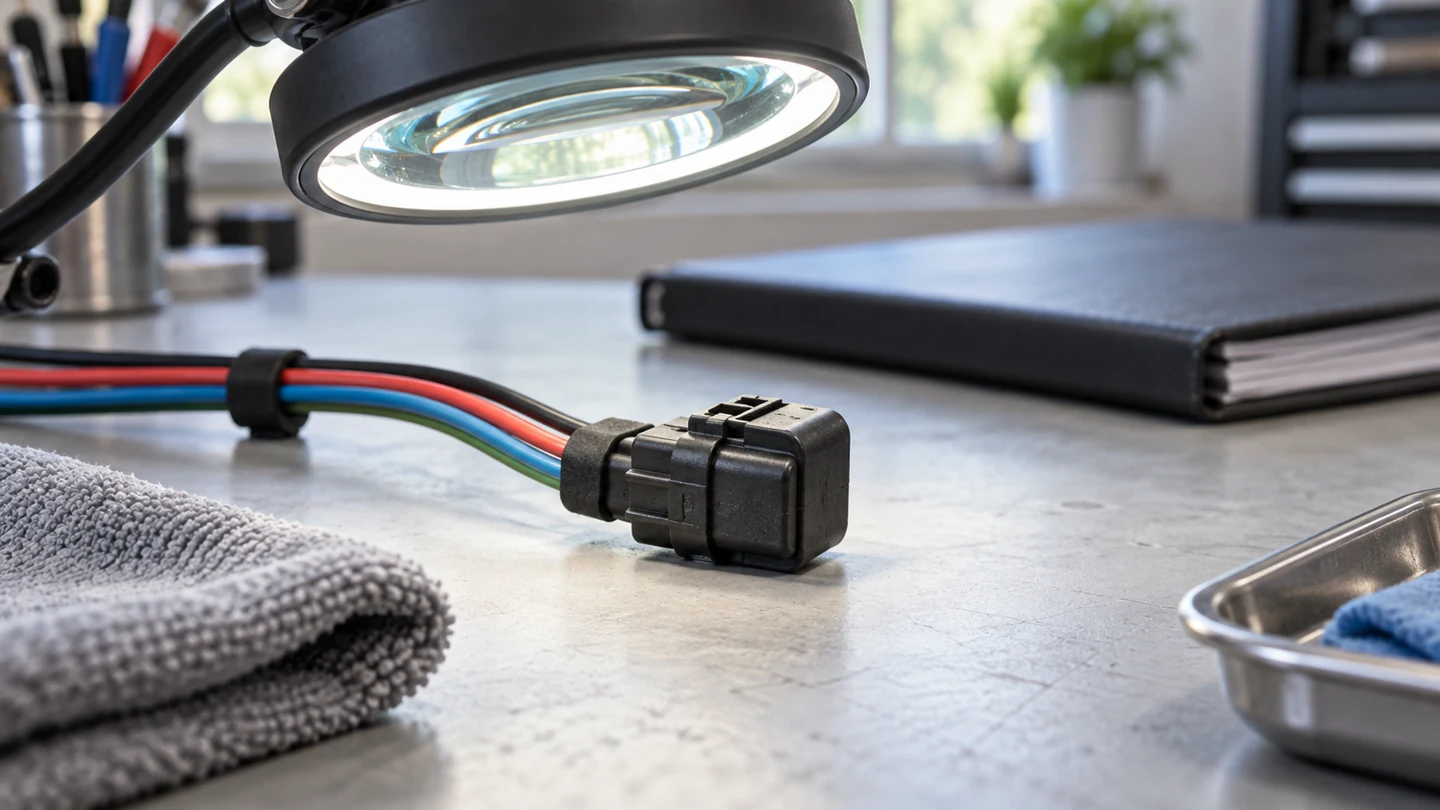
Verify circuit mapping, contact retention, seal installation, latch engagement and harness routing. Perform the specified electrical and functional checks with the appropriate equipment. IEC 60512-1:2018 describes a connector test framework, but acceptance limits must come from the relevant product or vehicle specification. A simple continuity check should not be treated as the only evidence of repair quality.
ZUCH’s connector catalog can support an inquiry with a documented mating interface and wire specification. No Ford approval or universal vehicle fitment is implied by a generic product listing.
Preguntas frecuentes
How do I identify a Ford automotive electrical connector?
Combine vehicle and component identification with the wiring-diagram connector reference. Compare housing markings, cavity arrangement, external keys and the mating interface before selecting a service part.
Can I replace a damaged Ford connector with a pigtail?
A suitable pigtail may be an option when the vehicle-specific procedure permits it. Confirm its application, wire specifications, splice method and available routing space before cutting the original harness.
How do I match a Ford connector to the correct model year?
Use the VIN, market, powertrain and component location rather than model year alone. Confirm any application or production distinction with the service or parts reference.
Are Ford electrical connectors different between vehicle systems?
Yes. Different interfaces can require different housing keys, contacts, sealing arrangements and repair methods. A connector for one system is not interchangeable solely because its cavity count matches another.
What is the best way to repair a Ford connector with corroded terminals?
Identify and correct the exposure source, inspect both mating halves and determine whether corrosion extends into the wire. Replace affected components using the relevant service procedure and verify the completed circuit.
Do I need an OEM part number to buy a Ford connector?
A verified service number is helpful, but a precise vehicle and component lookup or a fully documented mating interface can also identify a candidate. An uncertain photograph alone is a weak basis for purchase.
References
- Ford Motorcraft Service — vehicle-specific service-information access; market selection or subscription may be required.
- Aptiv Connection Systems — connector, terminal and seal portfolio structure.
- IEC 60512-1:2018 — connector tests and measurement framework.
- IEC 60529 consolidated edition — ingress-protection classification scope.
What should decide the final repair choice?
The correct Ford repair part is the one that matches the documented application and supports an approved repair of the actual damage. Identify the circuit and service reference before comparing housings. Then establish whether the contacts and wires can be retained, whether a pigtail is permitted, and where any required splices can be installed without strain or exposure. Preserve the cavity map before removal and verify the resulting assembly with the specified mechanical and electrical checks. Neither a familiar shell nor matching wire colors can replace those steps. For repeat procurement, retain the accepted component list, wire specification and application reference. ZUCH can use that information to assess a connector inquiry within its published range, while vehicle-specific repair approval remains dependent on the relevant Ford information.