Zhejiang ZUCH Technology Co., Ltd.
A connector described as “European” can appear in searches for a sensor plug, a repair pigtail or a general harness housing. The label does not identify the vehicle circuit, supplier family or repair method. It is therefore a weak starting point for an order when the actual requirement is a connector for one component on one vehicle. This guide explains how to turn that regional search into a useful specification for European automotive electrical connectors. It covers vehicle-service references, connector-family evidence, the differences between repair supply forms and the questions that should be resolved before a universal replacement is proposed. The focus is identification and sourcing rather than a claim that European vehicles share one standardized connector system.
Use the exact vehicle, VIN and component location to find the relevant parts and wiring information. Then confirm the housing and mating references, contact system, wire specification and sealing arrangement. Manufacturer channels such as BMW Aftersales Online System and Mercedes-Benz B2B Connect provide entry points for brand-specific aftersales information, with access conditions that depend on the service. Connector standards do not create a universal European pinout. IEC 60529, for example, concerns ingress-protection classifications; it cannot establish vehicle fitment, permitted harness repairs or compatibility between two superficially similar housings.
Why is a European connector label too broad for ordering?
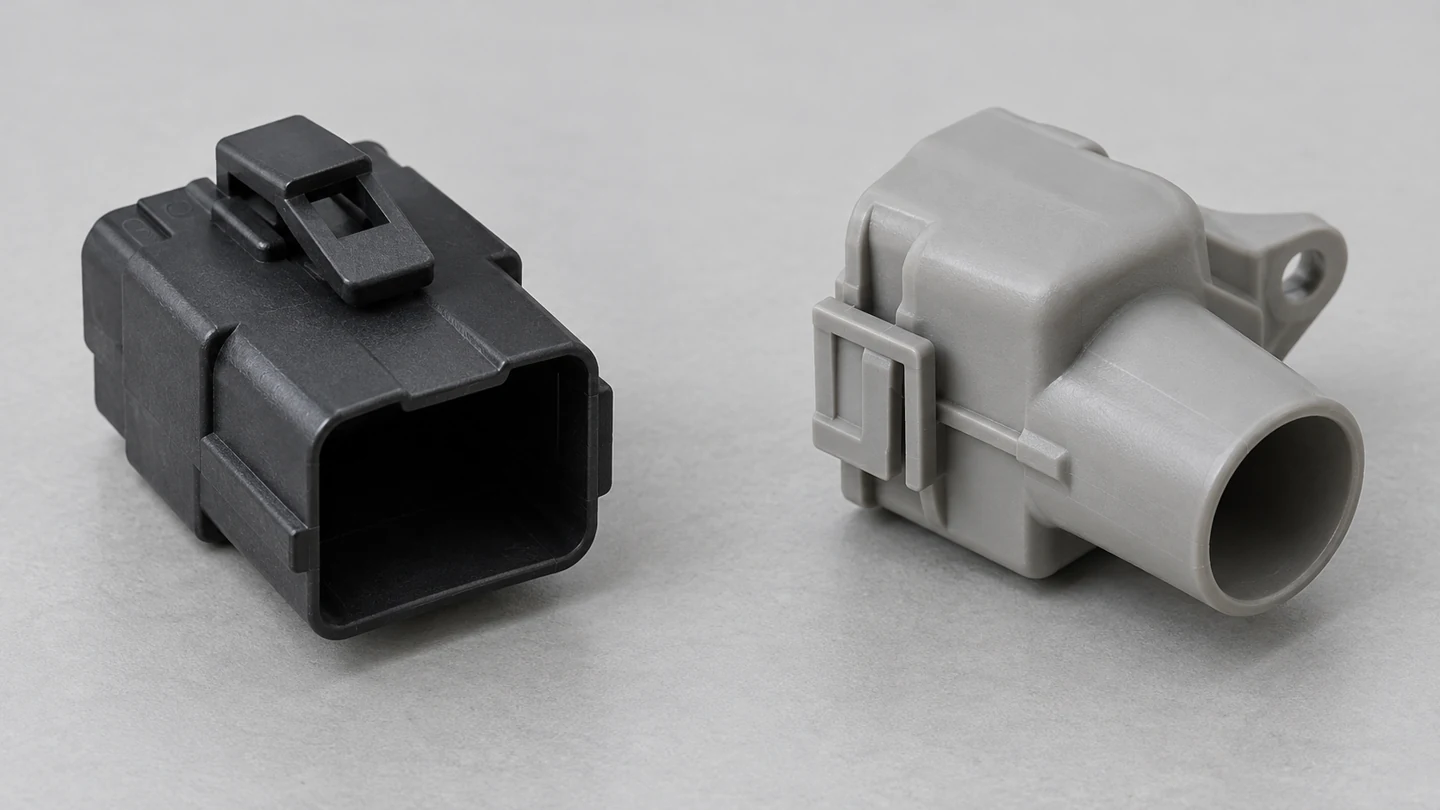
The vehicle manufacturer, component supplier and connector manufacturer can be different organizations. A connector on a device supplied by one company does not necessarily identify the loose harness shell or its service replacement. The same vehicle can also use different families for ordinary power, sensors, data and safety-related systems.
The Bosch Motorsport connector page gives a concrete example of product-family variety: it lists Bosch Jetronic and Compact connectors alongside other supplier families and separately mentions contacts and sealing components. This is a motorsport portfolio, not a road-vehicle interchangeability chart. Its relevance is the need to identify the actual family rather than assume that one regional or component-brand label defines the interface.
| Search description | What it can establish | What it cannot establish |
|---|---|---|
| European connector | A broad sourcing context | Family, vehicle fitment or pinout |
| Component supplier and device number | A candidate mating device | The complete repair connector specification |
| Exact housing and mating references | The intended mechanical interface | Vehicle circuit assignment or approved repair scope |
| Vehicle service replacement reference | A candidate repair part for a defined application | Permission to ignore its installation instructions |
How do you find the right vehicle-specific reference?
Record the VIN, model year, market, powertrain and exact component position. Use the applicable manufacturer’s parts and service information, and note any equipment or production distinction. Mercedes-Benz B2B Connect describes vehicle-centered access to parts, maintenance and repair information. Such a route is more useful for an actual repair than an unverified general connector diagram.
Keep the connector designation and the diagram view with the part inquiry. A mating-face view and a wire-side view need consistent interpretation. Pinout identification should confirm the actual cavity assignment rather than assume that a known supplier family has a single circuit arrangement across vehicles.
Should the order specify a housing, repair kit or pigtail?
A product photo may show an assembled connector while the supplied item is only the shell. Ask what is included before comparing quotations. A terminal repair kit, a housing and a wired pigtail have different assembly and installation requirements. The lowest unit price can be misleading when the required contacts, seals or tooling are missing.
| Supply form | Confirm before purchase | Installation consequence |
|---|---|---|
| Loose housing | Mating reference and all required retaining parts | Contacts must be specified and installed separately |
| Terminal or seal kit | Exact component references and permitted wire ranges | Correct release and termination tooling is needed |
| Repair pigtail | Application, wire specification and supplied length | Approved splice method and routing space are needed |
| Complete harness section | Vehicle and equipment application | Installation follows the relevant assembly procedure |
A connector RFQ should make these supply boundaries explicit. Include a cavity map where relevant, but do not request an unknown supplier to infer a vehicle circuit from wire colors in a photograph.
Why must sealing be assessed for the actual installation?
Environmental requirements follow the connector location and exposure, not the vehicle’s regional label. A dry interior interface and an underbody connection need separate assessments. Confirm the specified interface seal, wire seals, unused-cavity treatment and wire insulation range. A part advertised as sealed is not automatically suitable for every fluid, temperature or vibration condition.
IEC 60529 provides enclosure protection classifications under defined conditions. A rating needs an identified assembly and test configuration. It does not establish that a replacement pigtail, its splices and the surrounding harness all satisfy the vehicle’s requirements. Any product-specific claim should be supported by documentation for the intended assembly.
What should be verified before approving a repair part?
Compare the candidate with the actual mating component, confirm keying and latch engagement, and inspect the contact and seal specifications. Do not trim a key or substitute a contact merely because the resulting assembly can be pushed together. That changes the interface without establishing that it is suitable.
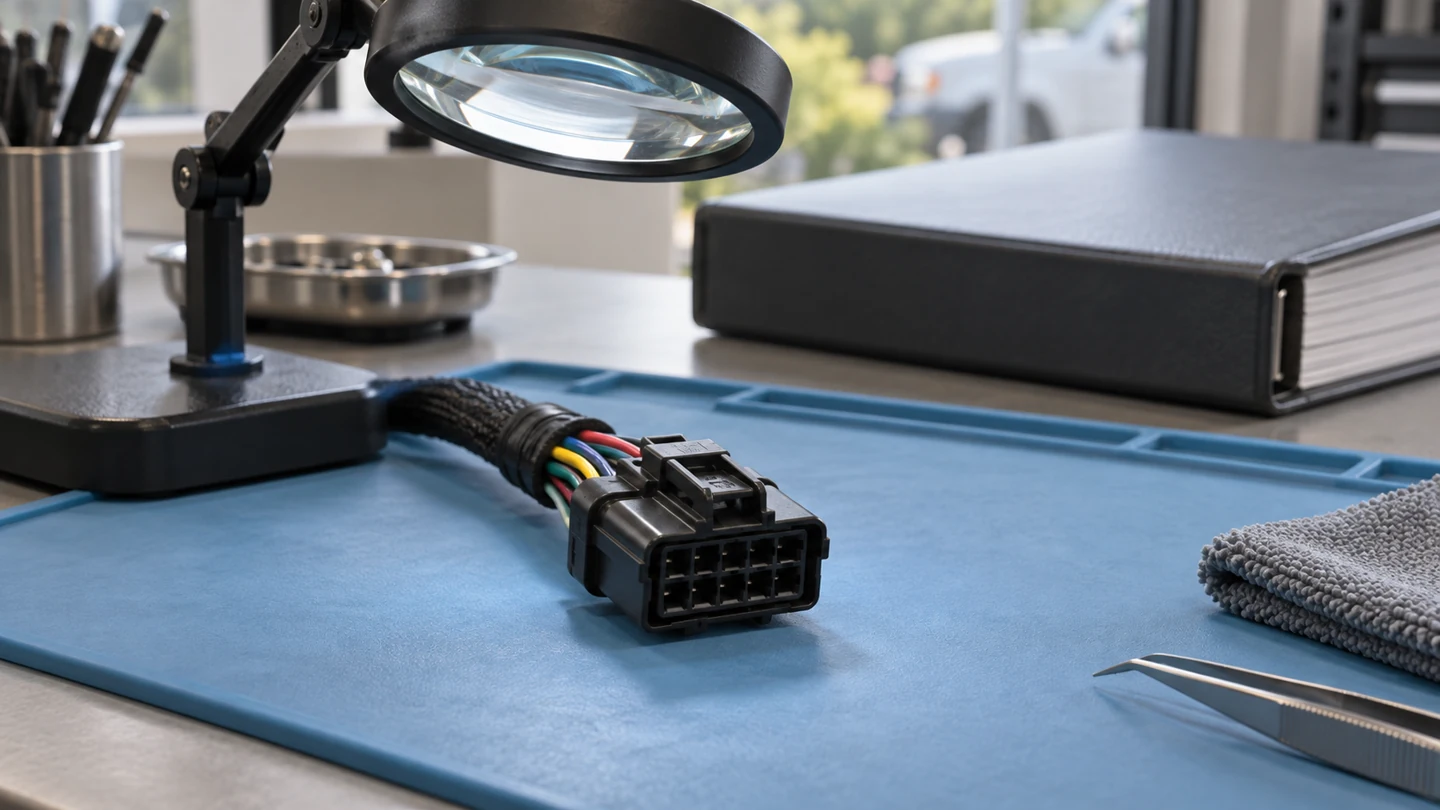
Follow the relevant power-down, repair and verification procedures, especially for safety-related and high-voltage systems. Keep accepted sample references and component lists for repeat orders. ZUCH’s connector product range can support a component inquiry with a defined interface and application requirement. No approval from a European vehicle manufacturer is implied by a general catalog listing.
Frequently asked questions
Are European automotive electrical connectors different from other types?
Specific families differ in interface, contacts, sealing and application requirements. The regional label alone does not establish a universal technical distinction or replacement rule.
How do I identify a European car connector?
Use the vehicle and component reference, the service connector designation and physical evidence from the housing. Confirm the exact mating interface and component specifications against reliable documentation.
Can I use a universal connector on a European vehicle?
Only where the application and repair procedure allow a documented alternative. Matching cavity count is insufficient, and specialized or restricted systems should not be converted using a generic guide.
How do I find an OEM reference for a European connector?
Use the relevant manufacturer’s parts and service-information channel with the VIN, component position and connector designation. Distinguish a service replacement reference from a molded supplier mark.
Why are sealed connectors common in European vehicles?
Sealed assemblies address exposure requirements at particular locations. Sealing is an application choice, not proof of a region-wide standard or unlimited waterproof performance.
What should I check before repairing a European car connector?
Check the exact interface, cavity mapping, damage extent and permitted repair method. Confirm contacts, wires and seals, then complete the specified retention, routing and electrical checks.
References
- BMW Aftersales Online System — official aftersales-information entry point; access conditions apply.
- Mercedes-Benz B2B Connect — vehicle-centered parts and workshop information.
- Bosch Motorsport: Connectors — documented connector-family variety within its motorsport portfolio.
- IEC 60529 consolidated edition — enclosure protection classifications and scope.
What makes a connector order specific enough to approve?
A reliable order links an identified vehicle circuit to a documented connector assembly. Establish the vehicle and component first, locate the appropriate service reference, and then verify the housing, mating part, contacts, wires and seals. State exactly which repair components the quotation includes and which installation requirements remain to be satisfied. A regional label, familiar supplier name or equal cavity count cannot replace that information. Do not approve a universal substitute without checking the vehicle’s repair restrictions and the completed assembly’s electrical and mechanical requirements. For repeat purchasing, preserve the accepted references so subsequent orders remain traceable. ZUCH can assess a documented connector inquiry against its published range, while vehicle-specific suitability and repair approval remain governed by the relevant manufacturer information.