Zhejiang ZUCH Technology Co., Ltd.
A listing for a GM connector may describe a sealed plug, an OEM pigtail or a connector family without saying which vehicle circuit it actually fits. Those descriptions answer different questions. The buyer still needs to know which service part is required, whether its contacts match the mating component, and whether the surrounding wire can support a local repair. This guide explains how to identify GM automotive electrical connectors before ordering and how to choose the repair scope when a latch, terminal or wire is damaged. It also separates a weather-sealed product description from evidence about the complete installed assembly, so a new shell is not expected to solve a leak or electrical fault by itself.
Use the vehicle identification number, component location and relevant wiring information to establish the connector reference. Confirm the housing and mating interface, then specify the terminals, wire and seals as an assembly. The GM Parts Store provides vehicle-selection tools for genuine-parts inquiries; service information is accessed separately through ACDelco TDS. Neither a vehicle badge nor the phrase “GM-style” establishes a pinout. When evaluating sealing claims, IEC 60529 identifies an ingress-protection classification framework, not universal approval for a replacement pigtail or its installation.
What identifies the connector family and the GM service part?
Record the vehicle, model year, powertrain, VIN and installation position. Locate the connector designation in the applicable wiring information and retain its circuit description. Then photograph the housing marking, mating face, wire-entry side and locking arrangement. The service reference and the connector manufacturer’s component reference may be different, so both should be kept in the repair record.
A connector family name can narrow the search but does not define every member of that family. The Aptiv Connection Systems portfolio separates low-voltage connectors, terminals and seals. Buyers should make the same distinction when ordering a GM automotive connector: confirm what the service kit includes, which contacts and seals it requires, and what component it mates with. Do not infer GM fitment from a supplier’s general automotive portfolio.
| Reference available | Useful purpose | Remaining verification |
|---|---|---|
| Vehicle and circuit designation | Locates the relevant service information | Exact application and production details |
| GM service replacement number | Identifies a candidate supplied repair part | Kit contents and installation requirements |
| Molded housing mark | Helps identify a connector manufacturer or shell | Mating part, contact set and service cross-reference |
| Retail family description | Provides an initial search term | Full mechanical and electrical compatibility |
What does a weather-sealed connector assembly actually include?
Assess the interface seal, wire-entry seals, unused-cavity plugs and the housing features that locate them. A complete latch does not establish that each sealing path is correct. The wire insulation diameter must suit the specified seal, and an unused cavity must be treated according to that connector’s assembly instructions.
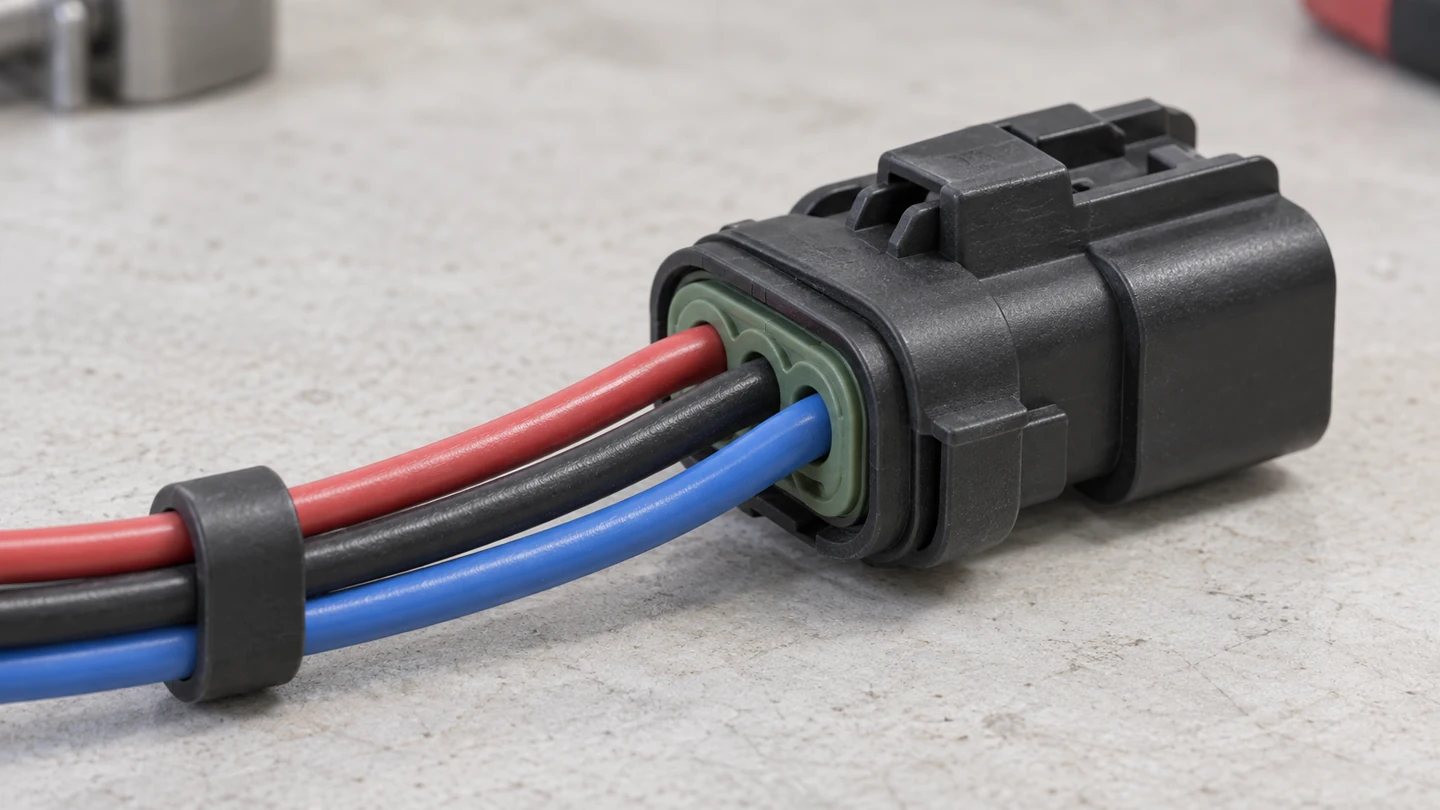
For a listing described as Weather Pack-style, request the exact part and assembly specification rather than extending the name into an unlimited “waterproof” promise. IEC 60529 classifies enclosure protection under defined conditions. It does not prove resistance to every automotive fluid or confirm that different contacts, wires and seals preserve the original assembly performance.
When is a pigtail preferable to a housing-only repair?
A housing-only repair retains the original wires and contacts when their condition and the service procedure permit it. A pigtail replaces the connector and a short wire section, which can be useful when the wire-entry area is damaged. It also adds splice locations. Those splices need the specified method, conductor condition, environmental protection and mechanical support.
| Observed condition | Repair question | Evidence needed before proceeding |
|---|---|---|
| Broken shell with intact wiring | Can the contacts transfer to a new housing? | Approved release procedure and reusable-component assessment |
| One damaged contact | Is an individual terminal repair allowed? | Terminal reference, wire range and tooling instructions |
| Damage at the wire entry | Will a pigtail remove all affected wire? | Conductor inspection and permitted splice location |
| Widespread heat or corrosion damage | Does the repair need a larger harness section? | Service procedure and inspection of the mating component |
Housing replacement should therefore follow damage assessment rather than a general preference to avoid changing the harness.
How far should a corrosion repair extend?
Inspect both mating halves and the conductor near the affected termination. Corrosion can make a local connector problem part of a wider wire or component repair. Determine where moisture entered and whether damaged seals, routing strain or a nearby leak contributed. Cleaning a contact surface does not establish that its plating, contact geometry or conductor is serviceable.
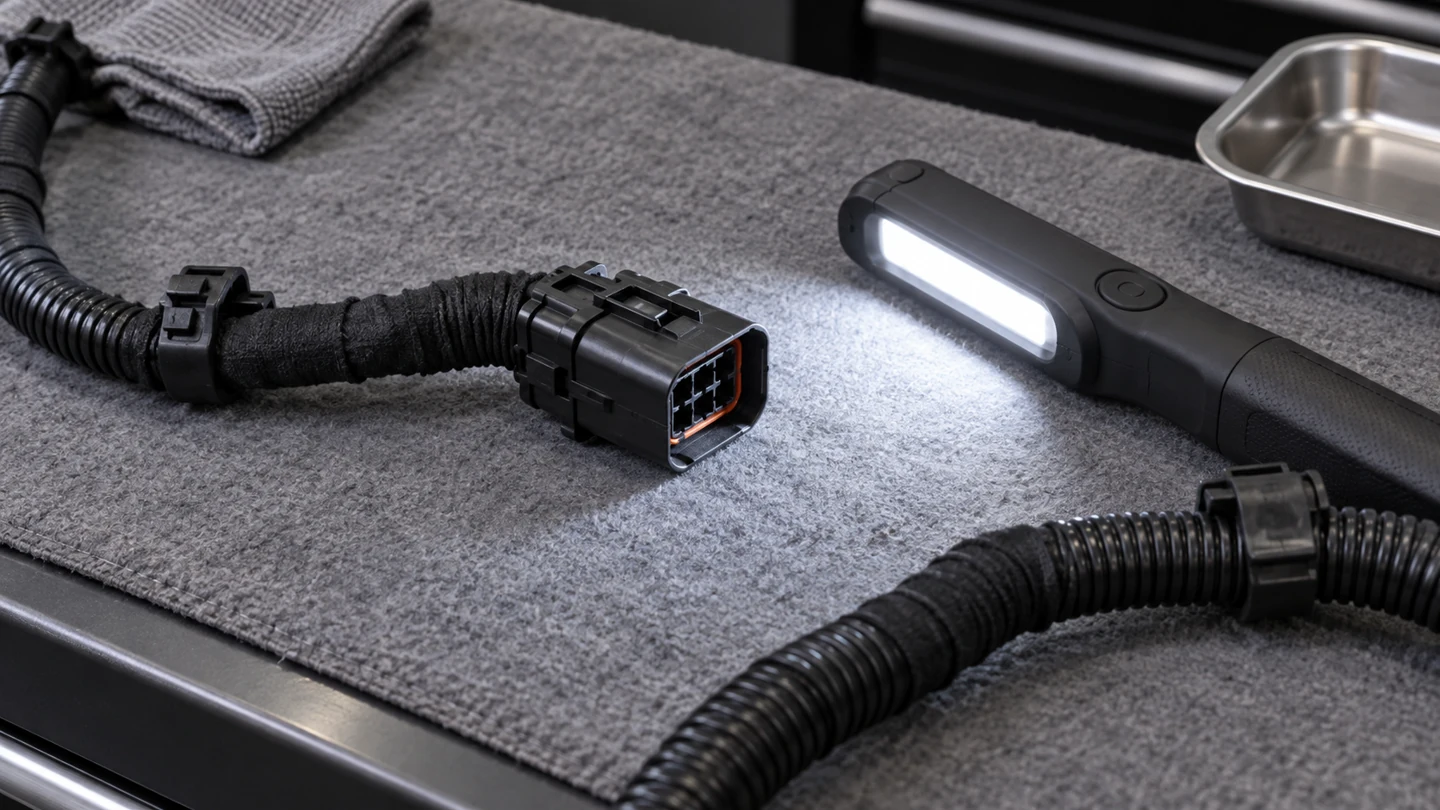
Keep the cavity map before releasing or cutting wires. Confirm the diagram viewpoint and map each replacement lead by circuit, especially when pigtail colors differ. The principles behind vehicle-specific pinouts remain important even when both housings look identical.
What should buyers require from a replacement supplier?
Ask for the exact application cross-reference, mating part, bill of materials, wire specifications and assembly instructions. A claim of “OEM quality” does not show that a product is a genuine GM service part or an approved equivalent. Document the evidence used to accept a sample and confirm that repeat orders use the same component references.
ZUCH’s connector range can support a component inquiry when the interface and application requirements are defined. Compatibility and any vehicle-specific approval still need separate verification.
Frequently asked questions
How do I identify a GM automotive electrical connector?
Combine VIN and component information with the service connector designation. Compare housing markings, cavity layout, keying and the mating reference before selecting a repair part.
Can I use an aftermarket connector on a GM vehicle?
It may be suitable when exact fitment, component specifications and the permitted repair method are documented. A similar photograph or broad GM application claim is insufficient.
What is a GM connector pigtail used for?
It replaces a connector and short wire section where that repair is permitted. The supplied wires must be mapped to the correct circuits and joined using the applicable service procedure.
How do I find the pinout for a GM automotive connector?
Use service information for the actual vehicle, component and connector designation. Confirm whether the connector view is from the mating face or wire side before interpreting cavity numbers.
Are GM weather-pack style connectors waterproof?
The style description alone does not establish an ingress rating. Verify the exact assembly specification, required seals and cavity plugs, mating condition and documented exposure limits.
How do I replace a corroded GM electrical connector?
Correct the exposure source, inspect contacts and adjacent wires, and choose the repair scope specified for that application. Replace damaged parts and complete the prescribed mechanical, electrical and functional checks.
References
- GM Genuine Parts and ACDelco Parts Store — vehicle-based parts selection.
- ACDelco TDS — service-information access portal; subscription may be required.
- Aptiv Connection Systems — connectors, terminals and seals as separate product categories.
- IEC 60529 consolidated edition — ingress-protection classification scope.
What should be verified before the GM repair is signed off?
The repair decision should follow the identified circuit, the extent of damage and the permitted service method. Establish the vehicle and connector references first, confirm the mating interface and component list next, and then decide whether the repair needs a housing, individual contacts, a pigtail or a larger harness section. Keep wire mapping and sealing requirements explicit throughout that process. Do not treat a weather-sealed family name, a closed latch or clean-looking contacts as proof that the completed assembly is correct. Final checks must address retention, routing and electrical operation under the relevant procedure. ZUCH can review a documented component inquiry against its published catalog, while genuine-part status and GM application approval remain matters for the appropriate service and parts references.