Automotive Electrical Harness Connectors
Quick Answer
An automotive electrical harness connector should be selected as a complete, compatible connection system—not by housing shape alone. Match the connector housing, terminals, seals, wire size and insulation diameter, current and voltage requirements, mating interface, installation environment, service needs, and assembly tooling. Before approval, verify the supplier drawing, application specification, mating parts, termination process, retention, polarity, sealing details, and inspection criteria for the exact part numbers being used.
Automotive electrical harness connectors are critical components of today’s vehicles, providing connections between electrical circuits and assisting in the proper functioning of various vehicle features (i.e., power door locks, headlights and/or infotainment systems) through the transfer of power and/or signals. This guide will give a comprehensive overview of automotive electrical harness connectors including: type of automotive electrical harness connector; application; and the importance of selecting the correct automotive electrical harness connectors for optimum vehicle performance.

What Are Automotive Electrical Harness Connectors?
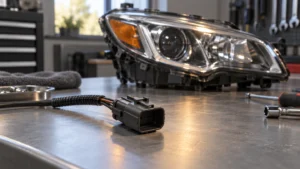
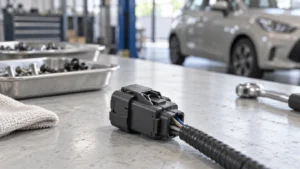
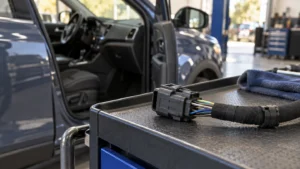
Automotive electrical harness connectors are specifically designed components that connect wires/cables within a vehicle’s wiring harness. They provide secure, reliable electrical connections for transmitting power data and/or signals between two or more automotive electrical components (e.g., battery, sensors, engine control unit (ECU) lighting, etc.) by creating an electrical path between them by providing durable connections against extreme temperatures, vibration, dust and/or water ingress.
In other words, automotive electrical harness connectors perform the same function as the “nerves” of an automotive electrical system by connecting them to the different engine components and systems.
As automotive technologies continue to advance (e.g., autonomous driving technology and electric vehicles (EVs)), so will the types of automotive electrical harness connectors needed to support those technologies.
What Types of Connectors Are Used to Connect Wires in Automotive Electrical Harnesses?
All automotive electrical wiring connectors are not designed the same. Each type of connector has a unique configuration, characteristics and/or performance level depending upon how it will be used. Below are some of the most popular types of automotive electrical connectors found in vehicles:
1. Pin Connectors
Pin connectors are extensively utilized in automotive wiring harnesses. They consist of both male and female connections, which will mate together for a secure connection. The typical uses for pin connectors are for compact and sturdy connections; for instance, an LED light or sensor will be powered by a pin connector.
2. Blade Connectors
Blade connectors are characterized by a flat conductive blade that slides into a receptacle. They are best suited for applications where a heavier current must be carried, such as supplying power to motors or attaching the battery to components that serve the vehicle’s battery system.
3. Circular Connectors
Circular connectors are reliable and operate well wherever durable and shielded connections are required. This type of design provides for easy mating and dismantling of the connector, making maintenance tasks easier. Circular connectors are often seen in areas that utilize high-performance technology, such as engine controls or telematics system installations.
4. Waterproof Connectors
In locations that may experience moisture, dirt, or snow, waterproof connectors are essential. A waterproof connector incorporates a seal or gasket that prevents moisture from entering the connection area and damaging the integrity of the connection. Waterproof connectors are typically installed in headlight assemblies, fog lights, and various exterior applications.
5. Multi-pin Connectors
Multi-pin connectors allow for multiple wires to be connected within the confines of a single housing, thereby reducing complexity in wiring layouts. These connectors are commonly used in feature-rich vehicles that require numerous data and power connections.
Automotive Harness Connector Type Comparison
These labels describe broad connector families rather than interchangeable specifications. The exact series, terminal, seal, wire range, ratings, keying, and mating half still have to be checked against the application and supplier documentation.
| Connector family |
Typical harness role |
Useful characteristic |
Selection boundary |
Verification focus |
| Pin connector |
Compact power or signal circuits |
Available in serviceable male-and-female interfaces |
Pin style alone does not establish electrical or environmental suitability |
Terminal size, retention, mating geometry, wire range, and keying |
| Blade connector |
Power distribution, motors, and equipment interfaces |
Flat contact interface can suit compact power connections |
Current capability depends on the exact contact, wire, temperature, and assembly |
Published rating conditions, contact engagement, crimp, and strain relief |
| Circular connector |
Serviceable power or signal connection |
Defined mating orientation and secure coupling options |
A circular form does not automatically mean sealed, shielded, or vibration-qualified |
Coupling, keying, sealing, shielding, and mating-cycle requirements |
| Sealed connector |
Exterior or splash-, dust-, and contaminant-exposed harness zones |
Environmental protection when all seals and cavities are correctly assembled |
“Waterproof” is not meaningful without stated test conditions and correct wire-seal fit |
Seal range, unused-cavity plugs, housing lock, and supplier test evidence |
| Multi-pin connector |
Modules, sensors, lighting assemblies, and grouped circuits |
Organizes multiple power and signal circuits in one interface |
More circuits increase the importance of pinout, keying, and secondary retention |
Cavity map, polarity, terminal position assurance, and mating-part number |
Considerations When Choosing Wire Connectors
When selecting the right wire connectors within an automotive application you will want to evaluate your vehicles electrical requirements. Some of these requirements that you will need to evaluate will be the total current and voltage that is required from your vehicles electrical system as well as any potential environmental influences on the wire connectors.
Another thing to consider when selecting an automotive wire connector for your vehicle is the materials that the wire connectors are manufactured from. Many electrical wire connectors today use mechanical features that are made from durable, high-impact plastics, along with metal contact points. For any applications that could be classified as heavy-duty applications it may be preferable to use metal housings due to their higher durability. Lastly, it is also important to ensure that the wire connectors meet any approved standard specifications (ISO, SAE, and OEM) so that you will not have any installation and operational issues with the wire connectors when installing or operating them.
Turn those general requirements into exact procurement controls. Record the housing and mating-half part numbers, terminal and seal part numbers, approved wire range, insulation diameter, circuit map, tooling, assembly instructions, and inspection plan. For the termination workflow, see how to crimp automotive connectors; the connector supplier’s instructions and the vehicle or harness drawing remain controlling documents. For programs requiring application-specific drawings, part-number control, or production support, review the questions to ask an automotive electrical connectors OEM. For a related technical topic, see Automotive Electrical Connectors Applications Types Functions.

Harness Connector Selection and Verification Table
| Decision area |
Define before selection |
Evidence to request or check |
Assembly or validation check |
| Electrical |
Circuit function, continuous and peak load, voltage, and allowable voltage drop |
Supplier ratings with their wire, ambient, and derating conditions |
Confirm correct terminal and wire combination; inspect for heat or abnormal voltage drop under the approved validation plan |
| Wire and termination |
Conductor size and construction, insulation material, and insulation diameter |
Application specification, approved wire range, strip requirement, and tool information |
Inspect conductor and insulation support, crimp form, strand condition, and terminal retention using the specified criteria |
| Environment |
Installation zone, temperature exposure, vibration, moisture, dust, salt, and chemicals |
Relevant supplier test method, conditions, results, and any application limitations |
Verify seal-to-wire fit, cavity plugs, latch engagement, routing, and strain relief |
| Interface and circuits |
Mating equipment, circuit count, pinout, polarity, keying, and space constraints |
Interface drawing, cavity map, mating-part number, and connector envelope |
Check orientation, full seating, secondary lock, continuity, isolation, and correct cavity assignment |
| Service and lifecycle |
Expected disconnects, access, repair policy, replacement path, and supply continuity |
Mating-cycle guidance, service instructions, lifecycle status, and change-control terms |
Confirm that approved removal and repair methods do not damage housings, terminals, seals, or locks |
| Quality acceptance |
Applicable customer drawing, vehicle-maker specification, workmanship level, and inspection sampling |
Current controlled documents and agreed acceptance criteria |
Use visual, dimensional, retention, and electrical checks required by the governing specification |
Standards and Supplier Evidence: Scope Matters
IPC/WHMA-A-620 addresses requirements and acceptance for cable and wire harness assemblies. It is a workmanship and acceptance standard, not a blanket certification for a connector product and not proof that a connector is suitable for every automotive installation. The applicable revision, class or customer criteria, inspection plan, and any vehicle-maker drawing or test specification must be defined by the parties responsible for the harness.
- ISO or SAE references: identify the exact document, revision, clauses, and application scope instead of accepting a general “meets ISO/SAE” statement.
- OEM requirements: treat the vehicle maker’s controlled drawing, component specification, validation plan, and approved material or process requirements as application-specific evidence.
- Supplier test reports: compare the tested configuration and conditions with the intended housing, contacts, seals, wire, tooling, and vehicle zone.
- Commercial consequence: unsupported compliance language can lead to a mismatched purchase specification, rejected parts, revalidation work, or field-service risk.
Common Problems With Automotive Electrical Wire Connectors
Electrical connectors in automobiles have been manufactured today to be very robust in design; however; they do encounter some issues from time to time. Below are some of the common issues that arise with electric wire connectors found in an automobile today:
Corrosion: Corrosion on the electrical connectors can occur when water or road salt contaminates the metal contact points on the wire connectors.
Loose Connections: Over time, a wire connector can come loose from the vibration caused by moving the automobile down the road, this can create a break in the continuity of the electrical connection to that particular electrical system.
Overheating: Poor quality wire connectors that have been installed improperly can create excessive heat in the wire connectors, which can lead to damage to the wiring system.
To reduce your risk of encountering any of the problems listed above be sure to use only high-quality wire connectors that meet or exceed the minimum standards set forth by the Electrical Industry Association, as well as periodically inspect and perform maintenance on the wiring systems in your vehicle.
Uses of Automotive Electrical Harness Connectors
There are many uses for automotive electrical harness connectors and they can be found in almost every electrical device within today’s automobiles. Some of the common uses for automotive electrical harness connectors are:
Engine and Powertrain: Connecting electrical devices within the ignition system, alternator, and starter motor.
Lighting Systems: Connectors that connect the various lighting devices in an automobile, including; headlights, stop lights, and interior lighting.
Infotainment: Powering the car audio systems, navigation systems, and LCD displays in the vehicle.
Safety Systems: Including the airbags, parking assist, and lane assist systems that are powered by the safety systems in an automobile.
Electric Vehicles: Providing the electrical connections for the automotive battery, charging system, and electric motors.
FAQs About Automotive Electrical Harness Connectors
What Are The Types of Connectors on Automotive Harnesses?
The common types of connectors on an automotive electrical wiring harness, as previously mentioned above, are pin connectors, blade connectors, circular connectors, waterproof connectors, and multi-pin connectors; each connector type is suitable for certain applications and when used together in an automobile should be reliable, durable, and cost-effective.
Why Is The Quality of an Electric Connector Important?
Many low-quality wire connectors will fail at the harsher environmental conditions causing a breakdown in the electrical connection to the electrical device; on the other hand, high-quality wire connectors will provide a high confidence level in the long-term reliability of the wiring system as they reduce the number of repairs and improvements to the automotive product.
How Do I Maintain My Vehicle’s Connectors?
Regularly performing the cleaning of the electrical wire connectors with the use of an electrical connector cleaner; as well as periodically checking the wire connectors for any cracks, corrosion, or burned areas will help to improve the reliability and performance of the wire connector and increase its useful life span.
Practical FAQs for Harness Connector Selection
What are the best connectors for automotive wiring?
There is no universal best connector. The right choice is the exact connector system documented for the circuit load, wire, environment, mating interface, tooling, packaging space, and service requirements; compare complete series and part-number evidence rather than housing appearance or brand alone.
What are the different types of connectors used in automotive wiring harnesses?
Common categories include pin, blade, circular, sealed, and multi-pin connectors. These labels are only a starting point because sealing, locking, contact size, circuit count, keying, shielding, and serviceability vary by series and must be checked for the intended circuit.
What is the best way to connect automotive wires?
Use the vehicle maker’s repair method or the connector manufacturer’s approved terminal, seal, wire, tool, and assembly process. A controlled crimp is common in vehicle harnesses, but the right method depends on whether the joint is permanent or serviceable, its load and environment, and the governing repair or production specification; electrical continuity alone does not verify retention, sealing, or strain relief.
Where can I buy automotive electrical connectors?
Buy from the connector manufacturer, an authorized distributor, or a qualified harness and connector supplier that can provide traceable exact part numbers and the required technical documents. Before ordering, use this automotive electrical connector sourcing guide to check mating parts, terminals, seals, wire ranges, tools, lifecycle status, minimum order conditions, and change-control support.
How to select a connector in a wiring harness?
Define the circuit load, voltage, wire and insulation dimensions, circuit count, pinout, environment, mating interface, packaging limits, service plan, and assembly process. Then compare the exact supplier drawing and test evidence with those requirements and validate the assembled connector in the intended harness configuration under the project’s applicable plan.
How do I figure out what wiring harness I need?
Start from the vehicle or equipment electrical architecture: list every source, load, signal, grounding point, connector interface, route, protection device, and service constraint. Convert that list into a circuit schedule, wire and connector specification, branch layout, environmental zoning, drawings, and acceptance plan; for an existing vehicle, use its model-specific wiring diagram and approved part identification rather than inferring compatibility from appearance.
Automotive electrical harness connectors are very critical components of an automobile’s electrical system and are used extensively to provide electrical power to all electrical devices within an automobile; therefore, it is critical for you to understand the different types of connectors used in your vehicle, how to use automotive electrical harness connectors in an automobile, and how to maintain your vehicle’s electrical harness connectors. Whether you are either upgrading your vehicle to a new/non-existing technology or diagnosing an electrical system problem in your vehicle; selecting and using quality automotive wire connectors is the most important aspect of your vehicle’s electrical system as it relates to automotive safety, performance, and longevity.
The practical rule is simple: specify and verify the complete terminated connection, not just the plastic housing. ZUCH can support connector and harness discussions around application requirements, mating compatibility, documentation, and sourcing; contact the team with your drawings, circuit requirements, wire details, and target operating environment.
References and Further Reading
- IPC/WHMA-A-620: Requirements and Acceptance for Cable and Wire Harness Assemblies
- TE Connectivity: Automotive Connector Systems
- Molex: Automotive Solutions
- Aptiv: Automotive Connection Systems
 Zhejiang ZUCH Technology Co., Ltd.