Watertight Automotive Electrical Connectors
Quick Answer: Watertight automotive electrical connectors are available, but the right choice depends on the complete mated assembly—not the housing name alone. Match the documented IP test level, wire size, current, temperature, vibration, mating cycle, seal design, and installation process to the vehicle location. An IP67 result generally addresses dust ingress and temporary immersion under specified test conditions; it does not by itself establish suitability for pressure washing, prolonged immersion, chemicals, salt spray, thermal cycling, or every automotive installation. For a related technical topic, see Waterproof Automotive Wire Connectors.
A reliable and safe electrical connection is critical for the automotive industry. Water and moisture entering an electrical system are significant issues that engineers and technicians face. Therefore, watertight automotive electrical connectors are an essential part of today’s vehicles. These connectors are designed to perform well when subjected to extreme conditions, providing continued durability and maximum performance of an electrical system regardless of the environment.
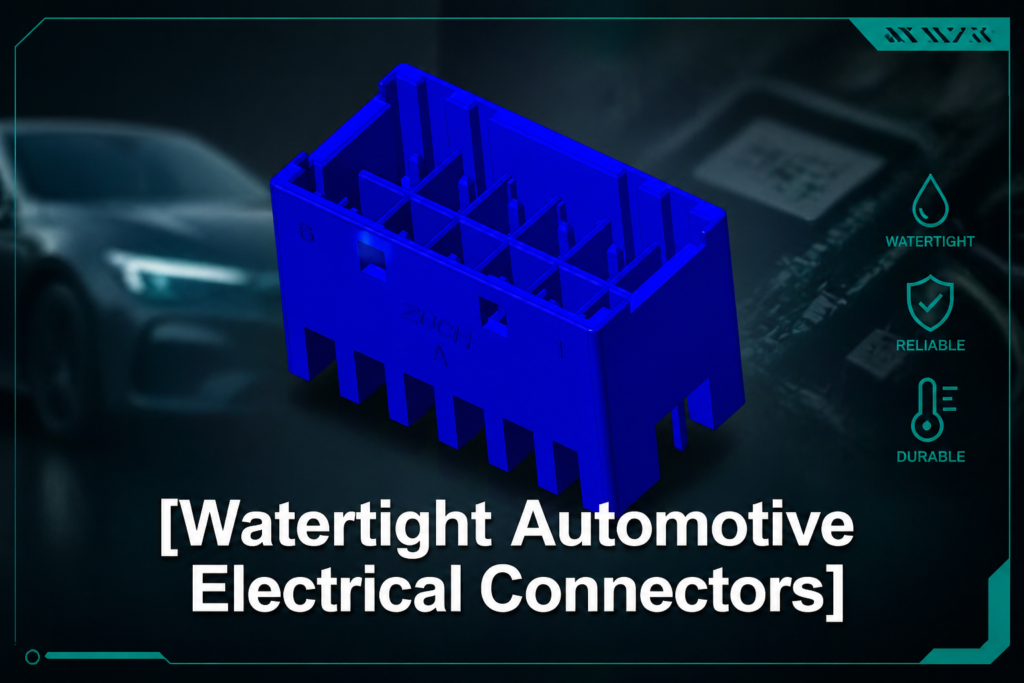
Examples of Watertight Automotive Electrical Connectors?
Watertight automotive electrical connectors are special parts designed to create and maintain a secure electrical connection while simultaneously preventing water, moisture, or other contaminants from damaging the connection. These connectors are essential in vehicles exposed to extreme weather, off-road conditions, or waterlogged environments. The watertight automotive electrical connectors have hard seals and are made from durable materials, ensuring that the connection is not compromised by dirt and moisture.
Typical places you will find watertight automotive electrical connectors include engine compartments, headlights, under chassis, or wherever there may be dampness or high humidity. The manufacturers of connectors generally use silicone, rubber, or thermoplastic materials to create an adequate protection level (usually rated IP67 or greater).
Watertight Connectors for Automotive Electrical Systems Overview
Watertight automotive electrical connectors are designed to meet stringent standards required for use in automobile applications, including:
- Sealing Technology: Watertight connectors utilize advanced gaskets, O-rings, and/or rubber seals to prevent the entry of dust and water.
- Durability: These connectors are designed to withstand the extreme temperatures, vibration, and mechanical stresses found in typical auto environments.
- Corrosion Resistance: The materials of construction for these connectors typically consist of aluminum alloy, stainless steel, and high-grade plastic materials to protect against corrosion caused by water, salt, and chemical exposure.
- Ease of Installation: Many watertight connectors have features such as snap locks or plug-and-play types of installations to facilitate rapid and secure installations.
- High Current Carrying Capacity: Watertight connectors can support a wide variety of voltage and current requirements; therefore, they can be utilized for supplying power to various types of components such as sensors, actuators, and lights.
How to Interpret Waterproof Ratings
The IP code helps a buyer compare defined ingress-protection test outcomes, but it is not a universal durability score. IEC 60529 classifies the protection provided by enclosures against access to hazardous parts, solid foreign objects, dust, and water. ISO 20653 addresses degrees of protection for electrical equipment in road vehicles. The applicable document, edition, test configuration, cable entry, mating state, and acceptance evidence should be stated on the supplier drawing or test report.
| Rating or target |
What it can indicate |
Important selection boundary |
Evidence to request |
| IP54 |
Limited dust ingress protection and protection from splashing water under the applicable test method |
Not an immersion rating; may be unsuitable for exposed underbody or washdown locations |
Applicable standard and edition, mated condition, cable and seal configuration |
| IP67 |
Dust-tight performance and temporary immersion protection under specified test conditions |
Does not automatically cover high-pressure cleaning, long-term immersion, chemicals, vibration, or thermal cycling |
Test report for the complete assembled connector and the exact wire range |
| IP68 |
Dust-tight performance and immersion conditions that are specified for the tested product |
Depth and duration are not interchangeable across products; obtain the declared conditions |
Declared depth, duration, water conditions, and tested assembly details |
| High-pressure/high-temperature water-jet level |
Resistance to a defined severe water-jet test when claimed under the cited standard |
Do not infer this performance from IP67 or IP68; confirm the exact code and method, including whether ISO 20653 applies |
Exact designation, nozzle/distance conditions, orientation, and complete test report |
Standards note: Neither IEC 60529 nor ISO 20653, by name alone, is a claim that a connector has been independently certified. They define classifications and test methods within different scopes. A defensible purchasing specification names the applicable standard, edition, IP designation, test conditions, and exact connector assembly; additional vehicle validation may still be needed.
Selecting the Seal Architecture
Ingress protection depends on every path through which water can travel. Interface seals protect the mated faces, individual wire seals or mats protect cable entries, cavity plugs close unused positions, and backshells or overmolding can add strain relief and environmental protection. None compensates for the wrong cable outside diameter, a damaged seal, an unseated terminal, or an incompletely engaged lock.
| Seal approach |
Useful when |
Main checks |
Common failure mode |
| Individual wire seals |
Different circuits or serviceable terminals need sealed cable entries |
Seal-to-wire insulation diameter, correct terminal, insertion depth, unused-cavity plugs |
Seal cut, rolled, omitted, or used outside its cable range |
| Mat or grommet seal |
Multiple circuits share a rear sealing element |
Housing compatibility, wire range for every cavity, compression, blanked positions |
One incorrect wire or empty cavity compromises the shared sealing system |
| Perimeter/interface seal |
The connector face must seal when fully mated |
Seal condition, latch or CPA engagement, alignment, mating cycles |
Pinched seal, contamination, partial mating, or damaged latch |
| Overmolded or potted termination |
Low serviceability is acceptable and cable exit protection is important |
Material compatibility, flex transition, repair strategy, supplier process controls |
Wicking, cracking, or stress concentration at the cable exit |
| Adhesive-lined heat-shrink splice |
A sealed inline wire repair is allowed by the service specification |
Wire size, crimp or solder process, heating profile, adhesive flow, strain relief |
Underheating, overheating, trapped contamination, poor mechanical support |
For procurement, define the installation zone and exposure first, then specify electrical load, wire range, temperature, vibration, fluid exposure, serviceability, and required validation. Review the supplier drawing and test evidence for the exact configuration rather than assuming that all products in a connector family share the same protection level.
Assembling Waterproof Electrical Connectors
Assembling waterproof connectors for automotive electrical systems involves an easy process; however, careful attention must be given when performing the assembly of the connector to ensure proper performance and reliability. The following is an example of a step-by-step process on how to assemble waterproof electrical connectors for automotive applications:
- Choose the Correct Connector: When selecting your watertight connector, make sure it meets your application’s specified characteristics, including wire size, pin configuration, current rating, and degree of water protection (i.e., IP rating).
- Prepare Wires: Strip the end of the insulation from every wire being terminated with a watertight connector.
- Crimp the Terminals: Use a tool to crimp terminals to exposed wires securely using the proper-sized crimping tool. A secure crimp connection maintains electrical flow, preventing the wire from slipping out.
- Insert the Wires: Ensure the crimped terminals are placed into the connector housing per pin configuration. Push firmly until the crimped terminal clicks, locking into the connector housing.
- Seal the Connection: If applicable, place the included weatherproof gasket, O-ring, or seal onto the male and female connectors. Apply dielectric grease to the male connector to create a good seal and improve electrical insulation.
- Test the Connector: After installation, test your connectors to ensure they are properly connected, have continuity between the two connectors, and are water-resistant before complete installation into your vehicle’s system.
By following these steps, you will ensure that your waterproof electrical connectors provide reliable, moisture-proof connections, thus increasing performance and safety.
Assembly qualification: Follow the connector manufacturer’s tooling, strip-length, crimp-height, seal-handling, grease, and inspection instructions. Grease is not a substitute for a designed interface seal and does not create an IP rating. For workmanship criteria, IPC/WHMA-A-620 can provide assembly requirements and acceptance criteria for cable and wire harness assemblies, but it is not an ingress-protection certification for a connector.
Before releasing an assembly, confirm terminal retention, complete lock engagement, correct cavity plugs, seal condition, electrical continuity, and the validation required by the vehicle program. If a terminal must be removed, use the correct service method described in How to Depin Automotive Connector; improvised tools can damage the retention feature or seal surface. The companion guide on How to Crimp Automotive Connectors explains why tooling and terminal-wire compatibility matter.
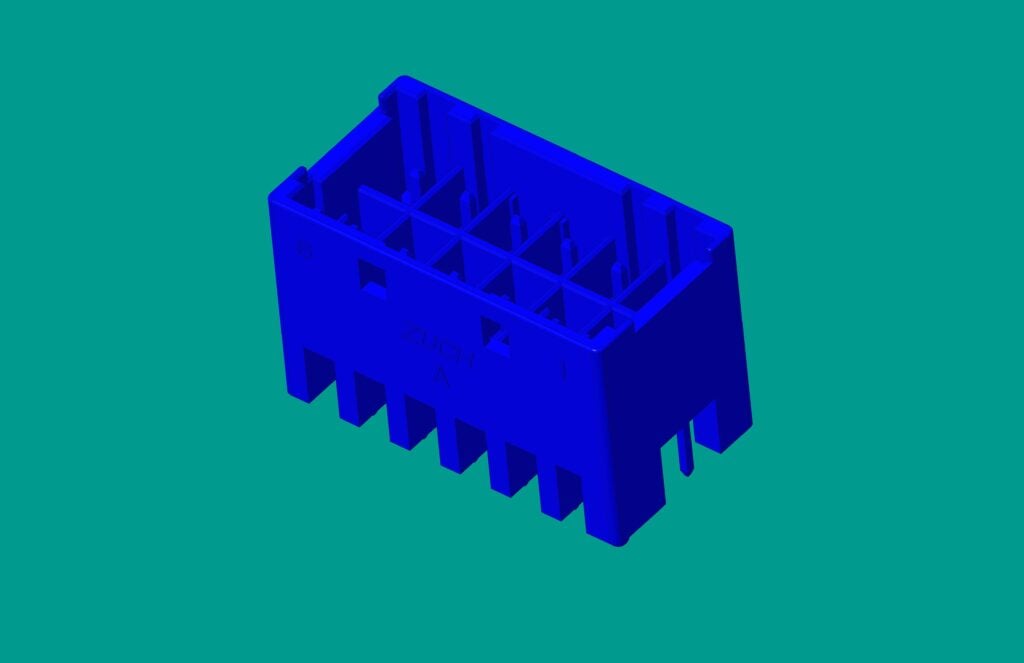
Choosing the Right Watertight Automotive Electrical Connector for Your Application
Use the following information to determine the proper connector for your needs:
- Application: Where will the connector be located in your vehicle (engine compartment, undercarriage, or other high-moisture area)?
- IP Rating: Choose connectors rated IP67 or better for optimal protection against water and dust.
- Environmental Conditions: Account for vibrations, temperature, and exposure to chemicals.
- Connector Type and Size: Find an appropriate connector size and pin configuration that meets the specifications of the electrical system’s requirements.
- Reputable Brands: Look at companies that manufacture watertight connectors like TE Connectivity or Delphi to ensure you receive quality products.
By fully understanding your requirements and specifications, you should be able to select a connector that guarantees reliability regardless of its use.
Selection boundary: Treat “IP67 or better” as a starting point only when the location actually requires it. “Better” is not a single ladder: immersion, water-jet exposure, vibration, temperature cycling, chemical resistance, current derating, and service life require separate evidence. ZUCH can support connector selection discussions, but buyers should approve a part only against a documented application specification and the supplier’s data for the exact configuration. For sourcing questions, see Where to Buy Automotive Electrical Connectors.
FAQs about Watertight Automotive Electrical Connectors
Q: Can I make a standard automotive electrical connector waterproof?
A: While it is possible to create a watertight seal by using external sealants or electrical tape, they do not offer nearly as much protection as professionally designed watertight connectors.
Q: Can I reuse my watertight connector?
A: Most watertight connectors can be reused, but check the specific model for reuse guidance. Inspect seals for damage prior to using again.
Q: How do I know if a connector is truly watertight?
A: Submerging the assembled connector in water and observing if there are any air bubbles is an option. Alternatively, use an industry-standard IP testing device to measure the water protection level.
Q: Can these connectors handle high-current applications?
A: Yes, but each connector will have an amp rating that must match the amperage for the application for which they will be used.
Q: Where can I purchase watertight automotive electrical connectors?
A: You can purchase from an online retailer, from the manufacturer directly, or from an authorized distributor of automotive electrical components.
Are there any waterproof automotive electrical connectors available?
Yes. Sealed automotive connector systems are available with interface seals, wire seals, cavity plugs, and other features intended to limit water and contaminant ingress. Verify the protection claim for the fully assembled, mated connector with the specified wires and accessories.
What is the standard rating for waterproof connectors?
There is no single rating that is correct for every waterproof connector or vehicle location. Specify a protection level based on the real exposure, then identify the applicable IEC 60529 or ISO 20653 method and request evidence for the exact assembly; also assess conditions outside the IP test scope.
What is an IP67 connector?
An IP67 connector is represented as having dust-tight protection at the first digit and temporary-immersion protection at the second digit when tested in the stated configuration under the applicable method. The designation does not automatically establish pressure-wash resistance, indefinite submersion, or resistance to automotive fluids, vibration, and temperature cycling.
Are solder seal connectors waterproof?
A correctly selected and installed solder-seal or adhesive-lined heat-shrink splice can provide moisture resistance, but the label alone does not prove a particular IP level. Confirm the wire-size range, heating process, strain relief, allowed repair method, and any test evidence for the finished splice.
How to choose the right electrical connector?
Start with circuit voltage and current, conductor size, pin count, keying, and mating requirements. Then check temperature, vibration, water and dust exposure, chemicals, sealing architecture, tooling, serviceability, and validation evidence for the exact part and assembled condition.
What are the best electrical connectors for automotive?
The best connector is the one validated for the specific circuit, vehicle zone, harness process, and service plan—not simply the option with the highest headline IP code. Compare supplier drawings and test reports, and confirm terminal, seal, housing, wire, tooling, and mating compatibility as one system.
Investing in high-quality watertight automotive electrical connectors will enhance the reliability and safety of your vehicle’s performance in the most difficult automotive environments. Selecting the connector that meets the unique requirements of each vehicle and following correct assembly procedures will maximize the performance and endurance of your vehicle’s electrical systems. Whether you are an automotive professional or a hobbyist, choosing the correct connectors for your application will provide maximum durability and efficiency for all of your vehicle’s electrical systems.
References and Further Reading
Final takeaway: Specify the environment, sealing system, assembly process, and evidence together; an IP code alone cannot make a connector reliable in every vehicle location.
To discuss a documented connector configuration for your harness and operating conditions, review ZUCH’s automotive connector products and contact the team with your circuit, wire, environmental, and validation requirements.
 Zhejiang ZUCH Technology Co., Ltd.