Waterproof Rectangular Connector Guide
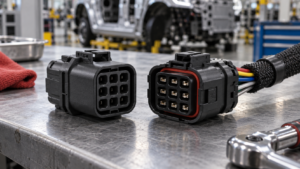
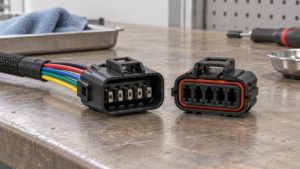
Many industries rely on rectangular connectors to provide a reliable electrical connection even when the connection is exposed to harsh environmental conditions. For example, a connector that provides secure electrical connectivity when exposed to moisture or dirt is generally considered to be a waterproof rectangular connector. As technology continues to improve, waterproof rectangular connectors have become more common in all types of applications (automotive, marine, industrial, outdoor) where a robust electrical connection is critical. This guide will provide information regarding the definition of a waterproof rectangular connector, applications for waterproof rectangular connectors, tips for selecting a waterproof rectangular connector in practice, and significant market trends related to waterproof rectangular connectors.
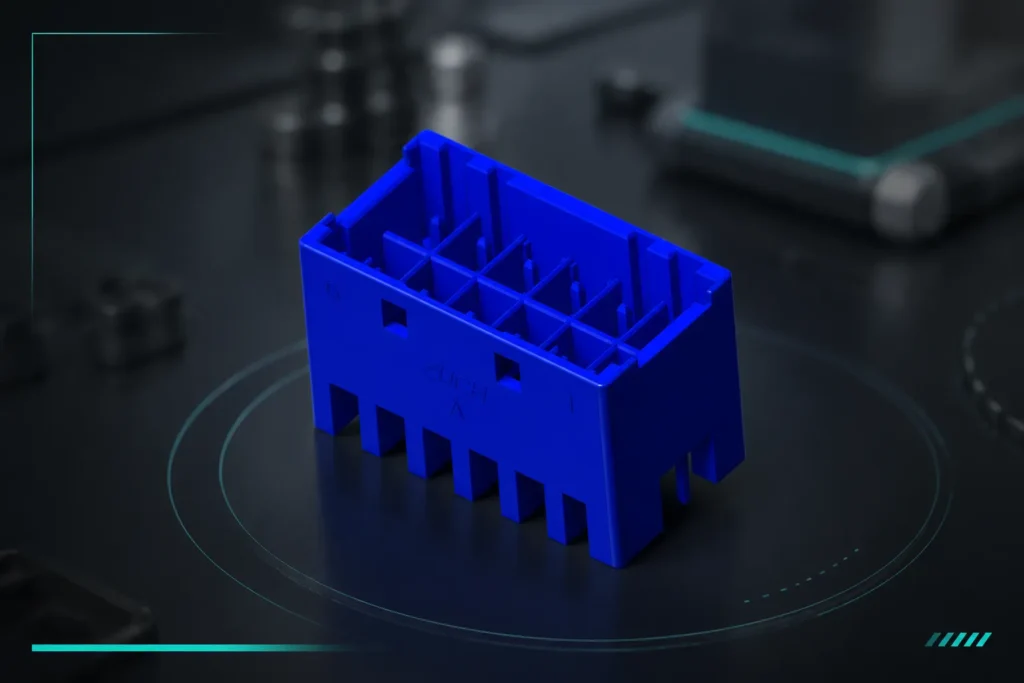
For a related technical topic, see Everything You Need to Know About Rectangular Multi Pin Connector.
What Makes a Rectangular Connector Resistant to Ingress
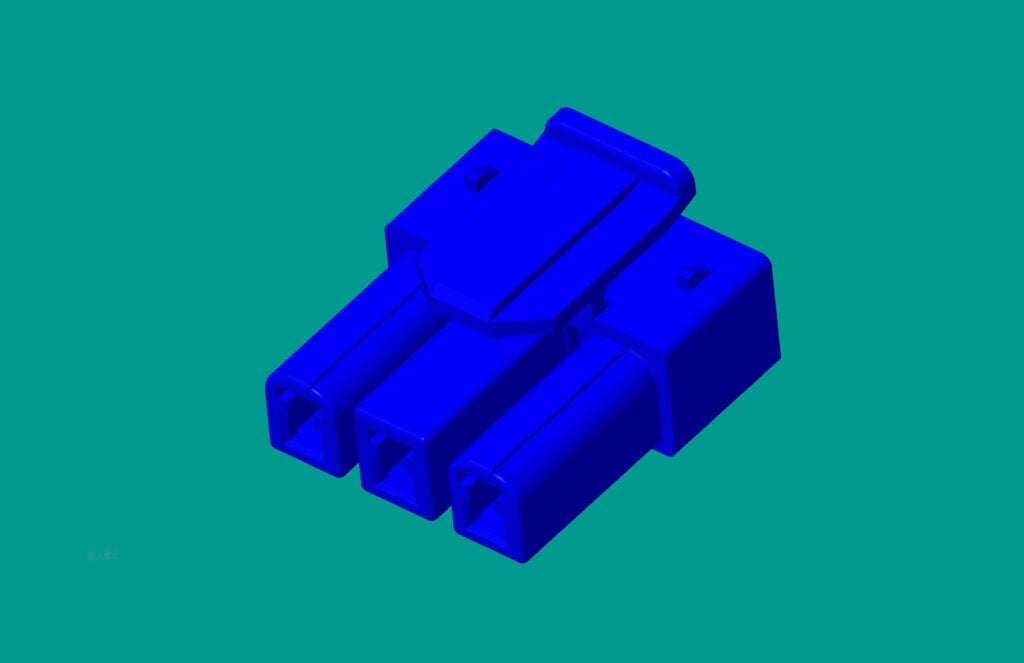
These connectors are made to protect electrical connections against water entering through the connector or other environmental conditions. These connectors are manufactured with improved sealing methods — they are fitted with gaskets, O-rings or potting material (waterproof barrier). They can be found in many applications exposed to rain, humidity, snow or submersion. Because of their unique shape, waterproof rectangular connectors are very popular due to their compact and space-saving design for use in high pin density applications.
When a Rectangular Interface Is the Better Fit
Both types of connectors (rectangular/circular) have applications, but in specific cases rectangular connectors provide unique benefits such as:
| Feature |
Rectangular Connectors |
Circular Connectors |
| Pin Density |
Higher pin count in a smaller footprint |
More challenging to achieve high pin density |
| Mounting Options |
Easier integration into compact spaces |
Generally bulkier |
| Ease of Design |
Uniform shapes for complex designs |
Primarily used for simpler system designs |
Rectangular connectors are usually preferred over circular connectors when it comes to applications that can be fixed (such as in industrial environments), have a high density, or are for non-moving or non-rotating equipment.
Read the IP Code as a Test Scope
To find out if a connector offers waterproofing, check the Ingress Protection (IP) rating. The IP code describes a device’s ability to protect from solids (e.g., dust) and liquids (e.g., water).
| IP Rating |
Protection Level |
| IP65 |
Dust-tight; resistant to water sprays |
| IP67 |
Dust-tight; can withstand submersion up to 1 meter for 30 minutes |
| IP68 |
Dust-tight; suitable for long-term submersion |
| IP69K |
Dust-tight; resistant to high-pressure water jets |
For devices that will be subjected to long-term contact with water or pressure washing, the best connector choices are IP68 or IP69K connectors.
Match Housing and Seal Materials to the Environment
A waterproof rectangular connector’s durability and performance depends a lot on the material used for the connector. Manufacturers typically use one or more of these materials for manufacturing their connectors:
- Thermoplastics Light, and able to withstand corrosion by UV light as well as chemical exposure. Applications where the design will be used outdoors and/or in marine environments.
- Metal Alloys Used commonly for increased durability and protection. Mechanical Stress is found naturally in most types of industrial facilities.
- Elastomers Utilized to seal components to provide capacity for high flexibility and to withstand environmental forces: Water, temperature, etc.
Applications That Need a Sealed Rectangular Interface
Thanks to their robust designs these connectors are found in numerous applications such as:
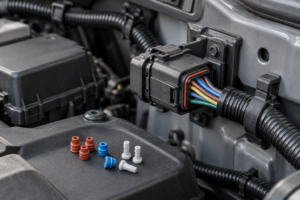
Rectangular connectors that are waterproof are very important components for wiring harnesses, ECUs, and engine sensors.
Used for navigation systems onboard electronics and underwater exploration equipment.
Deployed in solar panel systems and wind turbine control units to withstand outdoor conditions.
Designed to handle oil chemicals and water exposure in manufacturing plants.
To safeguard sensitive electronic parts from wiping products and substances, sterile environments need to be created in order for them to remain dry.
A Selection Workflow for Waterproof Rectangular Connectors
There are several factors you’ll want to take into account when picking out a waterproof rectangular connector to ensure compatibility with your application.
1. Electrical Requirements
Determine the voltage current and signal types necessary for your equipment.
2. IP Rating
Choose a connector with a suitable IP rating based on the expected exposure to water or dust.
3. Environmental Conditions
Assess the working temperature humidity levels UV exposure and chemical resistance requirements.
4. Connector Size
Consider the available space for mounting the connector. Rectangular connectors are ideal for compact setups.
5. Ease of Assembly
Select connectors that provide quick and reliable mating and unmating operations especially if frequent maintenance is required.
What Current Evidence Can—and Cannot—Say About Demand
Demand for sealed rectangular connectors is influenced by electrification, automation, outdoor equipment and higher-density harnesses, but a broad market label does not establish demand for a particular connector family. Public forecasts use different product boundaries, regions and base years, so a quoted market number should be tied to its publisher, publication date, scope and methodology before it is used in a sourcing decision.
For a project decision, use current RFQs, approved drawings, supplier capacity evidence and the application’s environmental requirements. These sources are more actionable than an undated market estimate when selecting a waterproof rectangular connector.
Questions Engineers Ask About Waterproof Rectangular Connectors
1. Are waterproof rectangular connectors more expensive than standard connectors
The greater price of waterproof enclosures is usually caused by the extra materials used in their construction, such as stronger sealants that are designed to withstand the elements and/or other contaminants. Despite this, they are still considered a more affordable option compared to non-waterproof versions when considering the durability, reliability, and long-term performance of waterproof enclosures used in applications where they will be subjected to harsh conditions.
2. How can I test the waterproofness of a connector
You should check for water ingress after submerging the connector in accordance with the manufacturer’s guidance for performing ingress protection (IP) tests, which follow standard procedures for evaluating the connector’s ability to maintain its waterproof ratings (e.g., IP67 or IP68).
3. Can waterproof rectangular connectors handle extreme temperatures
Many rectangular connectors designed for waterproof use are created with a material that is made to withstand both hot and cold environments. Be sure to check the manufacturer’s specifications before using a rectangular connector to determine what temperature range it was designed to operate at.
4. How do I maintain waterproof rectangular connectors
Inspect all seals and gaskets regularly to identify potential problems early. Damaged components should be replaced or repaired as required. Use compatible tools when assembling and disassembling connectors; using the wrong type of tool can cause damage to the connector.
5. Can these connectors withstand other environmental hazards like chemicals
There are a variety of waterproof connectors that will work well against chemicals and UV radiation. For more information, look at the specific product details or contact an authorized distributor.
6. Which industries benefit the most from waterproof rectangular connectors
Various industries, including; automotive, aerospace, marine, renewable energy, telecommunication and healthcare are supported by waterproof rectangular connectors because components are often subjected to water, dust, and extreme temperatures in these industries.
As technology becomes increasingly relied upon across many applications, especially those associated with hostile conditions, the need for rectangular waterproof connectors is becoming more important than ever before. Waterproof rectangular connectors utilize both quality materials and design to provide reliable sealing performance so that round connectors will never fail to operate properly across such applications as automotive, marine, renewable energy and a host of others. By evaluating all of the following variables, including but not limited to, their IP rating, the materials used to construct them and what application they are intended to be used for can allow you to properly select the correct connector as needed. As industrial automation, electrification, and IOT (Internet of Things) continue to evolve, The importance and relevance of rectangular waterproof connectors will be significant when constructing reliable, durable systems as a whole.
Does IP67 automatically mean IP69K?
No. IP67 and IP69K describe different test exposures. A connector must have evidence for the exact IP code and complete mated configuration required by the application; one test result should not be presented as proof of another.
Does an IP rating cover the cable entry and unused cavities?
Only when those parts are included in the tested configuration or the supplier explicitly defines the scope. Cable seals, cavity plugs, backshells, mounting orientation and mating components can create separate ingress paths and must be included in the installation review.
References
 Zhejiang ZUCH Technology Co., Ltd.