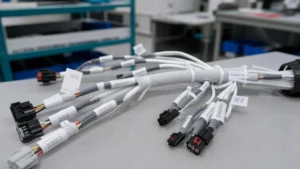
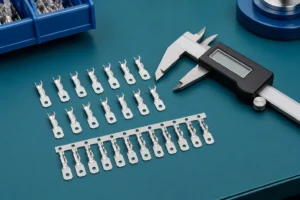
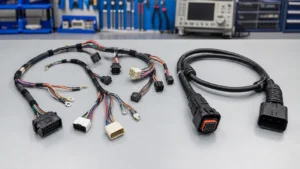
Contact retention is the ability of a female terminal to remain in its intended housing position after insertion and during the specified handling or service conditions. Use the controlled terminal, mating component, housing, and application requirements before making a sourcing or release decision.
Contents
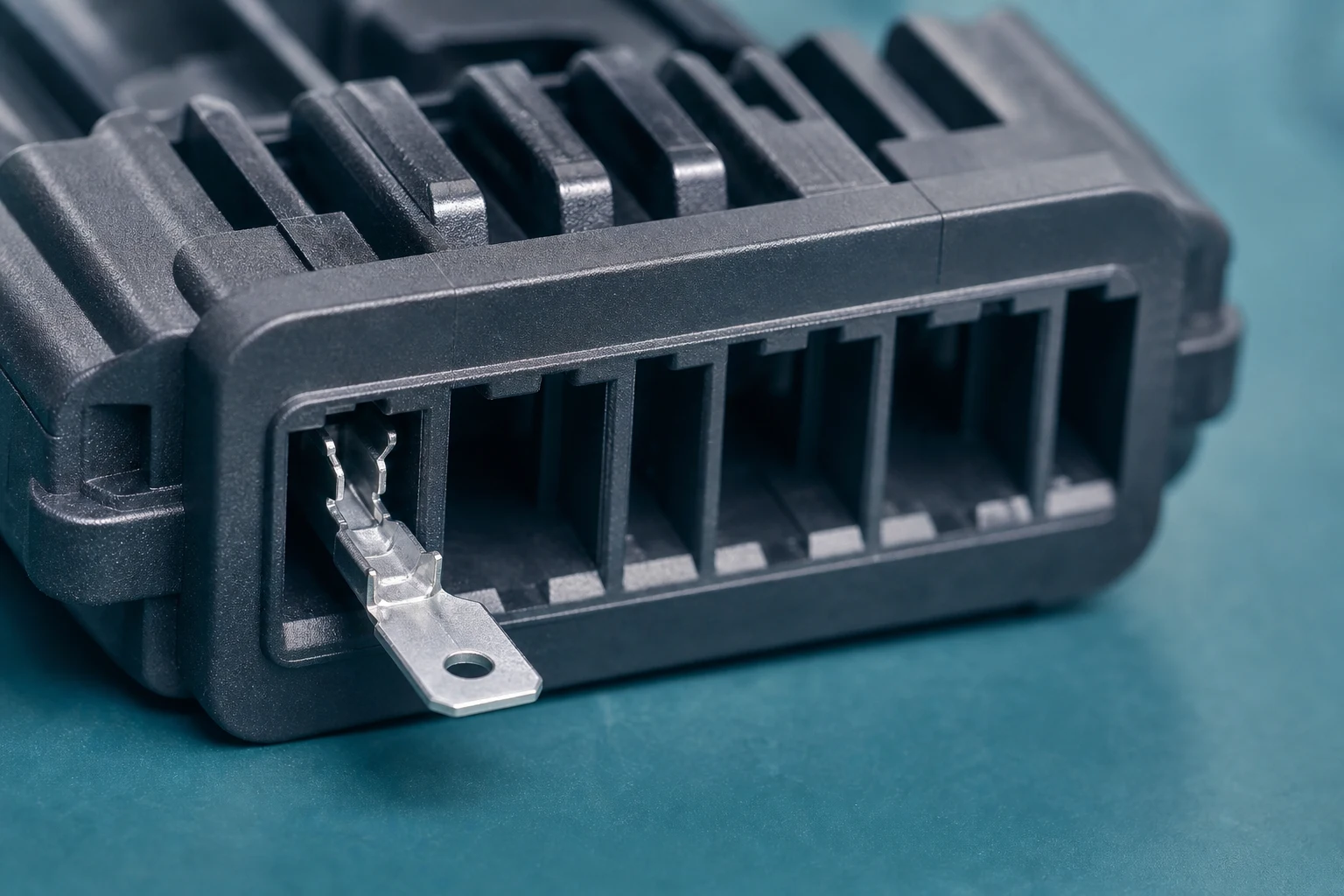
Stable retention depends on a female terminal remaining in its intended housing position after insertion and during the specified handling or service conditions. The outcome involves the contact, cavity geometry, primary lance, insertion path, wire dress, secondary retention where used, and the programme acceptance plan.
| Review area |
Control question |
Why it matters |
| Matched interface |
Which terminal, mate, and housing are specified? |
Prevents a nominal-size assumption from becoming a release decision |
| Application envelope |
What are the routing, environment, and handling conditions? |
Reveals loads that a static component comparison misses |
| Acceptance evidence |
Which inspection or validation evidence is required? |
Aligns engineering and sourcing expectations |
Part 2. Where does back-out usually begin?
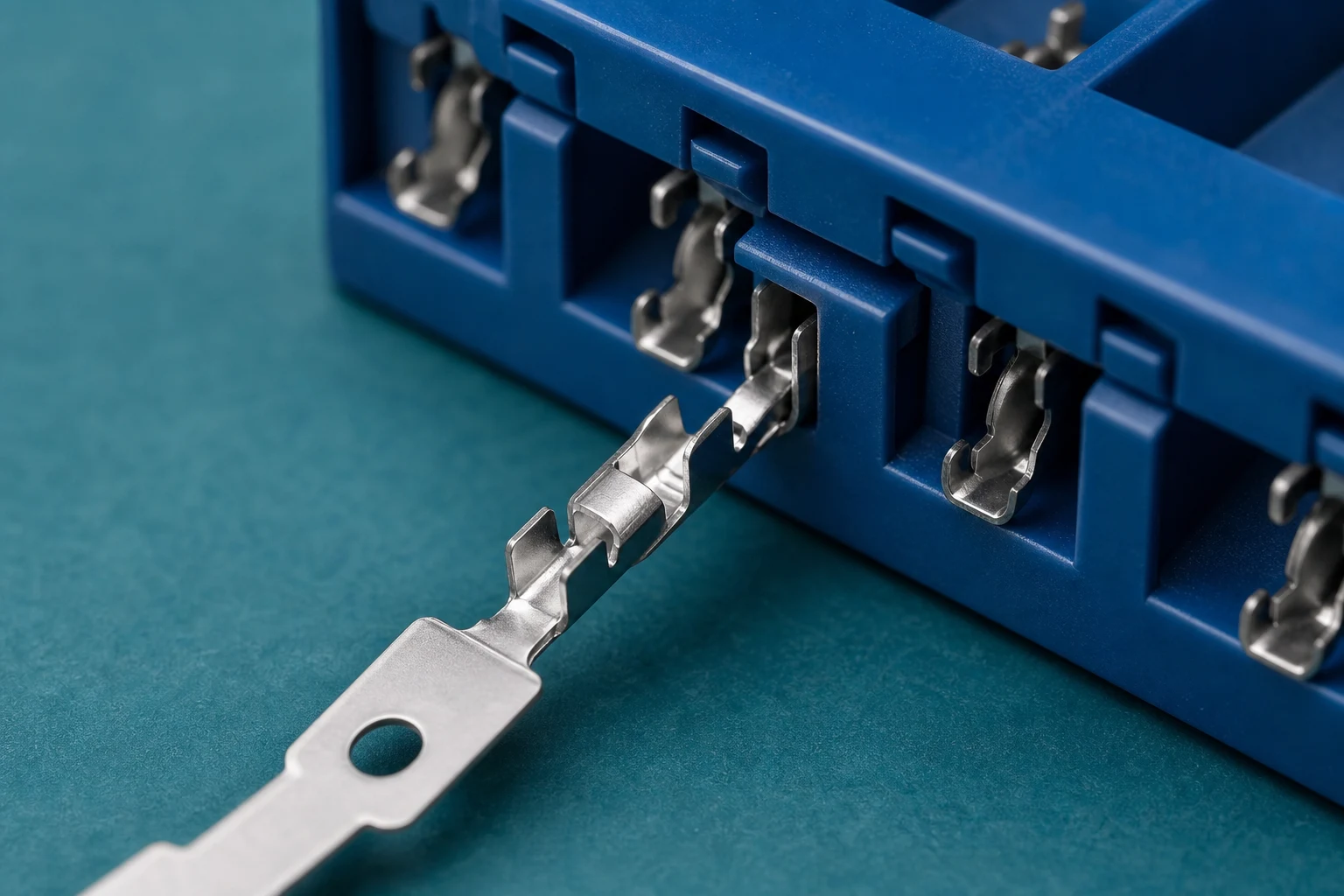
Back-out can begin when the terminal is not fully inserted, when a lance has been damaged or has not engaged its housing feature, or when the contact and cavity are not the intended pair. A terminal that appears present at the rear of a connector may still be short of its intended locked position, so visual cues must be tied to the controlled design.
Part 3. How do primary lances and housing windows work together?
A primary lance normally engages a defined feature in the housing to resist rearward movement. The engagement depends on the terminal orientation, the shape and condition of the lance, the cavity window, and insertion depth. Treat the terminal and housing as a matched interface; a general terminal family name does not prove compatibility.
Part 4. Why can wire dress create a retention problem?
A sharply bent wire, strained rear seal, tight bundle, or unsupported service loop can transmit force to the terminal after insertion. Review wire exit direction, bend space, seal position, clamp locations, and connector handling so that installation does not load the retention feature beyond its intended role.
| RFQ input |
What to state |
Decision supported |
| Component set |
Terminal, mate, housing, and orientation |
Interface compatibility review |
| Geometry |
Controlled dimensions and clearances |
Insertion and engagement review |
| Application |
Wire, routing, environment, and service conditions |
Retention and protection review |
| Evidence |
Samples, inspection, and acceptance plan |
Programme release review |
Part 5. When is secondary retention essential?
Secondary retention is especially relevant when the specified connector system uses a separate assurance feature to help confirm or reinforce terminal position. Whether it is essential depends on the selected housing, contact family, environment, and controlled application requirements. It should not be added as a generic substitute for correct primary-lance engagement.
Important: General component guidance does not approve a completed connection. This is a source-note application of the third-party references below; use the controlled drawing and programme acceptance plan.
Part 6. How should insertion and retention be verified?
Define the insertion method, allowable force, visual or tactile confirmation, cavity inspection, and any retention check required by the programme. Record what happens when a contact is misoriented, damaged, or fails to reach its seated position instead of relying on ad hoc rework.
Part 7. Which ZUCH route supports component discovery?
For a product recommendation limited to component discovery, begin with ZUCH’s Female Terminal and the live product catalogue. These routes can help identify terminal families for a controlled inquiry; they do not prove that a terminal is approved for a finished wire harness, connector assembly, environment, or programme.
RFQ inputs
- Controlled terminal, mating contact, and housing references.
- Drawing revision, dimensions, wire definition, and assembly orientation.
- Routing, environment, service, and mechanical constraints.
- Required samples, inspection or validation evidence, acceptance criteria, and records.
- Change-control and nonconformance expectations.
Fit Boundary
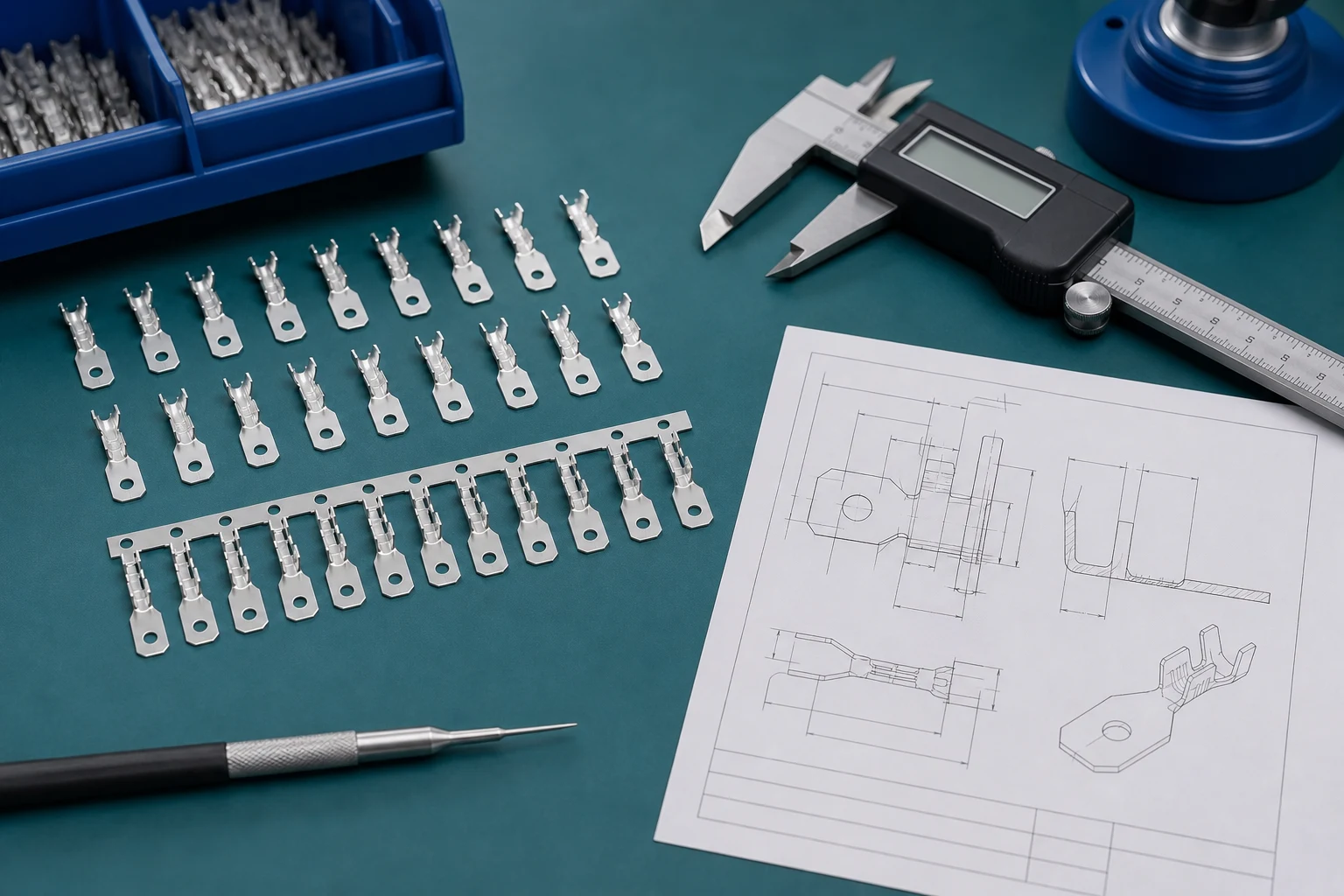
This guide supports technical selection and sourcing discussion. It cannot replace programme-specific validation, compliance review, or an engineering approval record. Use ZUCH’s sample request route or contact page for controlled component documentation and samples.
FAQ
What is terminal back-out?
It is rearward movement of a terminal from its intended housing position, often caused by incomplete insertion, damage, mismatch, or loading from the wire or bundle.
Can a female terminal lock without looking fully seated?
A correct lock position must be confirmed against the controlled housing and terminal design. Appearance alone may not prove full engagement.
What is a primary lance?
It is a retention feature on the contact that engages a mating feature in the housing to resist withdrawal after insertion.
Does a secondary lock replace the primary lance?
No. A secondary feature works within a connector system that still requires correct contact selection, orientation, insertion, and primary retention.
Why does wire bend radius matter near a connector?
A tight bend or strained bundle can apply rearward or side load to the contact, reducing the margin for stable retention.
How can a buyer specify retention checks?
Provide the controlled terminal and housing references, insertion method, inspection criteria, any required retention method, records, and the nonconformance route.
Can a damaged lance be repaired in place?
Use only the programme-approved disposition. Uncontrolled reshaping can change engagement and should not be assumed acceptable.
References
 Zhejiang ZUCH Technology Co., Ltd.