Wiring Harness vs Cable Assembly: Differences That Affect Your RFQ
A wiring harness and a cable assembly are quoted differently because each construction carries its own drawing, protection and process expectations. Name the construction you actually need before you request prices.
Contents
What separates a wiring harness from a cable assembly?
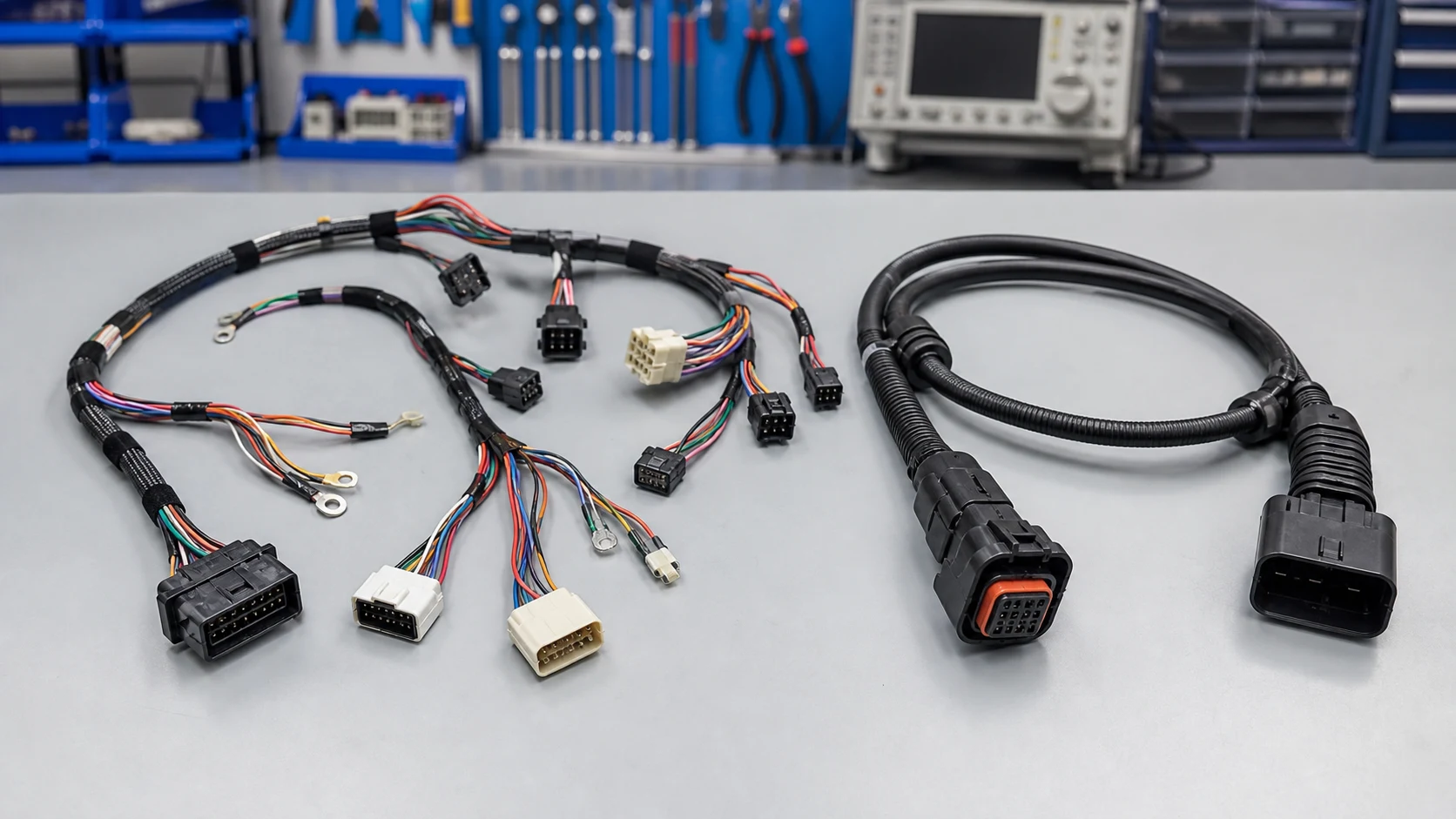
A wiring harness is typically an open bundle of discrete wires that distributes several circuits, while a cable assembly usually builds on a jacketed or shielded cable with terminated ends. Treat the terms as different constructions, not interchangeable labels, because suppliers price them against different processes.
| RFQ element |
Wiring harness emphasis |
Cable assembly emphasis |
| Core construction |
Discrete wires bundled and branched |
Jacketed or shielded cable with terminated ends |
| Drawing focus |
Circuit list, branch geometry, identification |
Cable specification, shield and jacket treatment |
| Typical protection |
Sleeves, wraps, clips and grommets |
Jacket, overmould, sealing at terminations |
Why does the distinction change your RFQ package?
Quoting teams read the construction to decide which materials, fixtures, labour steps and inspections apply. Send the wrong construction name and you receive prices built on the wrong process assumptions, which makes later comparison and negotiation unreliable.
List every circuit, wire specification, length and termination for a harness, together with branch geometry and identification. For a cable assembly, define the cable construction, shield treatment, jacket, connector interfaces and any sealing requirement in the controlled drawing. For a related technical reference, see Wire Harness Branch Design: Choosing Splices, Junctions and Breakouts. For a related technical reference, see Wire Harness Electrical Testing: Continuity, Hi-Pot and Contact Resistance Explained.
How do protection and routing choices drive cost?
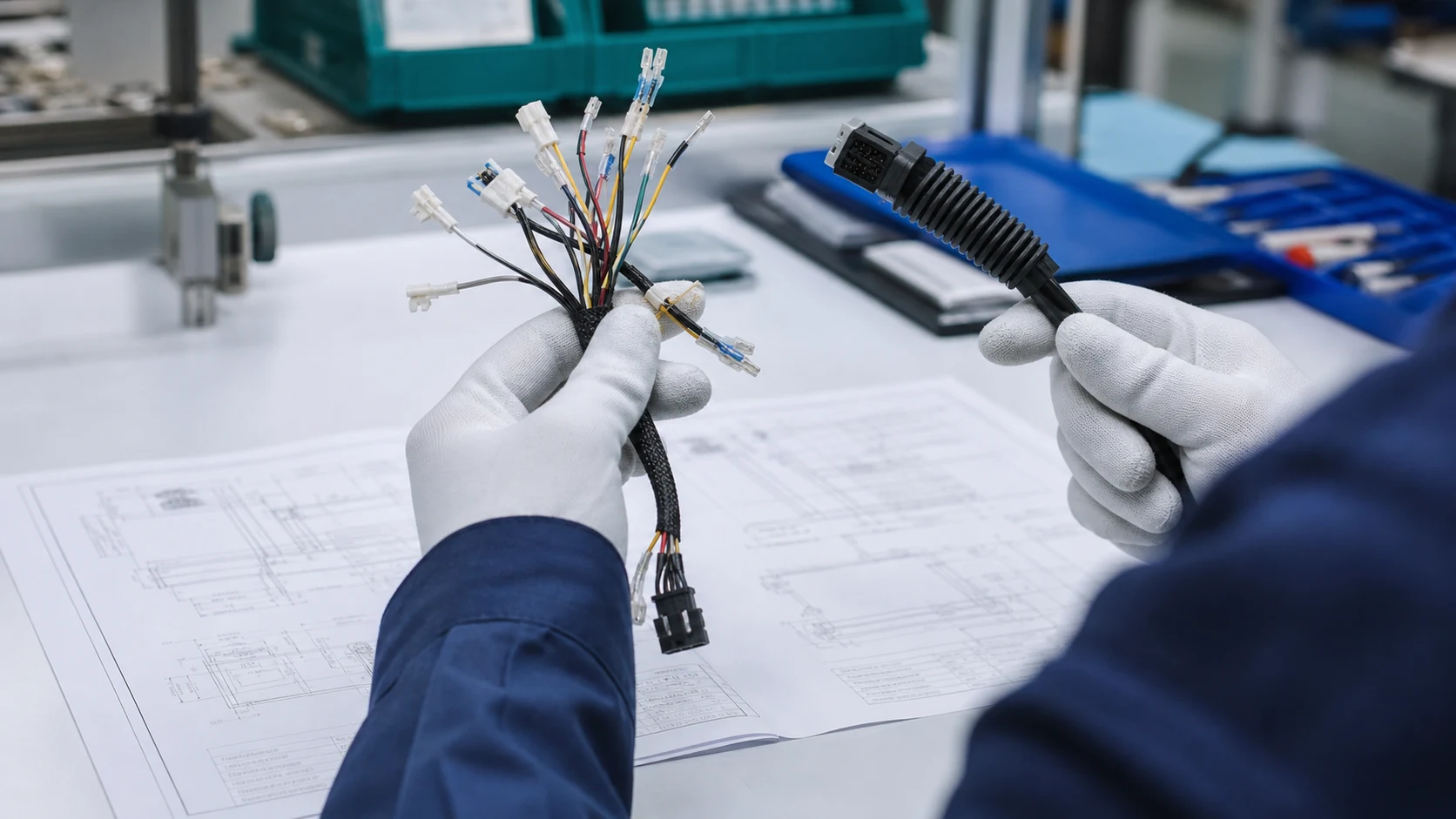
Sleeving, tape wraps, conduits, overmoulds and jacket choices each add material and process steps. Review the operating environment and routing envelope first, then specify only the protection the application actually needs.
| Cost driver |
What raises it |
Buyer input that controls it |
| Labour content |
Branch count, manual routing steps |
Simplified architecture and clear build notes |
| Materials |
Protection layers, connector families |
Environment-based protection choices |
| Test time |
Circuit count and acceptance scope |
A defined, application-based test plan |
Where do testing and acceptance expectations diverge?
State the electrical checks, dimensional checks and workmanship criteria that apply to your construction, with acceptance limits and records. Do not assume a generic test list transfers between a harness and a jacketed assembly; each drawing should carry its own plan.
Important: General guidance cannot approve a specific design or lot. This is a source-note application of the IPC and TE Connectivity references listed below; apply it through your controlled drawing and acceptance plan.
How should buyers structure a comparable quotation request?
Issue one controlled drawing revision, one quantity structure and one delivery assumption to every bidder. Ask each supplier to confirm construction, materials, test scope and packaging in writing so the quotes describe the same product.
Which ZUCH route supports a harness or assembly RFQ?
Use ZUCH’s contact route and the live product catalogue to identify relevant connector, terminal or housing component families. These are discovery routes only and do not demonstrate that a specific configuration is approved for your application.
RFQ inputs
- Controlled drawing revision, construction type and interface definitions.
- Wire or cable specifications, protection and identification requirements.
- Quantities, delivery assumptions, packaging and labeling expectations.
- Required tests, acceptance criteria, records and change-control rules.
Fit Boundary
This guide supports engineering and sourcing discussion; it cannot replace programme-specific validation, market requirements, or an approval record. Use ZUCH’s sample request route or the same contact route above for controlled component documentation and samples.

Make the RFQ describe the construction instead of relying on the name
“Wiring harness” and “cable assembly” are used differently across industries, so the label alone is not a controlled requirement. A comparable RFQ should describe the conductors, branches, connectors, protection, routing, labels, tests, quantities, and acceptance records that the supplier must quote and build.
| RFQ field |
Questions to answer |
Why it prevents quote drift |
| Topology |
Single cable, branched harness, junctions, breakouts, or overmolded sections? |
Suppliers do not price different constructions under one name |
| Interfaces |
Connector/contact part numbers, pinout, keying, orientation and mating parts |
Prevents non-mating or mirrored samples |
| Protection |
Shield, braid, conduit, grommet, strain relief, sealing or backshell? |
Protection changes routing, assembly time and validation scope |
| Release |
Tests, workmanship class, labels, packaging, sample approval and traceability |
Turns a quotation into a releasable purchase basis |
FAQ
Does the name wiring harness or cable assembly matter in an RFQ?
The name provides context, but it is not enough to quote or build consistently. Define the actual topology, interfaces, protection, dimensions, tests, labels and acceptance criteria.
Which construction is better for harsh environments?
There is no universal winner. Select sealing, shielding, jacket, strain relief and connector features from the actual exposure, movement, temperature, chemicals and service requirements.
Can one supplier quote both a harness and a cable assembly?
Yes, if the supplier receives the same controlled inputs and clearly separates the proposed construction, tooling, tests, packaging and assumptions for each option.
How many quotes should a buyer collect?
The useful comparison is based on comparable scope and evidence, not an arbitrary count. First make the drawing, BOM, acceptance plan and substitution rules consistent, then compare qualified suppliers.
What is the difference between a wiring harness and a cable assembly?
A harness is usually an open bundle of discrete circuits, while a cable assembly is built on a jacketed or shielded cable with terminated ends; the constructions carry different drawing and process expectations.
Does the name I use in an RFQ really matter?
Yes. Suppliers price materials, labour and testing from the construction they read, so the wrong term produces quotes that are hard to compare.
Which construction is better for harsh environments?
Neither is automatically better; the answer depends on routing, abrasion, moisture and service exposure defined in your application review.
What drawing details prevent quote misunderstandings?
Circuit or cable definitions, terminations, lengths and tolerances, protection, identification, and the test plan with acceptance limits.
Can one supplier quote both constructions?
Many suppliers handle both, but capability must be confirmed for your specific construction, volumes and quality requirements rather than assumed.
How many quotes should a buyer collect?
Enough to compare process assumptions, usually from a shortlist that received the identical controlled drawing package.
What belongs in a harness or assembly RFQ checklist?
Include the drawing revision, construction type, materials, protection, tests, quantities, packaging, records and change-control expectations.
Key takeaway
Use “harness” or “cable assembly” as a search term, not as the specification. The RFQ becomes comparable only when topology, interfaces, protection, routing, acceptance, and traceability are fixed or clearly marked as open.
References
 Zhejiang ZUCH Technology Co., Ltd.