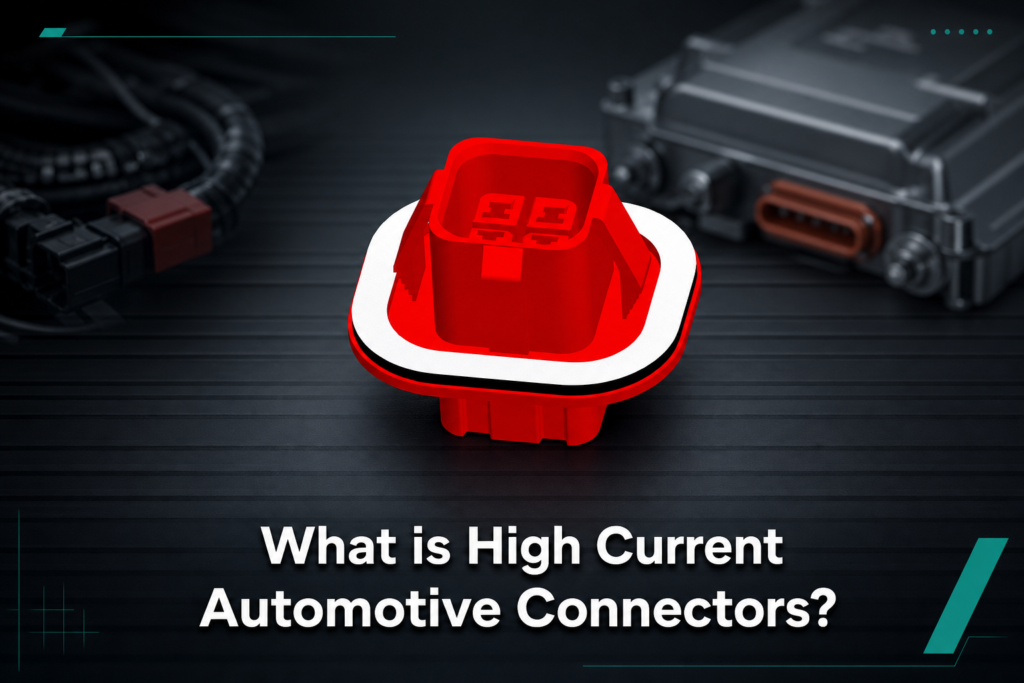
What is High Current Automotive Connectors?
As a result of significant growth in the use of reliable and efficient electrical systems in today’s developing automotive market, the need for automotive high current connectors has also increased. The demand for automotive high current connectors has increased dramatically due to the growing use of advanced technologies such as electric vehicles (EVs), autonomous driving systems, and infotainment systems in the modern automotive industry. Therefore, it is essential for you to understand what automotive high current connectors are and why they are crucial for your automotive production needs. For a related technical reference, see Automotive Connectors Market.
High Current Automotive Connector Overview
Automotive high current connectors are specific types of connectors that allow for larger amounts of electrical current to pass through vehicles’ electrical systems. These connectors are engineered to deliver the highest possible performance for electrical systems, even with demanding power requirements. Unlike traditional connectors that are only rated for lower electrical currents, automotive high current connectors are designed to provide a low-temperature, safe, and efficient connection for transferring electrical power.
For example, automotive high current connectors are commonly found in electric vehicle (EV) battery systems and hybrid car battery systems, as well as motor starter and alternator systems, and advanced vehicle infotainment systems. Because of their rugged design, these connectors are built to withstand even the harshest environments, such as high temperatures, shock, vibration, and exposure to severe environmental elements.
Features of High Current Automotive Connectors
Manufacturers take into account the following main criteria when choosing a high current automotive connector, which is important for both performance and durability:
- High Current Rating: High current connectors are available with high current ratings ranging from 50A to over 500A, depending on the application.
- Heat Resistance: These connectors are manufactured using durable plastics and tough metals, which allow them to dissipate heat and prevent thermal damage.
- Compactness: Connectors are designed to meet space constraints and to fit into compact vehicle designs, minimizing wasted space.
- Sealing and Protection: High current automotive connectors have seals and covers to keep out moisture, dirt, and debris, preventing damage to the connector.
- Vibration Resistance: Most high current automotive connectors have locking features that keep them securely connected, even in high-vibration environments such as engine compartments.
High Current Automotive Connector Applications
High-current automotive connectors are used in numerous automotive applications, including:
Battery Management Systems: In electric and hybrid vehicles, these connectors allow for power transfer between the battery and the electric motor or control unit. Given the high voltage and current requirements, a reliable connection is crucial for minimizing power losses.
Starter Motors and Alternators: High current connectors are typically found in vehicles with traditional combustion engines, delivering sufficient power to start engines and charge vehicle batteries.
Electric Vehicle Chargers: High current connectors are integral to EV charging equipment, including on-board chargers and fast-charging stations, ensuring efficient energy transfer for optimal electric vehicle performance.
Advanced Safety and Infotainment Systems: Modern vehicles feature advanced driver-assistance systems (ADAS) and high-performance audio and infotainment systems that rely on stable power connections.
Benefits of Using High Current Automotive Connectors
By using high current connectors, automotive manufacturers can achieve high-efficiency power management, offering several benefits:
1. Increased Safety: High current connectors minimize the risk of overheating or short circuits, boosting vehicle safety.
2. Improved Electrical Conductivity: These connectors help reduce power losses, ensuring optimal energy transfer across electrical systems.
3. Longevity: Quality high current connectors are durable and designed to last the lifetime of the vehicle, decreasing the need for frequent replacements or repairs.
4. Customization Options: High current connectors can be tailored to meet specific application requirements, catering to unique automotive designs and performance needs.
How to Choose High Current Automotive Connectors
To ensure you choose the right high current automotive connector, consider the following factors:
– Current Rating: Ensure the connector is capable of handling the maximum current required by the application.
– Voltage Rating: Verify that the voltage rating of the connector aligns with the system’s requirements to prevent overloading.
– Environmental Conditions: Take into account the conditions to which the connector will be exposed, such as extreme temperatures, humidity, dust, or water.
– Connector Size: Select a compact design that fits seamlessly into the available space of the vehicle.
– Durability: Opt for connectors that meet industry standards and have a proven history of reliable performance. 
High Current Automotive Connector Trends
The automotive industry is increasingly emphasizing electrification and automation, resulting in growing demand for innovative high current power connectors. Manufacturers are focusing on developing connectors that are more compact, lightweight, and energy-efficient. Emerging technologies, such as wireless EV charging and modular battery systems, are shaping advancements in connector designs and materials.
Sustainability is also a significant trend, with increased use of eco-friendly materials and sustainable manufacturing methods. These efforts align with global initiatives to reduce environmental impact and promote a sustainable future.
By staying informed on the importance of high current connectors and industry trends, automotive professionals and enthusiasts can make well-informed choices, ensuring optimal performance, safety, and efficiency for vehicles.
What Determines a High-Current Automotive Connector’s Rating?
The current printed on a connector catalogue page is not a universal value for every vehicle installation. The usable current depends on the contact system, wire size, temperature, duty cycle, housing, adjacent circuits, crimp quality and cooling conditions. A sound selection therefore checks the connector, terminal, cable, fuse or protection device and mounting arrangement as one current path.
| Decision area | Questions to answer before ordering |
|---|
| Electrical load | What are the continuous, peak and inrush currents, and what voltage drop is acceptable? |
| Thermal path | What ambient temperature, enclosure, airflow and duty cycle apply at the connector? |
| Mechanical retention | How will the connector resist vibration, cable pull and service movement? |
| Environment | Are water, dust, oil, salt, chemicals or temperature cycling present at the installed location? |
| Service and safety | Is a secondary lock, touch protection, interlock or controlled de-energized service procedure required? |
For high-voltage battery or charging circuits, do not treat a high-current connector as automatically suitable. Confirm the voltage rating, creepage and clearance, touch protection, mating sequence and the vehicle or equipment validation requirements. Current capability must be verified under the supplier’s stated test conditions; do not convert a catalogue headline into a field rating without checking the full datasheet.
What to Check When a Connector Gets Hot
Discoloration, softened plastic, intermittent power or a hot terminal can result from an undersized wire, an incorrect crimp, incomplete mating, contamination, loose retention or a load outside the intended duty cycle. De-energize the system using the applicable service procedure, inspect both mating halves and compare the terminal, wire and protection device with the approved design. Replacing only the visible housing can leave the underlying contact-resistance problem in place.
FAQs
What differentiates a high current automotive connector from a standard connector?
High current automotive connectors are specifically designed to handle high electrical currents and demanding conditions, unlike standard connectors that may not support heavy loads or harsh environments.
Where are high current connectors commonly used in vehicles?
A: These connectors are used in EV battery systems, starter motors, alternators, electric chargers, and advanced safety or infotainment systems.
How do I know if I need a high current connector?
A: If your application involves high-power systems or requires efficient energy transfer, you will most likely need high current automotive connectors.
Who manufactures reliable high current connectors?
A: Trusted manufacturers include TE Connectivity, Amphenol, Molex, and others that adhere to industry standards for quality and safety.
Does a higher ampere number always mean a better automotive connector?
No. The rating is meaningful only with its test temperature, wire size, terminal configuration, duty cycle and installation conditions. A larger connector may also add packaging and service constraints.
What is the first check when a high-current connector runs hot?
Follow the approved isolation procedure, then inspect mating, terminal seating, crimp quality, wire size, corrosion and the actual load. Compare the observed condition with the connector maker’s rating conditions before changing parts.
Can a high-current connector be used for both battery power and a signal circuit?
Only when the specific connector family provides suitable contact types, insulation, separation and pin assignments for both functions. Verify the datasheet and the system drawing rather than assuming that unused cavities are interchangeable.
High current automotive connectors are critical components in modern vehicles, enabling reliable and efficient power distribution across various systems. They are essential for applications ranging from electric vehicles to advanced infotainment systems. Choosing the right connector ensures long-lasting performance, reliability, and efficient energy transfer within automotive power systems.
Key Points for Choosing a High-Current Connector
Select a high-current automotive connector by matching the electrical load, thermal conditions, cable and terminal system, environmental exposure, retention and service procedure. The connector is reliable only when the complete path—not the housing name alone—has been checked and validated.
References and Further Reading
- IEC 60512 — Connector electrical, mechanical and environmental test methods
- IEC 60529 — Degrees of protection provided by enclosures (IP Code)
- ISO 16750 — Road-vehicle environmental conditions and testing
- ISO 8092 — Road-vehicle wiring-harness connection requirements
 Zhejiang ZUCH Technology Co., Ltd.