Zhejiang ZUCH Technology Co., Ltd.
A connector removed from a Japanese vehicle can be difficult to identify because the vehicle brand is only one part of the evidence. A compact shell, a familiar color or a similar number of cavities can lead to several different catalog families. Buying a “Japanese connector” without narrowing that family can leave the housing, contacts and wire seals mismatched. This guide explains how to use vehicle information alongside supplier catalogs to identify Japanese automotive electrical connectors. It also shows which details help distinguish families, how compact terminal systems change the repair requirements, and what evidence a buyer should obtain before treating an aftermarket part as a replacement for the original assembly.
Start with the vehicle circuit and connector reference, then use the housing marking, mating geometry and terminal specification to identify the supplier family. Country of origin does not create a universal interface or pinout. The Sumitomo Wiring Systems catalog distinguishes sealed and unsealed families, terminals, wire seals and dummy plugs. Yazaki’s connector catalog provides its own part-number search and family information. These are useful identification resources, but neither establishes a particular vehicle application without the relevant service reference. Confirm the exact contact, wire range and mating part before ordering.
Why do Japanese connector catalogs include several families?
Connectors serve different packaging, environmental and electrical requirements. A dry interior connection and a harness interface exposed to spray do not automatically need the same seal arrangement. A compact device interface and a larger wire-to-wire junction can also use different contacts, retention features and assembly tools.
The Sumitomo catalog lists families such as TS sealed, HX sealed and unsealed TS, along with separate high-frequency and Ethernet categories. The distinction is visible in the catalog itself and should be retained in a purchasing specification. It does not mean every Japanese vehicle uses those particular families, or that two similarly named products can be substituted.
| Identification approach | Useful evidence | Limitation |
|---|---|---|
| Vehicle brand and model | Locates the appropriate circuit information | Does not identify every connector supplier or revision |
| Supplier family name | Narrows the interface and component search | Does not select every housing variant or wire range |
| Exact housing and mating references | Establishes the intended mechanical interface | Still requires contacts, seals and circuit mapping |
| Photograph and cavity count | Supports a candidate comparison | Cannot prove fit or electrical compatibility |
How should an unknown connector be photographed and measured?
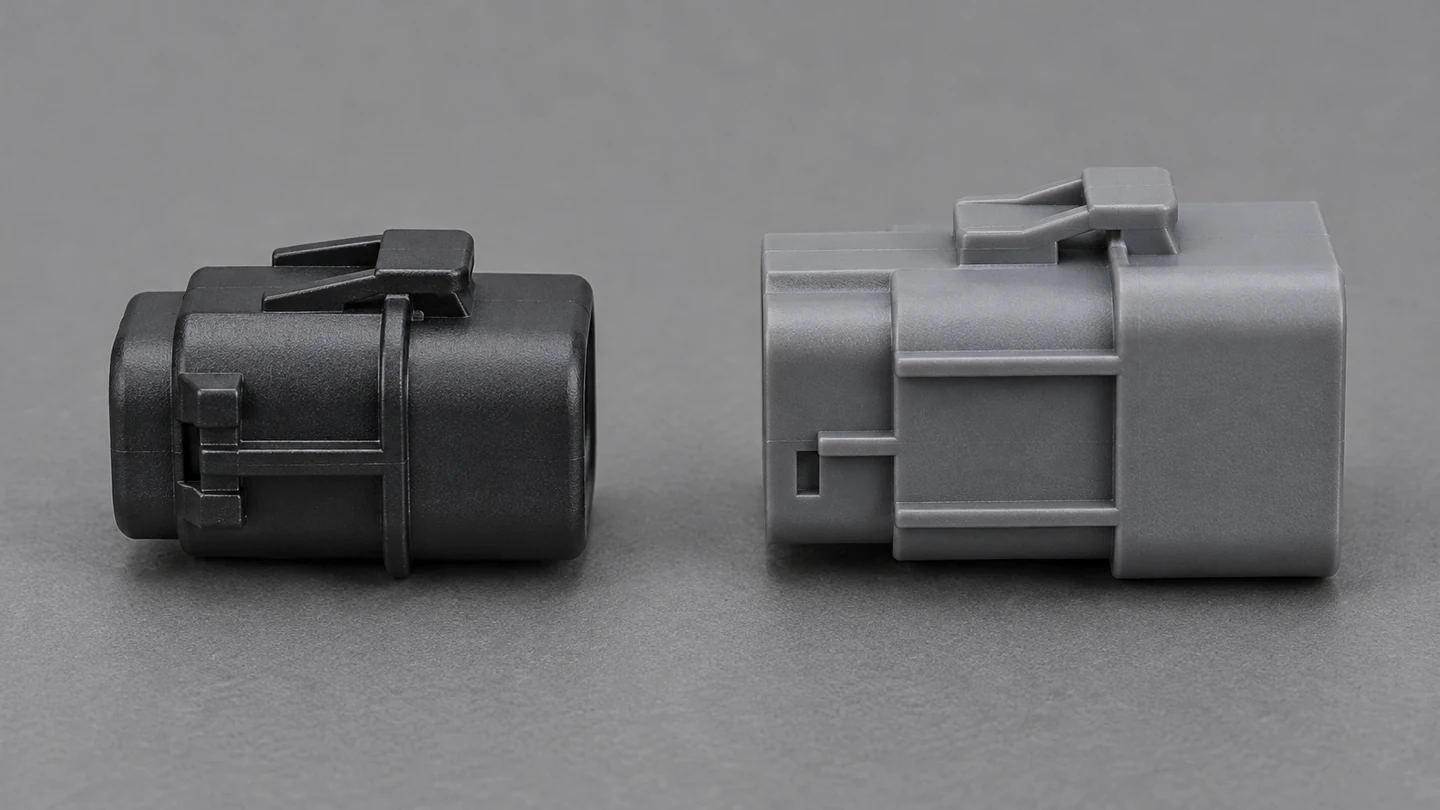
Record the mating face, wire-entry side, latch and any readable molded references. Keep the diagram orientation explicit. If measurements are needed, distinguish the terminal width from cavity dimensions and center-to-center pitch. A catalog search becomes more useful when each dimension refers to a defined feature rather than a general estimate of connector size.
Use the drawing to confirm the final candidate. Do not force a caliper or oversized probe into a contact to estimate its size. A physical measurement can narrow the search, but supplier drawings and the mating reference determine the intended interface. The same caution applies to pinout identification: matching cavities and matching circuits are separate tasks.
How do wire and seal specifications narrow the choice?
The wire has two dimensions that matter for component selection: its conductor size and its outside insulation diameter. The terminal’s permitted conductor range and the seal’s permitted insulation range need separate confirmation. Replacing the original wire with a visually similar lead can change the fit at the crimp and wire-entry seal.
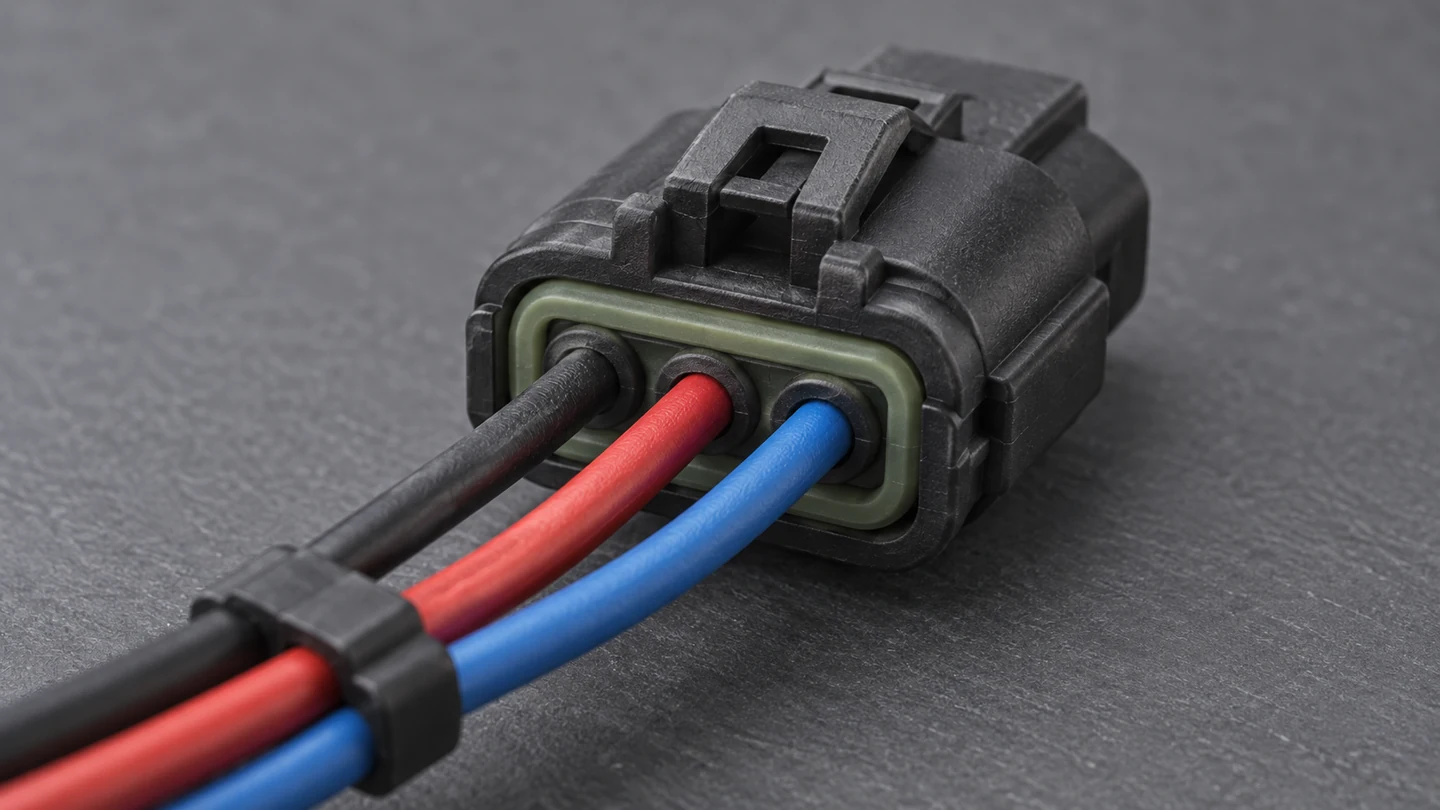
| Component | What to confirm | Why it matters |
|---|---|---|
| Vivienda | Exact family, keying and mating reference | Establishes intended assembly geometry |
| Terminal | Contact type, conductor range and retention design | Defines termination and housing compatibility |
| Wire seal | Part reference and insulation diameter range | Defines the intended wire-entry fit |
| Unused-cavity plug | Applicable cavity and assembly instruction | Addresses an otherwise open sealing path |
Terminal selection and seal selection therefore belong in the same review, even when the parts are ordered separately.
Why do compact connector systems need careful repair tooling?
Yazaki’s catalog includes a compact, low-profile 0.50PCB connector announcement, demonstrating that compact interfaces are a specific product-design category. It does not establish that all Japanese vehicle connectors are unusually small or that a compact contact can carry a particular load. Electrical and mechanical requirements remain product-specific.
For a repair, obtain the correct release tool, termination method and inspection requirements for the actual family. A contact that can be pushed into a cavity may still fail to retain correctly or damage its mating contact. Do not substitute a similar loose terminal based only on width. Follow the vehicle-specific repair restrictions for safety-related or high-voltage systems rather than extending a general low-voltage guide to them.
What should an aftermarket supplier document?
Request the exact housing and mating references, terminal and seal bill of materials, supported wire specifications and assembly instructions. Where product testing is relevant, identify the test conditions and acceptance limits. IEC 60512-1:2018 provides connector-test guidance; it does not certify vehicle fitment or make two supplier families interchangeable.
ZUCH’s connector catalog can support an inquiry based on those documented requirements. A regional description or similar product image is not a replacement cross-reference.
Preguntas frecuentes
What types of connectors are common in Japanese vehicles?
Relevant catalogs include sealed and unsealed wire connectors, device interfaces and specialized data connections. Identify the actual vehicle component and supplier family instead of assuming one type is universal.
Are Japanese automotive connectors different from US connectors?
The meaningful differences are specific interfaces, contact systems and application requirements. Regional labels alone do not establish a technical boundary or an interchangeability rule.
How do I identify a Japanese automotive electrical connector?
Use the vehicle circuit reference, molded housing markings, mating-face layout, external keys and contact specification. Check the candidate against the exact supplier drawing and mating part.
Can I use an aftermarket connector for a Japanese car?
A documented replacement may be suitable if its application, mechanical interface, contacts, wires, seals and repair requirements match. A broad regional fitment claim is insufficient.
Why are Japanese vehicle connectors often compact?
Some product families address limited packaging space, but compactness is product-specific rather than a property of every Japanese vehicle connector. Check the actual drawing and performance requirements.
How do I match terminals for a Japanese automotive connector?
Use the housing’s specified contact reference and confirm conductor range, contact interface, plating, retention and tooling. Do not choose a terminal solely because it appears to fit the cavity.
References
- Sumitomo Wiring Systems automotive components catalog — families, terminals, seals and dummy plugs.
- Yazaki automotive connector catalog — part-number search and connector-family information.
- Aptiv Connection Systems — comparator for separate connector, terminal and seal categories.
- IEC 60512-1:2018 — connector test and measurement framework.
What turns a regional search into a reliable part specification?
A useful specification replaces the broad label “Japanese connector” with an identified vehicle application and a documented component set. Establish the circuit first, narrow the supplier family with housing evidence, and then confirm the exact mating part, contacts, wires and seals. Record the drawing viewpoint before transferring wires and obtain family-specific tooling instructions before releasing or crimping contacts. A compact appearance, familiar color or equal cavity count cannot establish the missing details. When repeat purchasing is planned, keep the accepted drawing and component references so later orders can be checked consistently. ZUCH can assess a connector inquiry within its published range from those requirements, while vehicle-specific suitability remains tied to the relevant service information and verified mating interface.