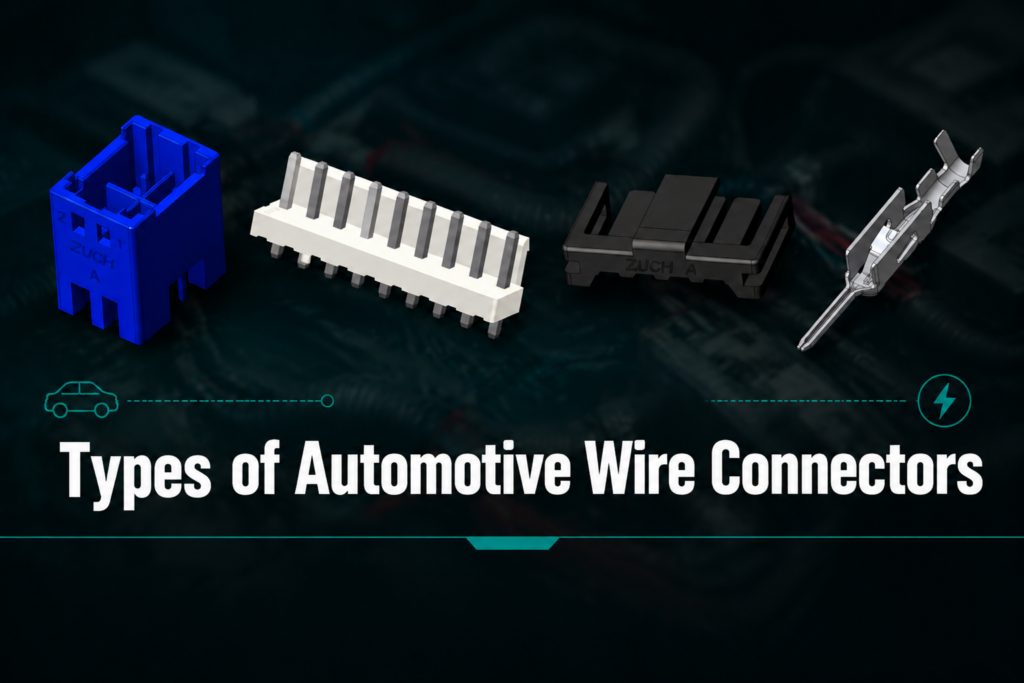
Types of Automotive Wire Connectors
Automobile wiring connectors play a very important part in the operation of a car’s electrical system. They help to connect sensors, lighting, and supply power to various electronic components of a vehicle. Selecting the appropriate type of automobile wiring connector for your vehicle can enhance durability and improve performance.
Quick Answer: The right automotive wire connector is the one that matches the connection task, wire size, current and voltage requirements, mating interface, and installation environment. Use butt connectors for permanent wire-to-wire repairs, terminals for studs or blades, quick-disconnects where service access matters, and sealed connector systems where moisture or contamination is expected. A correct part still depends on a compatible terminal, seal, housing, wire, crimp tool, and verified assembly process.
What Are Automotive Wire Connectors?
Automobile wiring connectors are electrical components used to attach wires or terminate electrical circuits in an automobile. They create protection from the elements (water, dirt, and heat) and maintain the electrical properties of the wire connection. Therefore, it is critical that you select the appropriate type of wiring connector for the reliability and efficiency of your automobile’s electrical system.
In practice, “connector” can describe a wire splice, a terminal attached to a stud or blade, or a multi-pin plug-and-receptacle assembly. Keeping those functions separate makes selection easier: first define what must connect, then verify the electrical, mechanical, environmental, and service requirements for that interface.
Common Types of Automotive Wire Connectors
There are various types of connectors available for automotive wiring; these different types of connectors are manufactured for specific uses. Below are the most common types:
1. Butt Connectors
Butt connectors allow you to join two wires end to end, and are available in a number of different configurations, including insulated and uninsulated. These connectors are suitable for making repairs to automotive wiring, extending wires, and ensuring reliable and stable connections for your vehicle’s electrical system.
2. Quick-Disconnect Connectors
Quick disconnect connectors are frequently found in applications where the connector will be connected and disconnected many times. They have very simple installation, and support many mating cycles, making them ideal for locations where you will need access to service the component.
3. Terminal Connectors
Terminal connectors include ring terminals, spade terminals, and bullet terminals. These types of connectors are used to connect wires to physical components such as relays, screws, switches, and more. The strength of these types of connectors also provides additional stability for making connections in situations with high vibration impact.
4. Heat Shrink Connectors
Heat shrink connectors offer superior protection from moisture, corrosion, and other contaminants. The tubing used in these types of connectors will shrink under high temperatures, providing a snug, insulated seal around the electrical connection.
5. Waterproof Connectors
Waterproof connectors have been designed for use in applications that are subject to exposure from moisture. They are typically used on parts in an automobile that are subject to water exposure; for example, when using outdoor lights or with components under a hood.
Automotive Connector Types and Selection Comparison
| Connector type |
Best suited to |
Selection checks |
Service and environment notes |
| Butt connector |
Joining two compatible wires end to end |
Wire-size range, conductor material, insulation support, approved crimp tooling |
Normally a permanent splice; choose the insulation and sealing approach for the actual exposure |
| Quick-disconnect connector |
Components that require planned disconnection for service |
Matching male/female interface, retention, electrical rating, mating durability |
Convenient access must not compromise strain relief or protection from vibration and contamination |
| Ring, spade, or bullet terminal |
Stud, screw, blade, switch, relay, or compatible bullet interfaces |
Stud or blade dimensions, wire size, terminal plating, mechanical retention |
Ring terminals resist accidental release; spade and bullet styles can be faster to service when correctly retained |
| Heat-shrink connector |
Connections needing added insulation and environmental protection |
Connector function beneath the sleeve, shrink range, adhesive or seal design, installation temperature |
“Heat shrink” describes a protection feature, not a complete electrical-interface category |
| Sealed multi-pin housing |
Sensors, lighting, modules, and harness-to-harness interfaces exposed to contaminants |
Terminal series, cavity count, wire seals, blanking plugs, keying, latch and counterpart compatibility |
Sealing depends on the complete matched system and correct assembly; do not infer performance from appearance alone |
The table is a starting point, not a substitute for the vehicle service information or the connector manufacturer’s drawing. Electrical rating, sealing, temperature range, vibration resistance, and mating-cycle capability are system-specific; verify them for the exact part combination and intended location.
Wire Connector Material Options for Use in Automotive Applications
The materials used in wire connectors directly affect the longevity and performance of each connector. Some of the commonly used material options include the following:
Copper: Copper is the most common metal used for tip connectors in automotive applications because of its high conductivity and reliability to allow an efficient flow of electricity.
Brass: Brass connectors are highly resistant to corrosion and therefore have a very long lifespan. Due to their ability to function reliably under heavy loads, brass connectors are typically used in high-demand applications.
Plastic: Plastic connectors are often constructed from insulated plastic materials that provide additional barrier protection against moisture and other contaminants.
Material names alone do not define performance. Terminal alloy, plating, housing resin, seal material, contact geometry, and the way the assembly is processed all influence the result, so buyers should compare the supplier’s part-level documentation rather than select by a generic material label.
How to Choose the Right Connectors
Identifying the automotive connector and selecting the appropriate part for your application can seem like an overwhelming task. However, it is very important for your automotive vehicle’s safety and efficient operation. The following steps will guide you through the process of selecting the appropriate connector(s) for your automotive application:
1. Assess the Application: If possible, find out what the connector will be used for and where the connector will be installed. This is the best way to start the connector selection process. The elements of moisture, vibration, or heat should help determine what type of wire connectors to use.
2. Match Wire Gauge: Ensure that the connector size is appropriate for the wire gauge you are using to avoid overusing a small or large connector and causing wear to the connector from an improper connection.
3. Consider Insulation: If your application will be exposed to harsh environments, use insulated or water-resistant connectors for added protection.
4. Think About Ease of Installation: Some connectors can be complex and take time to install. Evaluate your abilities and tools that will be needed to find the best option for your application.
Verify the Complete Connection System
- Electrical fit: Confirm the circuit’s specified voltage, current, conductor size, and acceptable contact resistance from the applicable design documents.
- Mechanical fit: Check the mating counterpart, cavity layout, polarization, terminal retention, strain relief, and available packaging space.
- Environmental fit: Match the documented temperature, fluid exposure, vibration, dust, and water requirements to the installation zone.
- Process fit: Use compatible terminals, seals, applicators or hand tools, and inspection criteria. The guide on how to crimp automotive connectors explains the assembly sequence in more detail.
- Service fit: Plan how technicians will unlock and remove terminals without damaging the housing; see how to depin an automotive connector for service considerations.
Understand Standards and Supplier Evidence
IPC/WHMA-A-620 provides requirements and acceptance criteria for cable and wire harness assemblies. It can guide workmanship and inspection agreements, but it is not a product certification for every connector or proof that a connector is suitable for a particular vehicle environment. Applicability, class, revision, inspection plan, and any customer-specific requirements should be defined in the purchasing and quality documents.
For sealed locations, review the documented protection of the complete mated connector system and its assembly conditions. A useful next step is to compare the construction and selection factors described in the guide to waterproof automotive wire connectors. For a custom harness or program-level sourcing decision, define drawings, materials, validation expectations, change control, and traceability before requesting an automotive electrical connector OEM proposal.
Applications of Automotive Wire Connectors
Automotive wire connectors are used in many parts of an automobile, including:
Lighting Systems: This type of connector is required to connect positive and negative terminals to headlights, taillights, and interior lights.
Sensors: Connectors are required to connect sensors to the vehicle’s Electronic Control Unit (ECU), allowing the ECU to measure and regulate conditions within the vehicle.
Entertainment Systems: Connectors are necessary for connecting the stereo system, DVD players, and video screens.
Power Distribution: Connectors are necessary to connect the power supply (e.g., battery and alternator) to an electrical component.
The same broad application can contain several connector types. For example, a lighting circuit may use a sealed multi-pin lamp interface, a ring terminal at a grounding stud, and an approved splice elsewhere in the harness. Selection should therefore be made connection by connection, not only by vehicle subsystem.
FAQs About Automotive Wire Connectors
How to Select Wire Connectors?
When selecting wire connectors, consider the application, environmental exposure, wire gauge, and ease of installation. Waterproof and heat-shrink connectors are best suited for moisture exposure.
Can Electrical Tape Be Used in Place of Connectors?
Electrical tape can only provide a temporary connection and cannot give the same type of secure connection that a quality automobile connector will give you.
Are All Wire Connectors Alike?
No, there are different types of connectors for different applications; for example, butt connectors are used for connecting two wires and quick disconnect connectors are used for providing temporary connections.
What are the three types of wire connectors?
A practical high-level grouping is wire-to-wire splices, wire-to-device terminals, and plug-and-receptacle connector systems. Each group contains multiple terminal, housing, insulation, and sealing designs, so the three groups describe connection functions rather than three interchangeable products.
Is it better to crimp or solder automotive wiring?
Neither method is universally better; use the termination method specified for the connector, wire, and vehicle repair procedure. Properly engineered crimps are common in automotive harness production because they can provide repeatable electrical and mechanical performance without introducing a solder-wicking transition, while solder may be required in a documented repair process for a particular application.
What are the different types of automotive wiring connectors?
Common types include butt splices, quick-disconnects, ring and spade terminals, bullet terminals, and sealed or unsealed multi-pin connector housings. Heat-shrink versions add insulation or environmental protection, but the underlying termination and interface still need to match the circuit and mating component.
How to choose the right wire connector?
Start with the connection function and mating interface, then verify conductor size, electrical requirements, terminal and seal compatibility, temperature, fluids, vibration, water exposure, tooling, and service access. Use the exact part drawing and application specification rather than choosing by appearance or color alone.
What are the best wire connectors for cars?
The best connector is the qualified, compatible system for the particular circuit and installation zone. A sealed multi-pin housing may suit an exposed sensor, a ring terminal may suit a stud, and a butt splice may suit an approved repair; no single type is best for every automotive connection.
How to identify different connector types?
Record the manufacturer markings, housing shape, cavity count and numbering, keying, latch position, terminal form, seal arrangement, and wire size before comparing supplier drawings or an OEM parts catalog. Do not rely only on color, because visually similar housings can use different terminals, keys, or electrical specifications.
By understanding your vehicle’s electrical requirements and selecting the correct connectors, you can help ensure that your vehicle is reliable. By selecting quality connectors, you will experience a safe product, a long lifespan of your connectors, and decreased costs for repairs due to replacing faulty connectors. By learning about the various types of automotive wire connectors, their materials, and their applications, you are paving the way to an efficient vehicle. Feel free to ask automotive professionals or refer to your vehicle owner’s manual for further advice.
A dependable connection comes from matching the complete system and controlling the assembly process—not from the connector name alone. ZUCH can help buyers compare connector configurations and documentation for an intended application; review the automotive wire connector range and contact the team with the mating interface, wire, environment, and program requirements.
References and Further Reading
- IPC: IPC/WHMA-A-620, Requirements and Acceptance for Cable and Wire Harness Assemblies
- TE Connectivity: Automotive Connector Systems
- Molex: Automotive Solutions
- Aptiv: Automotive Connection Systems
 Zhejiang ZUCH Technology Co., Ltd.