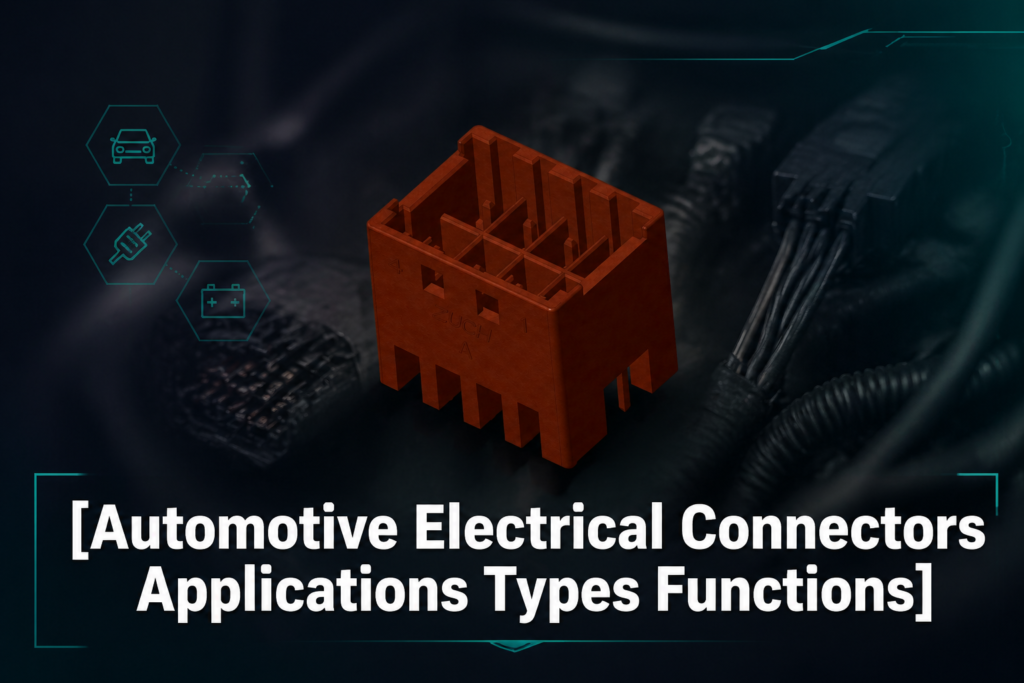
Automotive Electrical Connectors Applications Types Functions
Quick Answer: Automotive electrical connectors carry power, low-voltage signals, and high-speed data between vehicle components while providing mechanical retention, circuit identification, and—in sealed designs—protection from contaminants. Choose by application zone, circuit load, signal type, pin count, wire size, mating interface, environmental exposure, service needs, and documented validation for the complete terminal-housing-seal assembly. A connector type name alone does not establish current capacity, sealing, durability, or compatibility.
The automotive business revolves around accuracy and reliability; therefore, the connection between automotive electrical connectors and electrical functionalities is crucial for the proper functioning of a vehicle. Automotive electrical connectors are responsible for linking various electrical systems together safely, efficiently and without interruption. If you are either a manufacturer or mechanic or an enthusiast of the automotive industry understanding their applications, types and characteristics will help you make the best possible decisions. In this article we will discuss everything you would like to know about these critical automotive components.
Uses of Automotive Electrical Connectors
Automotive electrical connectors are an essential component for modern day vehicles. They are a fundamental component of the multiple different electrical systems in a vehicle that allow for communication between the components of that particular vehicle. Automotive electrical connectors are used in numerous areas of a vehicle’s electrical system, including:
1. Engine Systems – Automotive electrical connectors allow for the linking of sensors and control modules in the engine system to provide the correct amount of data needed for the engine to perform appropriately. For instance, automotive electrical connectors link temperature sensors, oxygen sensors and fuel injectors to the ECU (Engine Control Unit) of the vehicle.
2. Lighting Systems – Electrical connectors transmit both a power source and signals to control the lighting systems in a vehicle. (e.g. Headlight, stoplight), this enables all types of exterior and/or interior lights to function properly.
3. Safety Features – Safety features in a vehicle, such as airbags and ABS (Anti-lock Braking System) or advanced driver assistance systems (ADAS), depend on reliable automotive electrical connectors to function properly and efficiently through reliable connection.
4. Infotainment Systems – With the advanced level of infotainment systems included in modern vehicles, automotive electrical connectors provide the communication between touch screens and/or speakers and/or cameras and/or multimedia systems within the vehicle to function properly.
5. Battery and Charging Systems – With the increasing popularity of electric vehicles (EV) today, connectors are an essential part of charging systems because they connect the batteries to both the power management systems and to the charging stations.
Types of Automotive Electrical Connectors
Automotive electrical connectors come in many different types and sizes, made for different purposes in an automobile. Some of the most common types include:
1. Blade Connectors: Blade connectors are widely used throughout the entire automotive industry due to their reliable connections for low to medium power applications. These connectors are also easy to install.
2. Pin Connectors: Pin connectors have male pins and female receptacles; used for high performance tasks and signal applications, these connectors provide secure and accurate connections!
3. Coaxial Connectors: Coaxial connectors transmit signals for infotainment systems and camera systems; they are designed to maintain the integrity of the signal during transmission.
4. Weatherproof Connectors: Weatherproof connectors are built to withstand extreme weather conditions, as they will resist water and contaminants and have been used in some of the harshest environments.
5. Modular Connectors: As automobiles evolve to incorporate more advanced technology, modular connectors allow customization to meet evolving needs within the automotive manufacturing industry.
Functions of Automotive Electrical Connectors
Automotive electrical connectors are critical components of any vehicle’s electrical system, as they perform a variety of functions, including:
1. Electrical Transmission: Automotive electrical connectors provide an efficient, secure way to transfer electrical power and signals from one automotive system to another.
2. Protection: Automotive connectors provide protection to sensitive parts against elements such as water, dirt, and vibration, which can otherwise hinder performance.
3. Simplified Maintenance: They make repairs and upgrades easier by providing quick and easy disconnection options, which minimizes the amount of time spent on maintenance.
4. Versatility: They can accommodate the increasing complexity of today’s vehicles by being able to accommodate the varied functions required of today’s vehicles.
5. Safety: Automotive connectors help prevent shorts and interruptions in electronic circuits, helping to make both vehicles and their passengers safe.
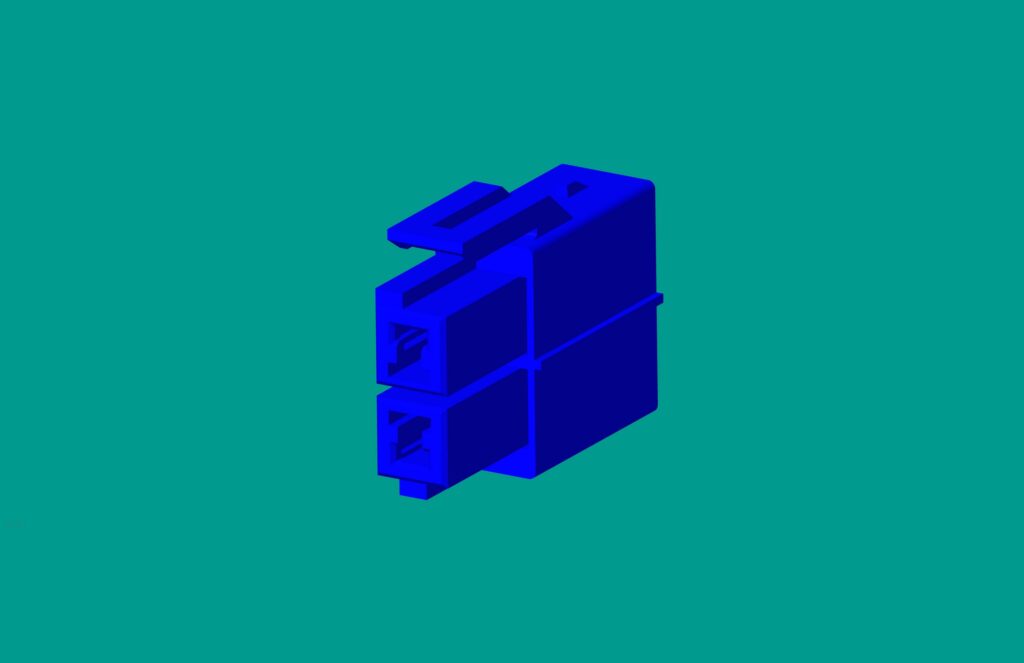
Application, Type, and Function Decision Table
The useful selection question is not simply “Which connector type is best?” It is “Which complete connection system fits this circuit and installation?” The table below maps common applications to a connector approach and the evidence a buyer or engineer should verify. The examples are decision categories, not universal part recommendations.
| Application |
Likely connector type or feature |
Primary function |
Selection checks |
Validation focus |
| Engine sensors and actuators |
Keyed multi-pin system; sealed version where exposure requires it |
Carry sensor signals, control signals, or actuator power |
Pinout, wire size, temperature, fluids, vibration, sealing, locking |
Contact resistance or voltage-drop checks, retention, environmental and vibration evidence for the intended assembly |
| Exterior and underbody lighting |
Sealed blade or pin-and-socket system |
Deliver power and control while limiting contaminant entry |
Load, cable range, seal-to-wire fit, mounting, service access |
Electrical load under operating conditions plus documented ingress and mechanical tests |
| Interior controls and body electronics |
Compact unsealed or sealed multi-pin system, depending on zone |
Combine multiple low-power circuits in one interface |
Circuit count, polarization, keying, secondary lock, assembly method |
Terminal seating, mating assurance, harness workmanship, and functional test |
| Camera, antenna, or infotainment data path |
Coaxial or other interface designed for the required signal protocol |
Preserve signal integrity between modules |
Interface and impedance compatibility, cable construction, shielding, routing, latch |
Protocol-specific performance, continuity, shielding, and installed-cable integrity |
| Battery, charging, or other higher-power circuit |
Purpose-designed power connector and terminals |
Carry the specified electrical load with secure mechanical connection |
Voltage, continuous and transient current, conductor size, temperature rise, touch protection where applicable, interlock needs |
Supplier load and temperature-rise data, connection resistance, retention, and application-specific safety validation |
| Serviceable harness junction |
Keyed modular multi-pin system with positive retention |
Enable controlled disconnection and reconnection |
Mating cycles, accessibility, coding, replacement parts, terminal service tools |
Post-service terminal retention, lock engagement, visual inspection, and circuit function |
Type and function are not interchangeable. “Weatherproof,” for example, describes an intended protective feature, while blade, pin-and-socket, and coaxial describe different interface forms. Ask for the drawing, compatible terminal and wire range, assembly instructions, and test evidence for the exact mated configuration instead of selecting by a generic family label.
What Each Connector Function Requires in Practice
Power delivery requires more than a matching cavity count. Confirm conductor size, terminal material and plating information, allowable electrical load under the supplier’s stated conditions, derating guidance, crimp specification, and heat-rise evidence. An illustrative bench check may compare voltage drop before and after environmental or vibration exposure, but the acceptance limit must come from the applicable drawing or vehicle specification.
Signal and data transfer adds interface, cable, shielding, routing, and protocol requirements. A mechanically mating connector is not automatically compatible with a camera, antenna, sensor, or network. For high-speed paths, verify the connector and cable as a system against the electrical interface and test method required by the vehicle program.
Mechanical retention and serviceability depend on correct crimping, terminal insertion, primary retention, any secondary lock, strain relief, and proper unmating technique. IPC/WHMA-A-620 provides requirements and acceptance criteria for cable and wire harness assemblies; it is not, by itself, a product certification or proof that a particular connector is suitable for a vehicle. The connector manufacturer’s drawing and tooling instructions remain essential. For related procedures, see How to Crimp Automotive Connectors and the troubleshooting guide on How to Fix Electrical Connectors Automotive. For a related technical topic, see Automotive Electrical Harness Connectors.
Environmental protection depends on the complete assembly: housing interface, terminal position, wire seals or mat seal, cavity plugs, cable dimensions, backshell or strain relief, and full latch engagement. A sealed housing cannot compensate for the wrong seal, a damaged cable entry, an empty unblocked cavity, or a terminal that has not locked in place. If water or road contaminants are credible hazards, compare the installation with the considerations in Waterproof Automotive Wire Connectors.
Standards, Workmanship, and Evidence Boundaries
Connector selection normally combines a supplier specification, vehicle or customer requirements, and evidence for the exact assembly. IPC/WHMA-A-620 addresses cable and wire harness assembly workmanship and acceptance; it does not certify an automotive connector for every application. Likewise, a vendor’s automotive product-family page can help identify available architectures, but it does not replace a drawing, test report, or program-specific approval.
- For the terminal-to-wire joint: review the specified wire range, strip length, applicator or hand-tool requirement, crimp dimensions, pull or retention criteria, and inspection method.
- For the connector interface: review keying, polarization, latch and secondary-lock operation, terminal position assurance, and the defined mating condition.
- For the operating environment: define temperature, vibration, moisture, dust, fluids, routing, and mechanical loads; request the relevant test conditions and results rather than relying on broad words such as “rugged.”
- For maintenance: define whether terminals or housings may be reused, which extraction tools are allowed, and what inspection is required after service.
Unsupported certification language creates commercial and engineering risk because buyers may assume that a part has passed a third-party scheme or a vehicle-program test that was never specified. Name the standard, edition or customer specification, tested configuration, acceptance criteria, and report when those details are available; otherwise describe the feature without implying approval.
Factors to Consider When Selecting Automotive Electrical Connectors
When selecting an automotive electrical connector, it is essential to choose a connector that will provide the same level of reliability and durability that your vehicle requires. Below are several factors to consider when selecting an automotive electrical connector:
1. Environmental Conditions: When determining the type of environment in which your connector will be installed, ensure you choose weather-resistant or sealed connectors for use in harsh environments.
2. Current and Voltage Requirements: Make sure that your connector is capable of supporting the electrical load it is subjected to without overheating or malfunctioning.
3. Material Durability: To increase longevity, choose housing materials made from thermoplastics and contact materials made from stainless steel or copper that will resist corrosion.
4. Compatibility: Verify that the electrical connector you intend to purchase meets the technical requirements and performance level of your equipment to avoid any compatibility issues that could lead to connector failure.
Convert those factors into a controlled procurement sequence:
- Define the circuit: voltage, current profile, conductor size, signal type, circuit count, and pinout.
- Define the vehicle zone: temperature, vibration, moisture, dust, fluids, routing, access, and service frequency.
- Match the complete system: housing, terminals, seals, plugs, locks, wire, tooling, and mating half.
- Review evidence: supplier drawing, assembly instructions, applicable test reports, change control, and sample inspection plan.
- Prototype and validate the assembled harness in the intended operating context before release.
Part markings, cavity count, housing shape, keying, terminal family, and seal arrangement can help with identification, but appearance alone is not enough. Use the guidance in How to Identify Automotive Electrical Connectors, then confirm the manufacturer and part number against controlled documentation. ZUCH can support discussions about configurable connector and harness requirements, but final selection should remain tied to the buyer’s documented circuit, environment, process, and validation plan.
Frequently Asked Questions About Automotive Electrical Connectors
1. What function do automotive electrical connectors perform
Automotive electrical connectors transmit electrical power and signals through a circuit securely while providing adequate protection from outside elements, allowing the vehicle to run safely.
2. What types of automotive electrical connectors are available?
There are many common types of automotive electrical connectors: blade connectors, pin connectors, coaxial connectors, weatherproof connectors, and modular connectors, each designed for use with specific applications.
3. Where can automotive electrical connectors be found?
A wide variety of automotive electrical connectors are found throughout various systems located in a vehicle such as the engine system, lighting system, safety system, infotainment system, battery charging system, etc.
4. What should I consider when choosing an automotive electrical connector?
When selecting an automotive electrical connector, always take environmental conditions, electrical requirements, material durability, and compatibility with other existing systems into consideration.
5. May I reuse automotive electrical connectors?
Automotive electrical connectors may at times be reusable; however, replacing them is the best option to ensure there is no loss of performance or reliability after installation.
6. Are there connectors designed specifically for electric vehicles
Yes, many manufacturers now create specific connectors designed solely for electric vehicles and their high current requirements, e.g., electric vehicle charging solutions.
What are the different types of automotive electrical connectors and what are their functions?
Common categories include blade, pin-and-socket, coaxial, sealed, modular multi-pin, and purpose-designed power connectors. Their functions can include carrying power, sensor or control signals, and data; providing retention and keying; supporting service disconnection; and limiting contaminant entry when a validated sealing system is used.
What are the functions of electrical connectors in electrical applications?
Electrical connectors create a detachable interface for transferring power or signals between conductors and components. Depending on the design, they may also provide polarization, circuit organization, mechanical retention, shielding, strain relief, or environmental protection; the required functions should be stated in the application specification.
What are the different types of electrical connectors?
Electrical connector types can be grouped by interface—such as blade, pin-and-socket, coaxial, board-to-wire, wire-to-wire, or board-to-board—and by features such as sealing, shielding, locking, and modularity. These categories overlap, so selection should use the actual electrical, mechanical, and environmental requirements rather than the type name alone.
What are the different types of electrical connectors used in automotive vehicles?
Vehicles use compact multi-pin connectors for body electronics, sealed systems for exposed zones, power connectors for higher-load circuits, and signal-specific interfaces for cameras, antennas, sensors, and data networks. The suitable design depends on the vehicle zone, circuit, cable, mating component, assembly process, and required validation.
How to identify automotive electrical connectors?
Record the housing markings, manufacturer logo, cavity count, keying, latch, color, seal layout, terminal form, and wire size, then compare them with controlled catalogs or drawings. Do not identify a replacement by appearance alone; confirm the exact part number, mating half, terminals, seals, and any secondary locks.
How to choose the right electrical connector?
Start with voltage, current profile, signal type, wire size, pin count, mating geometry, and service needs. Then check temperature, vibration, moisture, fluids, shielding or sealing needs, tooling, traceability, and test evidence for the complete assembled connection before approving it.
Automotive electrical connectors are the unsung heroes of modern vehicles, allowing different electrical components to work together. Automotive electrical connectors serve many functions as they relate to the operation of vehicle lights, safety devices, and integration of infotainment systems. As automotive technology advances, the need for reliable, high-quality, and versatile electrical connectors will continue to increase. Choosing the best electrical connectors for your specific needs will help ensure the long-term safety, performance, and durability of your vehicle.
References and Further Reading
Final takeaway: Select the connection as a complete, documented system; the housing name or visual match alone cannot prove electrical, mechanical, or environmental suitability.
To discuss a connector configuration for your circuit, wire, vehicle zone, assembly process, and validation plan, review ZUCH’s automotive electrical connector products and contact the team with your controlled requirements.
 Zhejiang ZUCH Technology Co., Ltd.