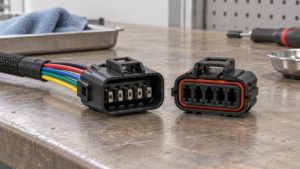
Rectangular Connector Pin Count: Balance Density, Routing, and Service Access
A rectangular connector’s pin count should be selected from the released interface, not from density alone. Position count affects the contact assignment, mating definition, routing space, service access, and evidence a program needs before release.
Contents
Pin count identifies the number of intended positions in a connector interface. It does not, by itself, define pitch, contact type, keying, housing geometry, terminal system, current path, or suitability for a particular assembly.
Start with the controlled contact assignment and mating definition. This makes the selection discussion specific enough for engineering and purchasing to compare equivalent interfaces. For a related technical reference, see Rectangular Connector Locking: Compare Lever, Screw, and Clip Interfaces.
| Interface question |
Why it matters |
Record to review |
| How many positions are required? |
Connects the housing to the intended contact assignment |
Schematic and released pin map |
| What mates with the connector? |
Prevents an incorrect assumption about compatibility |
Mating drawing and keying definition |
| What space is available? |
Shows whether density creates packaging limits |
Envelope, routing, and access layout |
Part 2. Balance density against the physical envelope
Increasing the number of positions may change the connector’s footprint, cable exit space, and space available for neighboring components. Review the actual enclosure or board envelope rather than choosing a denser layout solely to reduce the apparent connector count. For a related technical reference, see RAST Connectors on Appliance PCBs: Review Layout, Mating, and Retention.
The selected interface must also leave sufficient room for the assembly and inspection conditions defined by the program. Those conditions are specific to the released product and should remain under engineering control.
Important: Connector selection requires application-specific evaluation; matching a position count or a catalogue outline does not prove that a connector is suitable for the finished assembly. Source: TE Connectivity connector resources.
Check mating orientation, keying, polarization, contact assignment, and connector retention against the controlled design. A multi-position housing can still be the wrong choice when those definitions differ from the intended interface.
Keep the pin map with the relevant drawing revision. It helps the team distinguish an unused position, a reserved position, and a contact that is part of the released electrical design.
Part 4. Preserve routing and service access
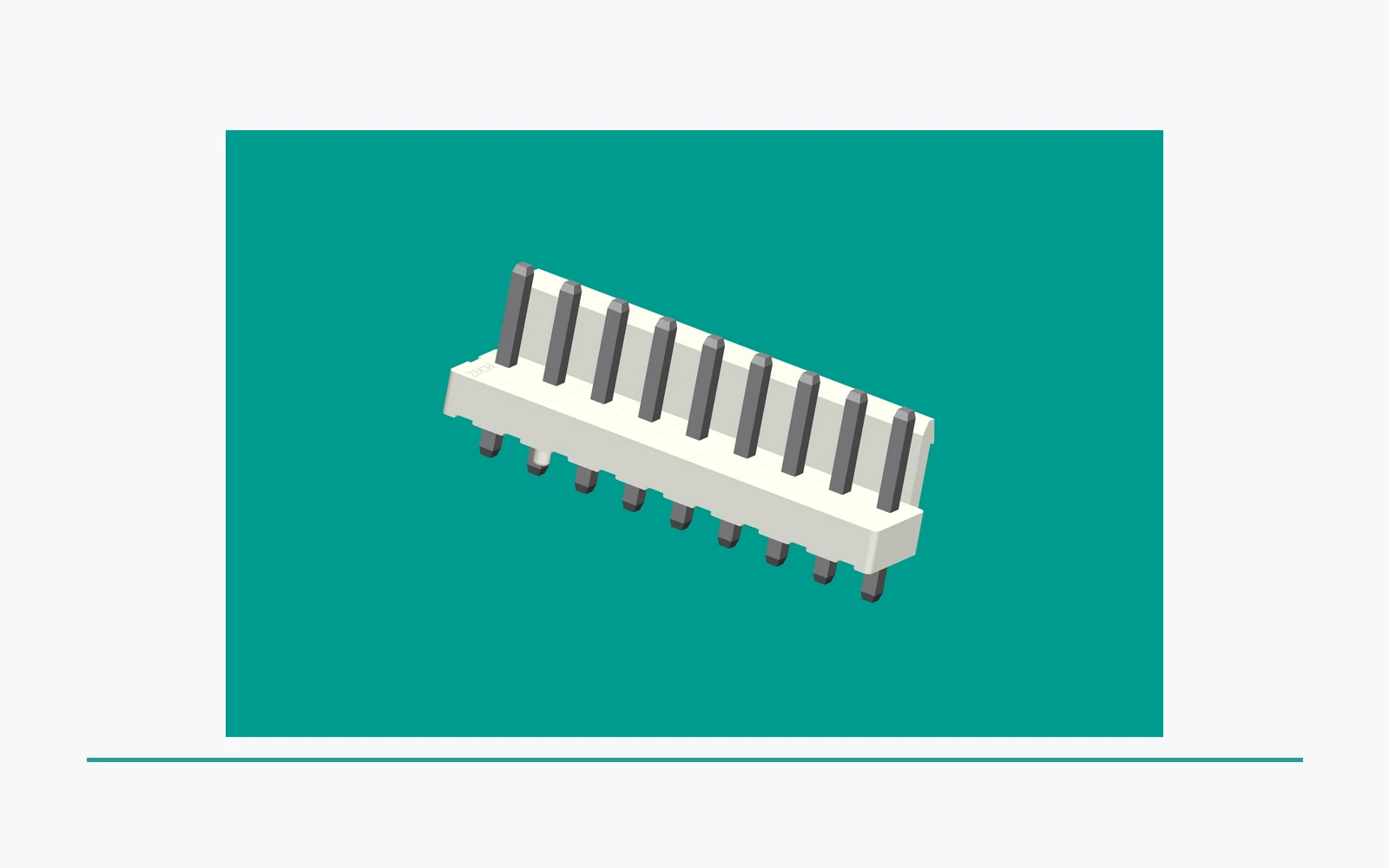
Dense connector layouts can affect wire break-out, bend space, latch access, tool clearance, and the ability to identify individual positions during assembly or service. Review these conditions in the complete assembly, including nearby covers, barriers, and harness supports.
Service access is not a cosmetic consideration. It can change whether the released design can be inspected, mated, retained, or replaced in the intended environment.
Part 5. Build a complete selection record
Use the same controlled definition for engineering review and supplier communication. This avoids a response based only on a generic phrase such as “12-pin rectangular connector.”
| Selection record item |
Purpose |
Send with RFQ |
| Pin map and revision |
Defines the requested position count and assignment |
Schematic, connector drawing, and revision |
| Mating and keying data |
Confirms the required interface relationship |
Mating-part definition and keying view |
| Envelope and routing limits |
Exposes density and access constraints |
Board or enclosure layout, cable exit, and access notes |
| Evidence and change needs |
States what the program expects from a response |
Sample objective, records, and change-notice requirement |
Part 6. Control revisions and proposed alternates
A change to pin count, keying, housing, terminal, contact assignment, mating part, or routing can affect the original interface review. Treat it as a documented change rather than assuming a connector with a similar number of positions is interchangeable.
When an alternate is suggested, compare it with the controlled revision and route differences to the responsible engineering process. The supplier response should identify what it addresses and what still needs program evaluation.
Part 7. Start a controlled ZUCH rectangular-connector inquiry
ZUCH’s rectangular connectors route and product catalogue provide a commercial route for identifying connector families. They do not confirm fit, stock status, validation, certification, or approval for a specific application.
For a useful inquiry, include the released pin map, mating and keying information, mechanical envelope, routing and access limits, sample objective, requested records, and change-control requirements. Submit controlled documents through the sample request route or contact page.
FAQ
Is a higher pin count always a better connector choice?
No. The selected position count must match the released contact assignment, mating definition, envelope, routing, and service requirements.
Does pin count alone define a rectangular connector?
No. Pitch, keying, contact system, housing geometry, mating interface, and application constraints also require review.
Why does service access matter in a dense connector?
It can affect latching, inspection, cable routing, tool clearance, and the ability to identify or service positions in the installed assembly.
Should spare positions be added without review?
No. Reserved positions can affect the controlled interface, housing, routing, and documentation. Review them with the responsible engineering team.
What should a connector drawing identify?
It should identify the controlled housing and mating interface, position count, pin assignment, keying, relevant dimensions, and application constraints.
Can an alternate connector be compared by position count?
Not reliably. Compare the complete controlled interface, including mating, keying, contact system, envelope, and required evidence.
What belongs in a rectangular connector RFQ?
Provide the current pin map and drawings, mating and keying definition, mechanical envelope, routing and service constraints, sample needs, requested records, and change-control expectations.
References
 Zhejiang ZUCH Technology Co., Ltd.