Zhejiang ZUCH Technology Co., Ltd.
Summary: Rectangular connectors for railway and transportation equipment can simplify panel layouts, circuit grouping, keying, and service access, but they should be specified as complete wired interfaces. Start with current, voltage, temperature, vibration, ingress, fire, EMC, cable routing, and maintenance requirements; then verify the exact mated configuration against the project standards. The International Energy Agency reports that rail carries 8% of the world’s passengers and 7% of global freight while representing only 2% of total transport energy demand. As rail networks expand and modernize, dependable auxiliary electrical interfaces remain a practical procurement priority.
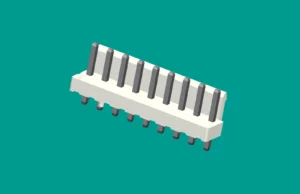
For a related technical topic, see Rectangular Connector Types.
Why are rectangular connectors used in railway and transportation equipment?
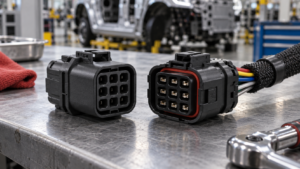
Rail vehicles and transport systems contain many low-voltage and auxiliary circuits: door controls, lighting, HVAC, passenger information, sensors, diagnostics, battery systems, cabinet controls, and communication equipment. A rectangular interface can organize these circuits in a compact, visible arrangement. Its flat geometry often suits cabinet cut-outs and side-by-side layouts, while coding and secondary locking features can help prevent incorrect mating during assembly or service.
The useful distinction is between a connector family and a qualified installation. Rectangular connectors for railway and transportation equipment may be installed in a fixed cabinet, under-floor enclosure, door module, HVAC assembly, wayside system, or service vehicle. Each location changes the environmental load. The same contact count may be suitable for a dry, fixed cabinet but unsuitable for a moving harness without the right cable support, seals, retention, and test evidence.
Before asking for quotations, a design team should define:
- number of circuits, pin assignment, coding, spare positions, and separation of power, signal, and data;
- rated current per contact, working voltage, simultaneous-current derating, and acceptable contact resistance;
- ambient and self-heating temperature, humidity, contamination, vibration, shock, and required ingress protection;
- wire cross-section, insulation type, bend radius, cable support, strain relief, and termination process;
- mating cycles, access space, error-proofing, inspection points, and field-replacement method; and
- the vehicle, project, and destination-market standards that apply to the complete equipment.
That preparation turns a generic rectangular connector enquiry into a controlled interface specification. It also prevents a common late-stage error: assuming a housing test or an unmated IP label proves the performance of the production harness.
Which technical factors matter most on rolling stock and transport equipment?
For rectangular connectors for railway and transportation equipment, the first technical question is location. A connector in a protected cabinet experiences a very different duty from one mounted near an exterior door, traction auxiliary system, or moving cable route. The specification should be written around the complete assembly rather than a catalogue description.
| Selection factor | What to define | Why it matters |
|---|---|---|
| Electrical load | Current per contact, voltage, duty cycle, inrush, and allowable temperature rise | Shared heating and high-contact density can require derating. |
| Contact system | Terminal type, copper alloy, plating, crimp window, retention, and initial/end-of-test resistance | Stable contact force and a repeatable crimp are central to long-term reliability. |
| Mechanical environment | Mounting direction, vibration axis, shock profile, latch or secondary lock, cable mass, and strain relief | Vibration often acts on the cable and termination as well as the housing. |
| Ingress and contamination | Required IP level, mated condition, cable exit, cleaning method, condensation, dust, and fluid exposure | An IP result is valid only for the specific tested configuration. |
| Fire and smoke | Project material requirements, component location, polymer data, and traceability | Fire performance is a vehicle-level compliance issue, not a generic marketing label. |
| EMC and data | Shield termination, grounding method, cable construction, separation, and protocol performance | Power and signalling circuits can interfere if the interface architecture is not controlled. |
| Serviceability | Keying, labelling, mating force, tool access, replacement parts, and inspection procedure | Clear service access reduces the risk of incorrect re-mating and extended downtime. |
IEC 60512 provides test methods for electromechanical components, while an application test plan should state the actual sequence, sample condition, and pass criteria. A useful review can also build on the same discipline described in ZUCH’s guide to rectangular connector mating force and assembly ergonomics: an interface is only serviceable when the operator can mate, inspect, and release it consistently in the available space.
How do rectangular and circular interfaces compare for transport projects?
The decision is not a contest between shapes. Rectangular housings can offer efficient panel use, readily visible orientation, modular circuit arrangements, and room for coding or locking features. Circular connectors can offer compact radial packaging and familiar coupling options. The better choice is the interface that meets the defined environmental, electrical, and service requirements with the lowest evaluated programme cost.
| Decision point | Rectangular interface | What the buyer should verify |
|---|---|---|
| Panel and cabinet layout | Uses rectangular cut-outs efficiently and can align several interfaces in a row. | Clearance, fastening, cable exit direction, and future service access. |
| Circuit organisation | May support practical grouping of power, signal, and spare circuits. | Pin map, separation distances, current derating, and keying. |
| Mechanical retention | Can use latches, levers, screws, or secondary locks depending on the family. | Mated retention under the project vibration and cable-load condition. |
| Sealing | Gaskets and cable-entry designs can support protected applications. | The exact housing, seal, terminal, wire, backshell, and mating state used in the IP test. |
| Field work | Visible orientation and labels can simplify controlled replacement. | Tooling, release sequence, inspection, and prevention of mismating. |
For projects where water, dust, or condensation are relevant, the review should include the distinction explained in sealed versus open rectangular connector selection. A sealed connector is not automatically the right answer: the seal must match the wire range, cable movement, mating cycle, installation method, and service process.
Which railway and transport standards should be reviewed?
Standards identify the evidence a project may need; they do not transfer automatically from one product family to another. The responsible vehicle builder, system integrator, or purchaser should confirm the current edition and the contractually applicable requirements for the component location and end equipment.
- EN 50155: railway applications – electronic equipment used on rolling stock. It helps frame the environmental and electrical operating conditions for equipment.
- IEC 61373: rolling-stock equipment shock and vibration testing. The project test plan should state mounting, axis, cable condition, electrical monitoring, and acceptance criteria.
- EN 45545-2: fire protection on railway vehicles. Material requirements depend on the hazard level, vehicle type, and installed location.
- EN 50121 series: railway applications electromagnetic compatibility. Connector and harness design must support the system EMC architecture.
- IEC 60529: IP code for protection against ingress. The declared rating should refer to the actual mated and cabled configuration.
- IEC 60512: connector test methods for electrical, mechanical, and environmental performance.
For rectangular connectors for railway and transportation equipment, a credible evidence package normally identifies the exact part numbers, terminals, seals, wire sizes, cable exits, test methods, samples, and revision status. A generic certificate, a housing-only test, or a test from another cable configuration does not close the engineering risk.
How should buyers specify rectangular connectors for railway and transportation equipment?
We recommend a five-step selection process that links purchasing to engineering evidence.
- Map the interface: freeze circuits, current, voltage, wire sizes, connector location, and the mechanical envelope before comparing families.
- Define the environment: list temperature, moisture, dust, vibration, shock, EMC, fire, and maintenance conditions for the installed assembly.
- Control the termination: require approved terminals, crimp tooling, crimp-height or pull-force controls, insertion checks, and traceability.
- Validate the whole assembly: test the mated connector with the intended cable, strain relief, enclosure, and mounting arrangement; inspect electrical continuity during relevant vibration or thermal tests.
- Plan service and change control: document keying, labels, spare parts, replacement instructions, notification rules, and the evidence required for an engineering change.
ZUCH’s rectangular connector range provides a starting point for reviewing interface options. For an actual rail or transport project, the technical team should provide ZUCH with the circuit schedule, intended environment, wire details, drawings, target standards, forecast volume, and validation plan so the proposed configuration can be assessed against the application rather than selected by catalogue appearance.
This approach also applies when a project uses the same components across several platforms. The lessons from rectangular connectors in robotics are relevant: a repeatable mechanical datum, controlled cable path, and clear mating logic can reduce interface variation, but the final qualification must still reflect the transport duty cycle.
Frequently asked questions
Are rectangular connectors suitable for railway applications?
Rectangular connectors for railway and transportation equipment can be suitable when the exact connector-and-harness assembly meets the project’s electrical, environmental, mechanical, fire, EMC, and service requirements. Suitability cannot be determined from the housing shape or contact count alone.
What is the difference between a railway connector and a standard industrial connector?
Rectangular connectors for railway and transportation equipment may be subject to different vibration, shock, temperature, fire-and-smoke, EMC, reliability, documentation, and change-control requirements than a standard industrial installation. The applicable standards depend on the equipment and installation location.
How is IP67 performance checked for a connector?
Test the fully mated, wired configuration under the applicable IEC 60529 conditions. The report should identify the housing, terminals, seals, wire range, cable exit, coupling state, and any limitations.
What causes connector failures on vibrating transport equipment?
Common causes include inadequate terminal retention, unstable crimping, unsuitable cable support, contact fretting, insufficient latch retention, and a test configuration that does not reflect the installation. Electrical monitoring during vibration testing helps expose intermittent faults.
What information should be sent with a connector RFQ?
Include the drawing, pin map, current and voltage, wire details, environment, standards, sealing target, cable routing, mating cycles, validation requirements, annual volume, and delivery market. Those details enable a meaningful technical proposal.
References
- International Energy Agency: The Future of Rail – global passenger, freight, and transport-energy context.
- International Electrotechnical Commission – standards catalogue, including IEC 60512, IEC 60529, and IEC 61373.
- European Union Agency for Railways – railway safety and interoperability resources.
- International Union of Railways – global railway sector resources.