Zhejiang ZUCH Technology Co., Ltd.
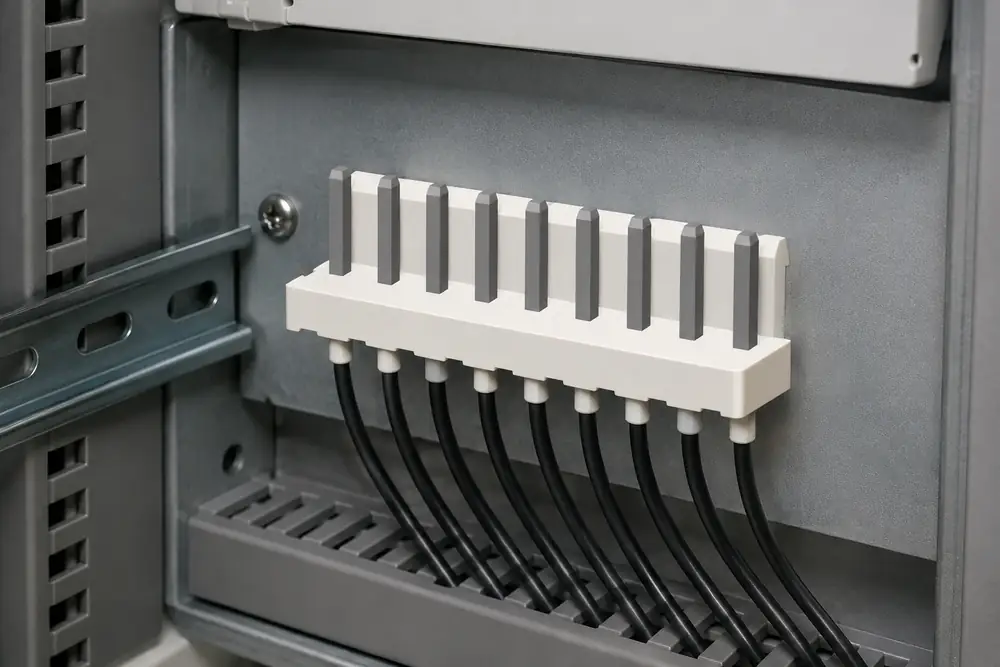
When a maintenance engineer in Stuttgart found a cabinet feeder connector too hot to touch during a planned line restart, rapid discoloration around one termination appeared before the shift could proceed. The initial assumption was a defective connector; the investigation instead traced the heat to current demand, conductor sizing, and termination selection that no longer matched the installed duty.
Summary: Connector heat is usually an I²R problem: at the same resistance, doubling current produces four times the heat. Check the actual load, conductor and terminal compatibility, tightening process, and evidence of contact-resistance change before replacing parts. A qualified measurement plan should compare each pole under the real application duty, because temperature limits and test conditions are application dependent.
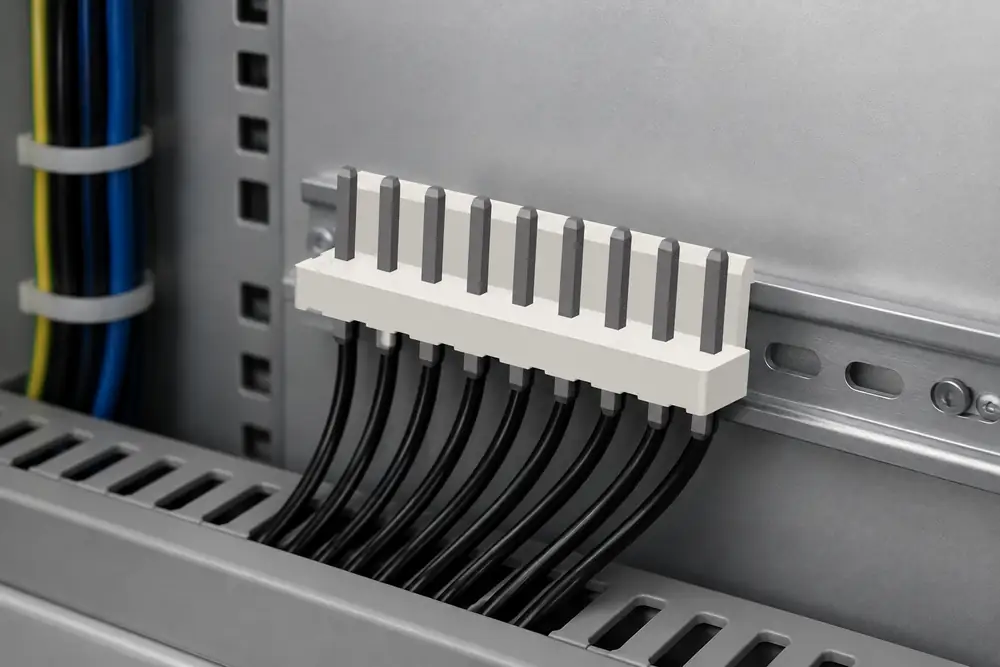
Rectangular Power Connectors are valued in industrial cabinets because they bring power and, in some designs, signals into a serviceable interface. That convenience does not make their thermal margin automatic. The contact system, wire, crimp or screw termination, housing, enclosure airflow, ambient temperature, mating condition, and duty cycle work as one electrical path. A hot interface is therefore a system warning, not simply a cosmetic defect.
Heat begins with resistance, current, and the real duty cycle
Every energized path creates heat in proportion to current squared times resistance. Contact resistance may rise when mating surfaces are contaminated, contact force falls, a terminal is incompletely seated, or a conductor is not properly terminated. The resulting heat can further oxidize surfaces or relax a poor joint, creating a feedback loop. An overload may look similar at first, but it is distinguished by whether the temperature increase tracks the load across all comparable poles or concentrates at one connection.
A useful field method is to record current, ambient conditions, and temperature at a stable operating point, then compare equivalent circuits with the same instrument and viewing conditions. Infrared thermography is valuable for finding an abnormal pattern, while a low-resistance four-wire measurement can help investigate the electrical path after appropriate isolation. Neither result alone establishes a universal acceptable value: emissivity, loading, terminal geometry, installation, and the product instructions affect the interpretation.
Symptoms that deserve escalation include localized browning, softened plastic, a sharp odor, intermittent equipment behavior, darkened plating, insulation shrinkage, or a terminal that feels mechanically loose. Do not normalize a warm connector merely because it still carries power. A reliable industrial rectangular connector maintenance routine treats a change from the established thermal pattern as a prompt to inspect the entire circuit.
Overload and high-resistance faults leave different clues
When current exceeds the design assumption, several elements in the path may warm together: conductors, terminals, and contacts. When a single crimp, screw, or contact has elevated resistance, the hottest point is commonly localized. That distinction informs the corrective action. Reducing load without correcting a poor termination leaves a latent defect; replacing a connector without reviewing load growth can repeat the failure in a new component.
Diagnose the terminal and match the conductor before specifying a replacement
A loose terminal is a frequent source of concentrated heating. Vibration, incorrect strip length, an unsuitable crimp tool, conductor strand damage, torque-process variation, or wire that is outside the terminal’s intended range can reduce the effective contact area. Visual inspection should be followed by a controlled check against the connector and terminal manufacturer’s assembly instructions. Re-tightening or re-crimping without identifying the process error can conceal rather than eliminate the cause.
Wire gauge matters because it affects conductor resistance, termination fit, flexibility, and heat dissipation. A larger conductor is not automatically safer if it cannot be correctly accommodated by the contact or is forced into an unsuitable termination. Conversely, a smaller conductor may add voltage drop and heat under load. Specify the wire construction, insulation temperature class, strand count, strip length, terminal type, and cable-routing conditions as a coordinated set. For background on format options, see this guide to rectangular connector types.
| Observed pattern | Likely contributor | Useful confirmation | Corrective focus |
|---|---|---|---|
| One pole is much hotter than its peers | High contact or termination resistance | Four-wire resistance comparison after safe isolation; inspect seating and termination | Replace affected parts and correct the assembly process |
| Several conductors warm as load rises | Load above the installed design assumption | Measure actual current and compare with documented circuit design | Reassess connector, wire, protection, and duty cycle together |
| Heat follows bending or vibration | Strand damage, poor strain relief, or intermittent contact | Inspect routing and termination under a controlled maintenance procedure | Restore strain relief and use the specified wire and terminal method |
| Discoloration near a hot enclosure | Ambient temperature or restricted heat dissipation | Compare cabinet and connector temperatures during representative duty | Review enclosure layout, spacing, airflow, and material selection |
Choose materials and construction for the thermal environment, not only the catalogue current
A rectangular power connector should be selected as an assembly, including contacts, housing, seals where used, backshell, cable, and termination. Heat-resistant housing materials can preserve dimensional stability better in demanding thermal environments, but they do not compensate for a bad electrical joint. Contact material and plating influence corrosion behavior and mating performance; the appropriate choice depends on environment, mating cycles, and the supplier’s validated configuration. For a related technical reference, see PCB Power Connector. For a related technical reference, see What Is a Power Connector?.
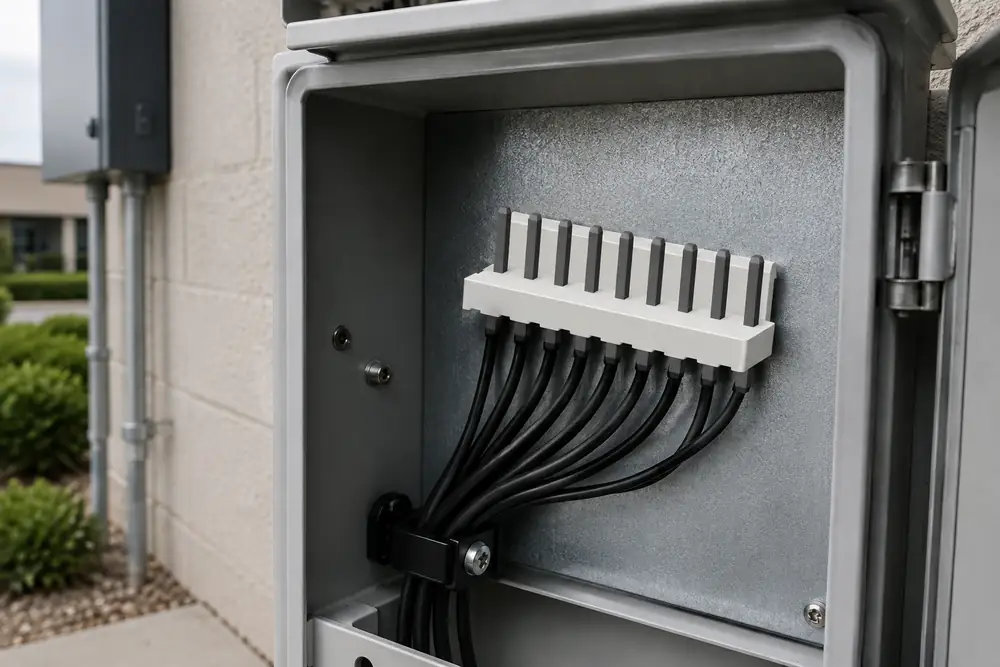
Thermal behavior is also shaped by the cabinet. Bundled cables, tight bend radii, adjacent heat sources, restricted convection, and frequent peak loading can make an otherwise appropriate component run hotter in service. The hidden cost is not limited to the connector: unplanned downtime, troubleshooting labor, damaged wiring, requalification work, and disruption to production can outweigh the unit cost difference between suitable and marginal selections.
| Decision point | What to document | Why it affects heat | Decision owner |
|---|---|---|---|
| Load profile | Continuous load, peaks, duty cycle, and measured operating current | Current drives I²R losses and determines thermal stress | Design engineering |
| Conductor matching | Wire cross-section, construction, insulation, strip length, and approved terminal range | Mismatch can raise conductor resistance or compromise termination quality | Design and manufacturing engineering |
| Termination process | Tooling, crimp profile or tightening process, inspection record, and pull-test plan where specified | Stable contact pressure reduces variability in the current path | Manufacturing and quality |
| Installation environment | Ambient temperature, enclosure layout, vibration, contaminants, and service access | These factors alter heat dissipation and contact reliability | System integrator |
| Maintenance trigger | Baseline thermal image, inspection interval, and replacement criteria | Trend changes can reveal deterioration before a line stop | Maintenance and quality |
Standards, evidence, and a practical selection path
Standards can help teams define tests, documentation, and product-market expectations, but the title of a standard is not a blanket product certification claim. IEC 61984 addresses connectors in its stated scope; UL 1977 covers component connectors in the context defined by UL; and USCAR-2 is an automotive electrical-connection performance specification. Their applicability depends on the product, destination market, intended use, installation, and the claims made in purchasing or marketing documents. NIST measurement resources are useful when planning traceable electrical and thermal measurement practices.
Unsupported compliance claims create commercial risk: they can delay approvals, trigger rework, and leave sourcing teams without the evidence needed for customer review. Ask suppliers for the exact configuration’s technical documentation, applicable test basis, material information, and assembly instructions. For engineered interfaces, a review of custom rectangular power connector requirements can help translate system constraints into a controlled specification.
For sourcing teams looking for a rectangular power connector for sale, use this short selection sequence:
- Start with measured load and installation conditions, then define the connector, wire, and termination as one circuit.
- Confirm that the proposed contact and terminal configuration supports the specified conductor construction and assembly method.
- Request configuration-specific documentation and agree on incoming, production, and maintenance inspection evidence.
- Validate representative assemblies under application-relevant current, ambient, enclosure, and duty-cycle conditions.
ZUCH can be considered during this documented selection stage when a team needs configurable rectangular connector options and sourcing support; the final choice should remain anchored in the actual application, the approved assembly process, and verifiable documentation.
Frequently asked questions
Why do rectangular power connectors overheat?
They overheat when electrical resistance and current create more heat than the connector system can safely dissipate. Common contributors are overload, poor terminal contact, incorrect conductor matching, contamination, and high ambient temperature. Isolate the cause by comparing current and temperature patterns across equivalent poles under representative duty.
Can a loose terminal cause a power connector to get hot?
Yes. A loose or poorly formed terminal can reduce the effective contact area and increase resistance at a concentrated point. Inspect the terminal, conductor preparation, retention, and process records against the approved assembly instructions, then replace damaged components rather than relying on a visual adjustment alone.
How do I check a connector for high contact resistance?
Use a safe, documented maintenance procedure to de-energize and isolate the circuit, then compare equivalent contacts with an appropriate low-resistance four-wire method where suitable. Pair that result with a visual inspection and thermal observation during representative operation. The test setup and acceptance criteria must be appropriate for the product and application.
Does wire gauge affect connector temperature?
Yes. Conductor cross-section influences resistance and therefore heating, while wire construction and diameter also affect how well the conductor fits the terminal. Use only the conductor range and termination method specified for the selected contact, and account for bundling, routing, and ambient conditions.
What signs mean a hot power connector needs replacement?
Replace affected parts when there is discoloration, melting, damaged plating, cracked housing, degraded insulation, loss of retention, or evidence that a termination has been thermally compromised. First address the root cause in the circuit; otherwise the replacement may be exposed to the same overload or assembly error.
How can I prevent a rectangular power connector from overheating?
Specify the connector, contacts, wire, termination process, and installation environment together, then validate representative assemblies under expected duty. Maintain a baseline inspection process that looks for load changes, localized heating, looseness, corrosion, and enclosure heat buildup. Prevention is most effective when procurement, engineering, quality, and maintenance share the same documented assumptions.
References and next step
- IEC 61984: Connectors — Safety requirements and tests
- SAE USCAR-2: Performance specification for automotive electrical connection systems
- NIST Physical Measurement Laboratory
The memorable judgment: a hot connector is rarely an isolated part problem; it is evidence that the electrical path and its real working conditions are no longer aligned.
When the specification is ready for review, explore ZUCH connector products and contact the team with the load profile, wire details, environment, and documentation requirements for a focused discussion.