Industrial Rectangular Connectors for Heavy-Duty Applications
Heavy-duty industrial connector In a harsh industrial environment, a connector is not a tiny plug-in electrical component. It plays an important role in machine uptime, signal stability, power security, and maintenance convenience. Ordinary connectors can rarely provide the long-term operational reliability when the attached equipment is subject to vibration, dust, moisture, heat, oil or continuous mechanical stress. That’s why so many Engineers, OEM’s, and Industry Buyers opt for the rectangular connector when performance and high reliability truly matter.
Industrial rectangular connectors can be found in a wide range of applications, such as factory automation, robotics, railway, power distribution, heavy-duty machinery, energy storage, wind energy, solar power equipment, and transportation. With their compact design, high contact density, rugged housings and modular design concept, these are ideal for applications that require the transmission of power, signal and data securely through one robust interface.
For a related technical topic, see Modular Rectangular Connectors.
What Are Industrial Rectangular Connectors?
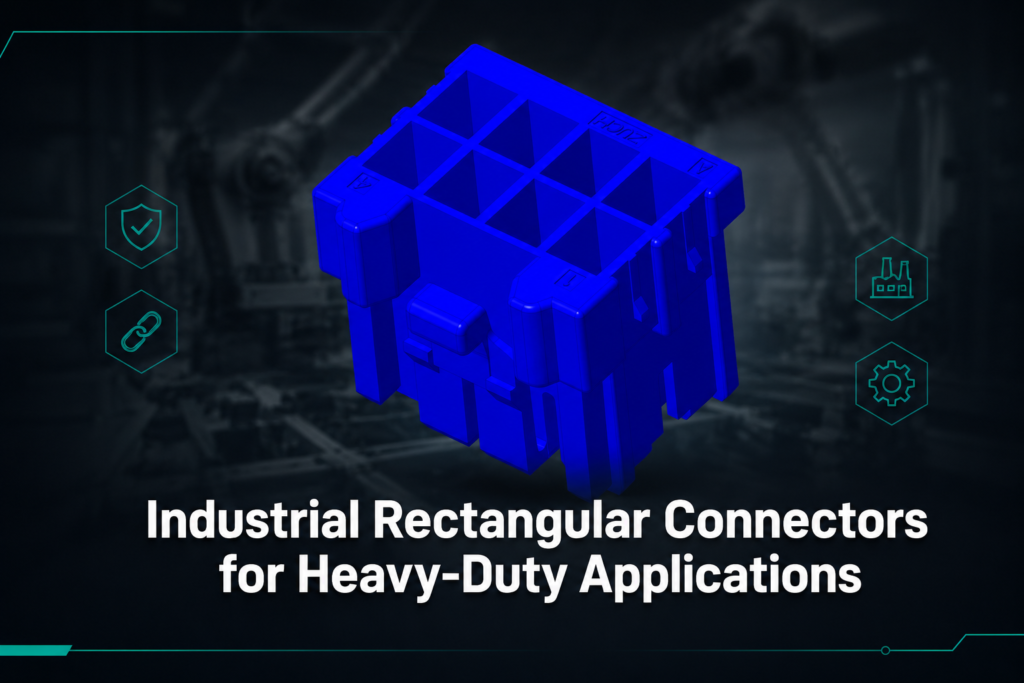
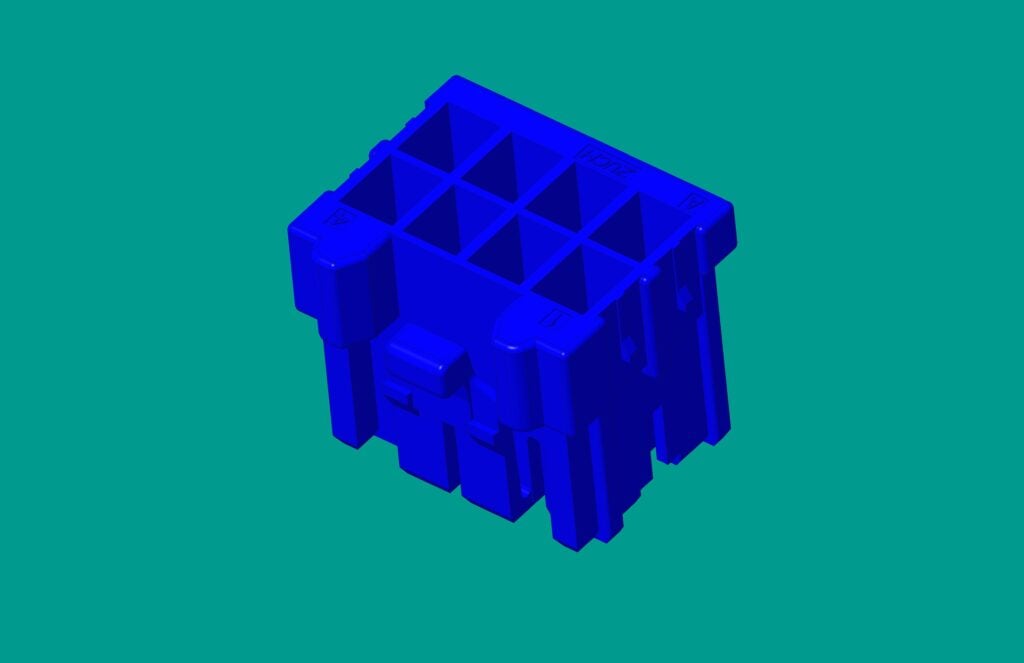
Industrial rectangular connectors Rotary is a series of built housing connectors with rectangular interface and robust design ideal applications in harsh conditions. A typical connector kit may have a hood, shell, insert, contacts, cable gland, sealing element and locking system. It may provide power transmission, signal transmission and data transmission separately, or partial combination of these functions according to the different design. Industrial rectangular connectors are designed for more demanding environments in contrast to many standard connectors. They frequently have metal housings, reinforced plastic inserts, contacts that resist corrosion, and locking systems that are reliable. Many heavy duty rectangular connectors are also available with modular inserts, so that it is possible to combine power contacts, signal contacts, pneumatics modules or data modules in a single connector body.
They are therefore particularly suitable for use in industrial equipment where space is at a premium but connection needs are many. What used to be three or four separate connectors can be replaced with a single well-engineered rectangular connector, allowing application engineers to streamline wiring and reduce maintenance work.
Why Rectangular Connectors Are the Best Choice for Heavy-Duty OBC Applications
Heavy-duty environments typically require more from electrical connections. Machines could be operating continuously for days at a time, vibrating, outside, or be maintained on a regular basis. A poor connection can lead to overheating, signal instability, communication errors, equipment shutdown and even hazards to safety.
Rectangular connectors are well suited for these applications as they can provide high mechanical strength, good space utilization, flexible contact layout and reliable connection. The rectangular geometry enables more contacts to be arranged within compact spaces, which is ideal for control cabinets, automation systems, power distribution units.
Serviceability is another key benefit. Machinery in many industrial systems is assembled from modules. When a motor, control unit, robotic arm, or field device must be replaced, a rectangular electrical connector enables the module to be quickly disconnected and reconnected by the technician without rewiring every cable. This minimizes downtimes and enables more rapid maintenance procedures.
Heavy Duty Rectangular Connectors – Key Benefits
High Contact Density
One of the leading reasons for purchasing the rectangular industrial connector is the number of contacts that can be housed in a very limited space. They are capable of handling power, signal, control, and even communication lines all in one connector system. For multi-wire machines, this reduces wire pack and makes electrical design cleaner.
Dependable Protection in Extreme Conditions
Heavy duty rectangular connector products are meant to be used in harsh environments. They may have dust tight and waterproof protection of IP65, IP67 or even better based on the model. Metal can provide extra protection against impact, vibration and mechanical abrasiveness. For outdoor installations or wet industrial locations, sealing and protection for cable entries must be considered.
Flexible Modular Configuration
Many industrial rectangular connectors offer modular inserts. This gives design engineers the flexibility to tailor the connector to the actual application requirements. For instance, a single connector can accommodate high-current power, low-voltage signal contacts, Ethernet modules, and pneumatic couplings. This type of flexibility is very useful in OEM equipment, automation, and specialized machinery.
Quick Installation and Service
Industrial machinery needs to be fast assembled and maintained in the field. Rectangular electrical connectors can be soldered, crimped, or screwed depending on the method of termination. In addition, lock levers can provide secure mating and unmating procedures while eliminating the risk of accidental disconnection during operation.
Mechanical Strength
Hence mechanical strength is important in instruments such as vibratory or mobile ones. Heavy duty rectangular connectors are commonly furnished with reliable locking mechanisms between single lever, double lever or screw locking systems. Such constructions achieve a stable linkage, even if the machines run continuously under mechanical vibration.
Typical uses of Industrial Rectangular connectors
Industrial rectangular connectors are found in many industries where the products are reliable and robust. They are used to connect sensors, motors, actuators, control cabinets, and production line modules in factory automation. They are used for power and signal transmission between moving and fixed machine components in robotics.
Rectangular electrical connectors are also employed in railway and transit systems to power onboard control, lighting, braking, communication module, and power. For the automobile project, a rectangular automotive connector could be selected for the requirement of small size, anti-vibration, and reliable electrical performance.
Industrial rectangular connectors are also used in renewable energy systems including wind turbines, solar inverters, energy storage cabinets and power conversion systems. Such uses call for connectors that can be relied upon to last for many years and withstand harsh environmental conditions.
How to Choose the Right Rectangular Connector
Selecting a connector is about more than just selecting the right number of pins. Buyers should consider the electric ratings, the mechanical structure, the environment for the installation, the maintenance, and the need for certification.
Current and Voltage Rating
The connector needs to fit the voltage and current of the device. Power applications generally require larger contacts and higher level of insulation. Communication may utilize smaller contacts with reliable low-current micro-transmission. An underrated connector adds to the risk of heat build-up, voltage drop or premature failure.
Contact layout and termination technique
Different applications call for different contact configurations. A few systems only need a couple high-current contacts, some need a dozen high-current contacts, and still others need hundreds of signal contacts. The termination options (screw, crimp, spring or solder connection) should be chosen according to the wiring guidelines, vibration intensity, and maintenance preferences. Construction of Housing
Metal housing is widely adopted in heavy-duty industry because it has the features of high strength and durability. Plastic housings could be enough for the lighter duty applications where weight and price matter. For outdoor or chemical environment, surface treatment and anti-rust also need to think about.
IP Ratings and Environmental Protection
If the connector is going to be exposed to dust, water, oil, chemicals or outdoor, IP rating is critical. IP65 can be acceptable in many indoor industrial applications; IP67 or higher may be required for outdoor systems, washdown areas, or extreme environments.
Locking Design
Locking system has influence on connection security. In any application subject to vibration or movement, a positive locking system can prevent unintentional disconnection. Two lever or screw locking mechanisms are sometimes preferred for higher requirement applications.
Standards and Certification
For global projects, compliance can be a critical purchasing factor. Buyers may require certifications such as CE, UL, RoHS, REACH etc. Datasheets and Technical drawings Reliable suppliers can provide datasheets,part drawings,molding information,production instructions,cost down plan,material information and test reports if necessary.
Rectangular vs Circular Connectors
The rectangular and circular connectors are both very common in industrial applications but are used to fulfill different types of design requirements. Circular connectors are commonly selected for small device connections, sensor wiring, and applications in which a circular interface is more easily assembled. They are prevalent in field devices, automation networks, and mobile platforms.
But rectangular connectors do have the advantage of being space efficient when large number of contacts is needed. Their flat-profile design allows for easy stacking in control cabinets as well as machine panels. They can also accommodate modular inserts more easily, allowing to combine multiple electrical and communication functions in a single connector shell.
For up-to-the-minute power management for heavy machinery, automation systems, and power delivery units that require high contact density, rapid maintenance, and high power handling capabilities, a rectangular connector generally is the more practical solution.
How to Separate Power and Signal Requirements in One Connector
Heavy-duty rectangular connectors are often considered for equipment such as chargers, converters, battery cabinets and automated machinery. In these systems, the safest comparison separates power contacts, signal contacts, data modules and any auxiliary functions instead of treating the connector as one undifferentiated part.
| Interface |
Confirm before selection |
| Power |
Voltage, continuous/peak current, contact size, wire range, temperature rise and touch protection |
| Control or sensor |
Pin assignment, keying, shielding or reference conductors and service access |
| Data |
Module type, cable construction, routing and the supplier’s transmission guidance |
| Mechanical/environmental |
Locking, strain relief, cable entry, IP target, vibration and chemical exposure |
Supplier Checks Before Design Approval
- Send the supplier the electrical profile, contact map, wire sizes, cable diameters and mounting drawing.
- Ask which ratings apply to the exact insert, contact, housing and termination combination, including ambient and duty-cycle conditions.
- Confirm keying, secondary retention, touch protection, mating sequence and access for inspection or replacement.
- Record the approved part numbers, revision, test evidence and change-notification process in the project file.
Is a rectangular automotive connector interchangeable with an industrial rectangular connector?
Not by shape alone. The two may differ in vibration profile, sealing, terminal system, standards, keying, wire range and validation requirements. Confirm the exact mating pair and application evidence before substitution.
How many pins should a mixed power-and-signal connector have?
Count the required power, control, data, shield and spare circuits, then check the available contact sizes, separation and service space. Leave only the expansion capacity that the design actually needs; unused cavities do not make an incompatible insert suitable.
What is the most useful information to include in an RFQ?
Provide voltage/current profiles, contact map, wire size and cable diameter, environment, IP target, mounting and locking method, mating cycles, certifications, annual quantity and drawings or photos of the existing interface.
Outdoor use is conditional, not automatic. Check the complete installed system—housing, insert, seals, cable glands, mounting orientation and cable routing—against the required water, dust, UV, temperature and chemical exposures. A connector should not be described as weatherproof solely because a similar family has an IP marking.
FAQs
Why Choose Rectangular Over Circular?
Rectangular connectors are generally the best option in high contact density situations, modular configurations and having efficient panel mount capabilities. Because of their shape, numerous pins can be placed in a very small area, which enables itsap is used in control cabinets, heavy industrial applications, and industrial automationsolutions. Circular connectors still work well for many field devices, but rectangular connectors frequently offer more versatility in intricate wiring.
What Are Heavy Duty Rectangular Connectors Used For?
Heavy duty rectangular connectors are suitable for power, signal and data applications in harsh environments. It is widely used in industrial automation, robotics, railway equipment, renewable energy system, power cabinet, construction machinery, and manufacturing equipment.
Can Rectangular electrical connectors be outdoors?
Yes, Rectangular electrical for outdoors cannot be expose to outdoors . When choosing for outdoor usage, also pay attention to the IP level, material of the housing, quality of the cable glands, corrosion resistance, UV resistance and working temperature range.
How Do I Choose the Right Number of Pins?
The required number of pins depends upon how many power, signal, data or control lines the device needs. And you also need to leave some space for future upgrade just in case you will upgrade it in future. For complex systems, the use of a modular connector may be preferable to a fixed insert.
Are industrial rectangular connectors used for high current?
Many industrial rectangular connectors have high current ratings and can be safely used for power. Buyers should check rated current, rated voltage, contact size, wire gauge, temperature rise and safety standards before choosing. Never select high-current connectors by looking at them, or by counting pins and holes.
What’s the difference of lay out for the rectangular automotive connector and industrial rectangular connector?
A rectangular automotive connector is generally intended for use in vehicles, where vibration, tight packaging, temperature cycles and automotive standards must be met. A general purpose industrial connector is typically intended for use with factory tools, machines, power supplies, and robotic uses. There are elements of performance which can be common– but the standards of design and the applications can vary.
What Is the Right IP Rating for Me?
IP65 may be sufficient to prevent dust and water spray for general domestics indoors use. For outdoor products, moist places or applications which need to be dipped in water, choose IP67 or above. The final decision lies on the real working conditions.
Is It Possible to Customize Rectangular Industrial Connectors?
Various rectangular industrial connectors can be customized by means of different inserts, contact layouts, cable entries, housings and termination solutions. Installation efficiency and wasted wiring complexity can be reduced when customization is available under OEM projects.
What Should I Do to Improve the Service Life of Connector?
Do you have any recommendations on how to extend the life of a connector? Follow the manufacturer’s backgrounds to select the appropriate electrical load, do not overload, use the right connector glands, the correct assembly, and lead, adhesive apply to avoid unnecessary mechanical Stress to connector protectors, and give connector manufacturers install guidelines away from chafe with the installation. bisschen t t auch immer hilflich in rauen Umgebung oder so.
What information should I provide to a manufacturer/supplier?
Provide the following as much as possible for an accurate recommendation: voltage & current, number of contacts, wire size, operating environment, required IP rating, method of mounting, cable exit, certification’s required, quantity/repeat order expected. Images or schematics of the machinery may also enable the vendor to confirm the best option more quickly.
Why Supplier Support Matters?
When it comes to heavy-duty applications, choosing a connector has more to do with than price. A professional manufacturer/supplier can guide customers to choose right series, housing size, insert type, contact material, cable entry. Tech support can minimize design errors, compatibility problems, and overall product development time.Customers should seek out suppliers who can offer information-rich reliable datasheets, consistent product quality, engineering support, predictable lead times, and effective communications. Long-term supply stability and the ability to customize are also significant considerations for OEM customers.
Industrial rectangular connectors offer a rugged, versatile, and space-saving solution for applications that demand a harsh environment and high performanace power, signal, and data transmission. Buyers can enhance the reliability of their equipment, reduce downtime, and build safer and more efficient industrial solutions by using the suitable electrical rating, housing material, IP protection, locking mechanism, and supplier support.
Key Points for Validating a Heavy-Duty Connector System
For heavy-duty or mixed-power equipment, choose the connector only after the electrical, mechanical, environmental and service interfaces are documented. Use the supplier’s exact rating conditions and assembly instructions to validate the complete system, including cable entries and mating hardware.
References and Further Reading
- IEC 61984 — Connectors: safety requirements and tests
- IEC 60529 — Degrees of protection provided by enclosures
- IEC 60512 — Tests and measurements for connectors
- IEC 60068-2-6 — Vibration testing guidance
 Zhejiang ZUCH Technology Co., Ltd.