Terminal Supplier Quality Control Checklist for B2B Buyers
Terminal supplier quality controls are the documented checks that connect a defined terminal requirement to consistent, traceable supply. A buyer should approve the control system only when the supplier can show how specifications, samples, production checks, lot records, changes, and nonconformities are handled for the relevant product. Initial approval is the start of supplier quality management, not the end of it.
Contents
What do terminal supplier quality controls need to prove?
The controls must prove more than “inspection happened.” They should show that the supplied terminal remains within the buyer’s defined interface, material, termination, documentation, and change-control requirements across the life of the purchase.
ASQ’s supplier-quality resource describes supplier quality management as a proactive, collaborative system that begins in supplier selection and continues through the relationship. For terminal supply, that lifecycle view is useful because a correct initial sample does not by itself control a later material, tool, process, or sub-supplier change.
| Control area |
Buyer needs to know |
Objective evidence |
| Product definition |
What exact terminal and mating condition is being bought? |
Controlled drawing, revision and approved acceptance criteria |
| Process control |
How are critical features checked during manufacture? |
Process flow, control/inspection plan and response instructions |
| Lot control |
Can delivered material be isolated if a concern appears? |
Lot ID linked to material, process, inspection and shipment |
| Change control |
What changes require buyer review before shipment? |
Change-notification and re-approval procedure |
| Nonconformance |
How are suspect lots contained and corrected? |
Segregation method, corrective-action workflow and effectiveness record |
| Ongoing performance |
When is supplier approval reviewed? |
Scorecard, audit plan and review triggers |
Important: A terminal test report only supports the terminal configuration and scope stated in that report. Phoenix Contact’s quality document explains that type-test reports contain the test context, equipment, and results. Do not treat a report for another product, construction, or requirement set as automatic approval.
How do you define the terminal requirement and approval boundary?
Begin with the connection, not the supplier’s catalogue category. A terminal must be evaluated with its mating interface, conductor, termination process, enclosure or housing relationship, and operating conditions. If those inputs are vague, a supplier can provide a plausible quotation without offering a comparable part or control plan.
Lock down these items:
- Controlled terminal drawing, revision, material/finish requirements, and critical characteristics.
- Mating tab, housing, connector, or assembly interface.
- Wire/conductor dimensions and the intended crimp, solder, weld, screw, or other termination process.
- Application conditions and any customer, product, or market requirements.
- Sampling, inspection, test, documentation, packaging, and labeling expectations.
- Change-notice, traceability, and nonconformance escalation rules.
Practical engineers often find that the tool and process are inseparable from terminal quality. In a crimp-contact discussion, a user described fitting problems after a nonstandard crimp step. That is buyer-language evidence for why the approval basis must identify the relevant wire and process; it is not a universal acceptance criterion. For a related technical reference, see How to Size a Crimp Splice Connector for Stranded Copper Wire.
Which documents belong in a buyer quality agreement?
A quality agreement turns a sourcing expectation into a controlled purchasing requirement. It should identify the documents, records, notifications, and response route that apply to the terminal program. For a related technical reference, see How to Evaluate a Connector Manufacturer for B2B Sourcing.
Ask for the current quality-system scope, but then move directly to part/process evidence. A certificate may support confidence in a management system; it does not prove a specific terminal, tool, or material is acceptable for the buyer’s application.
Useful agreement items include:
- The controlled part specification, drawing revision, and permitted deviation process.
- The inspection or control plan tied to critical characteristics and reaction actions.
- Lot traceability records and required retention/access expectations.
- Required inspection, test, material, or conformance documents for each shipment when applicable.
- Written notification before a relevant material, tooling, process, site, or sub-supplier change.
- Nonconformance containment, communication, corrective action, and effectiveness review.
- Buyer or qualified third-party access rights when risk requires a process audit.
Amphenol’s public supplier handbook is a useful reference point: it describes supplier evaluation across quality-system, infrastructure, technical, manufacturing, continuity, and performance factors, with first-article and surveillance concepts where required.
Where should the buyer place production quality checkpoints?
Quality controls work best as linked checkpoints, not a final inspection only. Independent supply-chain QA testing guidance distinguishes top-of-production, in-process, final-random, and loading inspections. The appropriate checkpoints and criteria must be agreed for the actual terminal and purchase risk.
| Checkpoint |
Buyer’s purpose |
Evidence to retain |
Typical escalation trigger |
| Pre-production |
Confirm the controlled drawing, materials, setup and sample plan |
Build/lot identification and first-piece or agreed setup evidence |
Revision mismatch or uncontrolled material |
| In-process |
Detect drift before the entire lot is complete |
Defined inspection results, segregated nonconformance and reaction record |
Critical feature outside acceptance criteria |
| Final release |
Confirm the released lot matches the purchase requirements |
Final inspection/conformance documents where required |
Missing record, mixed lot, or unresolved defect |
| Shipment / receipt |
Preserve identification and allow buyer verification |
Label, pack, lot and delivery records |
Damaged packaging, label mismatch, or lot not traceable |
The table is not a mandate to inspect everything at every point. It is a way to assign the right evidence to the right risk. A buyer should define the acceptance criteria and sampling approach with the product/quality team rather than copying a generic rate into the purchase order.
How do traceability, change control, and corrective action work together?
Traceability lets a buyer identify what could be affected. Change control prevents an altered product or process from quietly entering supply. Corrective action turns a confirmed nonconformance into containment, root-cause work, and an effectiveness check.
TE Connectivity’s AD&M supplier manual calls for a lot-traceability system that follows components from raw material through inspection and test operations, rework and sub-supplier procedures, through shipment. The buyer’s own requirement should specify which records are needed, how long they are retained, and how quickly a trace request must be answered.
A useful quality agreement also defines re-approval triggers. Examples can include a controlled drawing revision, a specified material/finish change, tooling replacement that affects a critical feature, a relocation, or a change to a defined sub-supplier. The exact trigger list is program-specific; avoid calling every production adjustment a buyer approval event unless the agreement says so.
How should a buyer audit and approve a terminal supplier?
Choose the audit depth from the risk, not from a fixed supplier label. A desk review can be appropriate for a well-defined, lower-risk terminal purchase supported by clear documents and representative samples. A remote or on-site audit becomes more appropriate when the terminal is new, the process is new, the program is high consequence, traceability is weak, volume is significant, or earlier evidence conflicts.
Follow the product flow during an audit: incoming material identification, storage, tool/setup control, work instructions, in-process verification, final release, nonconformance segregation, rework, records, and shipment labels. Independent supplier-assessment guidance focuses on how processes and controls are documented and implemented, which is a useful lens for an evidence-based audit.
Approval can be scoped. For example, a buyer might authorize samples, a controlled pilot, or a particular product/process combination while actions are open. Record the approval boundary, evidence reviewed, open actions, owner, due date, and next review trigger.
Which ZUCH product route fits the inquiry, and what should the RFQ contain?
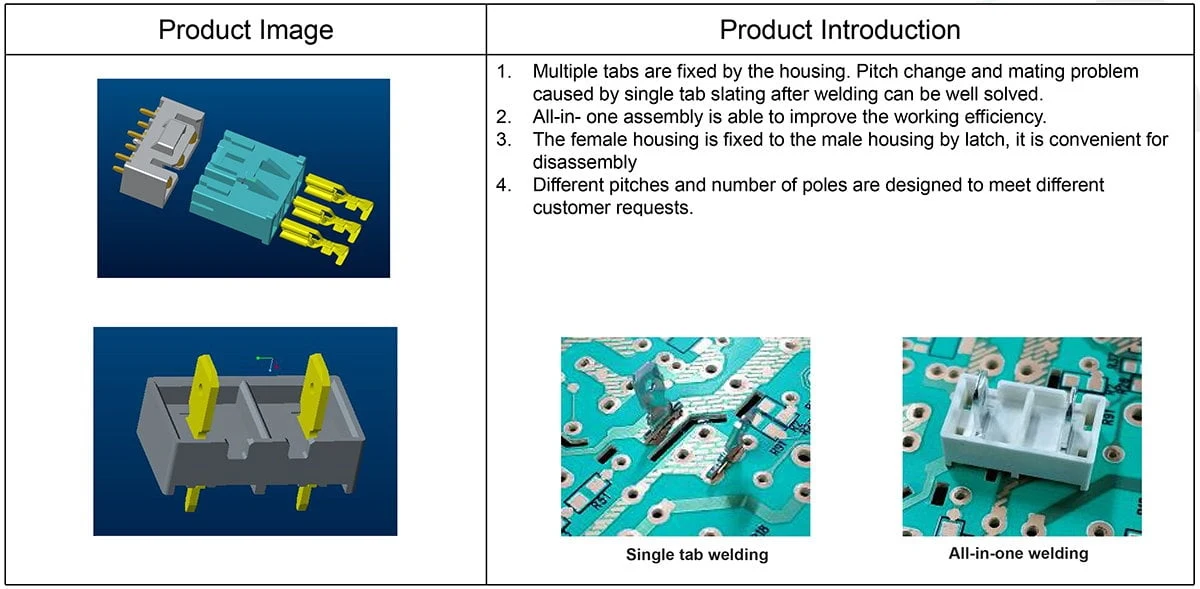
If the requirement points to a terminal product family, start with ZUCH’s terminal product routes and use the live ZUCH Connecting Terminals catalogue as the discovery route. The Connecting Terminals page and Solderless Terminals page are category-level routes when they match the controlled requirement. These pages provide product discovery only; they are not approval records or substitutes for detailed product documentation.
Where the end use relates to vehicle connections, the site’s automotive connection applications can give context for the inquiry. The appropriate product route should still be confirmed against the controlled terminal requirement, not chosen from an article.
RFQ and quality-control inputs
- Controlled drawing/part revision and mating interface.
- Wire/conductor and termination-process definition.
- Application conditions and critical acceptance criteria.
- Required drawings, inspection/test, material, or conformance documents.
- Sample quantity and validation/inspection plan.
- Demand range, release pattern, packaging and identification.
- Lot-traceability, change-control, nonconformance, and corrective-action expectations.
Fit Boundary
This checklist is suitable for buyers who need a repeatable way to approve and monitor a terminal supplier against defined requirements. It cannot replace engineering qualification or customer/market rules for safety-critical, regulated, automotive, medical, aerospace, or other controlled programs. A catalogue listing and a general quality discussion do not establish approval for a particular terminal/application combination.
To start a controlled inquiry, send the RFQ details through ZUCH’s sample request route or contact page and ask for the applicable documentation and sample route. The product catalogue is the appropriate place to identify the relevant product family before the evidence review begins.
Build the terminal supplier evidence pack before approval
The useful question is not whether a terminal supplier has a certificate. It is whether the supplier can connect the controlled part requirement to material, tooling, inspection, release and traceability records for the lot being purchased.
| Evidence layer |
Minimum buyer check |
Typical gap to close |
| Part definition |
Drawing revision, finish, mating interface and critical characteristics |
Supplier quotes a catalogue family without the controlled configuration |
| Process control |
Tool/setup control, work instruction and reaction plan |
Inspection exists but is not linked to a process change |
| Product verification |
Representative samples and agreed inspection/test results |
Certificate is supplied without part-specific evidence |
| Lot control |
Material, production, inspection and shipment identification |
Records cannot trace a delivered lot backward |
| Change response |
Written notice, re-approval triggers and nonconformance route |
Material or tooling changes are discovered after shipment |
Use the evidence pack to assign risk-based checkpoints. New tooling, a new finish, a new site, a high-volume launch or a history of nonconformance may justify a deeper audit or a controlled pilot. The exact sampling rate and test limits must come from the product and customer requirements; a generic checklist cannot replace them.
Keep the approval decision narrow and explicit. Record the part number, revision, site, process boundary, evidence reviewed, open actions and the event that will trigger re-approval. That record is more useful than a supplier label such as “approved” with no scope.
Pull-force and contact-resistance limits must stay tied to the part
A supplier control plan should show how incoming material, stamping or plating, molding, assembly, dimensional checks and electrical/mechanical tests connect to lot release. Pull-force, contact-resistance and plating limits are not universal numbers; they depend on the terminal design, wire, mating system and governing specification. Request the applicable method and acceptance limit rather than copying a generic value into the purchase order.
FAQ
Are supplier certificates enough to approve a terminal lot?
No. Verify certificate scope, then link the delivered lot to the controlled terminal requirement, material/finish evidence, inspection or test records and shipment identification. Approval should cover the specific part and process boundary.
What should trigger terminal supplier re-approval?
Use the program agreement to define triggers such as drawing, material/finish, tooling, process, site or sub-supplier changes, plus major nonconformance. The trigger list should be specific to the part risk.
How should a buyer handle a terminal supplier’s open corrective action?
Record containment, root-cause owner, due date, effectiveness evidence and the approval boundary. A conditional pilot or sample release may be appropriate, but do not silently treat open actions as full production approval.
What are terminal supplier quality controls?
They are the documented controls that link a defined terminal requirement to supplier approval, production verification, lot traceability, change management, and nonconformance response.
What should a buyer check before approving a terminal supplier?
Check the controlled product requirement, quality-system scope, relevant process/inspection evidence, representative samples, traceability, change control, and corrective-action process.
Are certificates enough to approve an electrical terminal supplier?
No. Verify the certificate’s scope, then evaluate part-specific documents and evidence that match the terminal, application, and buyer acceptance plan.
What records should follow a terminal lot?
The required record set should let the buyer link the delivered lot to material input, applicable production/process history, inspection or test evidence, and shipment identification.
Which production checkpoints matter most?
Use checkpoints that fit the program: pre-production/setup, in-process control, final release, and shipment/receipt identification are common layers. The criteria must be product- and risk-specific.
When should I audit a terminal supplier?
Audit when the program risk, volume, newness, lifecycle exposure, evidence gap, or prior performance justifies a deeper review than a desk assessment.
What belongs in a terminal RFQ?
Include the controlled part and mating interface, conductor/termination details, application conditions, acceptance criteria, required evidence, sample plan, demand pattern, and traceability/change-control expectations.
Key takeaway
A terminal supplier is ready for the defined approval boundary only when the buyer can connect the requirement to process controls, inspection evidence, lot traceability and a controlled response to change or nonconformance.
References
 Zhejiang ZUCH Technology Co., Ltd.