What Are Automotive Male and Female Connectors?
Automotive connectors allow the electrical system to supply power and carry signals to connect different parts of the automobile. They form a secure connection between different electrical components that we rely on. They are built robust enough to withstand the vibrations, humidity, temperatures, and all of the other extreme conditions that are present in an automobile.
The way the connectors are designed classify them as either male connectors or female connectors. Male connectors are typically made of metal and are either formed by punched pins or blades that protrude from one end. They connect to the female connector side of the connector via the female connector’s open socket-style terminals. So when a male connector and a female connector are mated together, they create a pathway for electrical power and or data to go back and forth through the connectors.
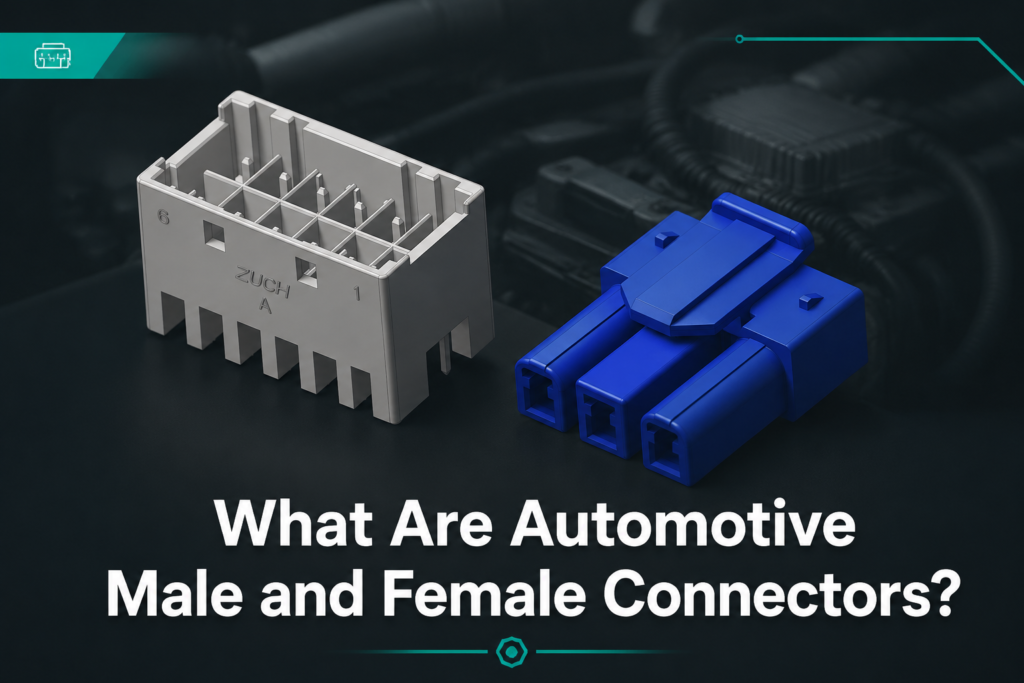
Automotive Male and Female Connectors
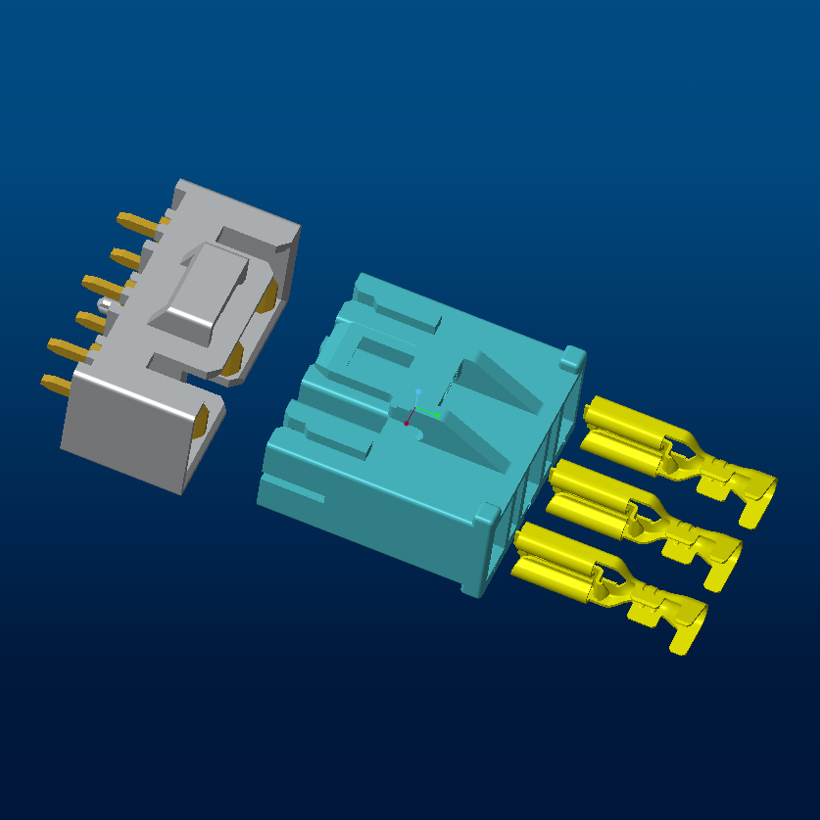
When identifying automotive electrical connectors, compare the size, contact shape and construction of the mating pair. Automotive female connectors must be matched to the corresponding male contacts, not selected by housing outline alone.
- Male Connectors: These can be either flat blades or round pins. Connectors have been specially designed to allow them to be plugged into identical female connectors with ease. They can be used to connect various automotive components. Examples of these would be connectors used for automotive battery terminals and automotive sensors.
- Female Connectors: Female connectors are also called receptacles or sockets. Their receptacle design allows the male connectors to fit securely within them, preventing them from being disconnected or damaged by electrical arcing during operation.
A male and female contact can form an electrical pair only when the complete connector system is compatible. Contact size, housing family, keying, polarization, cavity layout, locks, seals, wire range, and ratings must all match; contact gender alone does not establish interchangeability.
How Can You Differentiate Between Male And Female Connectors?
Determining whether a connector is a male or female connector is crucial in making sure they are compatible during the repair or installation. Use these tips for identifying them:
- Inspect the design of the connector: A male connector will have exposed metal pins, while the female connector will have the socket designed specifically to receive the metal pins from the male connector.
- Check molded markings and part numbers: Some product families identify contact or housing type, but M/F markings are not universal. Use the manufacturer’s drawing or catalog definition.
- Look at the size and shape of the connectors: Male and female connectors are designed to be a seamless fit – each connector has a unique design to keep the connector pairing to the intended connectors.
- Use the product packaging or owner’s manual: Vehicle wiring diagrams, owner manual, or product manuals often identify the connector type and male or female designation.
Automotive Male/Female Connector Uses
These connectors can be found in virtually every electrical component in your vehicle and allow the efficient and effective transfer of information between the various components. Below are some examples of how they are used:
1. Power Supply Connections: Provides secure supply of electricity from the battery to the various systems in the vehicle, including the ignition system, alternator, and lighting systems.
2. Sensors & Data Communication: Automotive systems use sensors to send critical data, including engine temperature and fuel level. Male/female connectors are critical to keeping this data flow happening.
3. Infotainment Systems: Infotainment systems transmit data between control units and displays. These connectors are used to complete this data transfer.
4. Lighting System: The headlights, taillights, and interior lighting systems use these connectors to receive steady power and operate continuously.
Why Buy High-Quality Automotive Connectors?
Quality is key when you’re looking to buy male and female automotive connectors. High-quality connectors lead to better durability, less chance for signal loss, lower electrical resistance, and provide protection against environmental factors (e.g., moisture, corrosion). In contrast, low-quality connectors can cause problems like system failure, vehicle malfunction, and even create safety hazards.
Connector quality should be assessed against the application: controlled drawings, mating compatibility, contact and wire range, locking and sealing system, electrical and environmental limits, test evidence, tooling, traceability, and change control. A general ISO or SAE statement does not prove that a connector is suitable for a specific circuit.
Identify Contact Gender Before Naming the Housing
Search results show that buyers often try to identify a connector from a picture, but the shell shape can be misleading. The most reliable starting point is the conductive contact at the mating interface: a pin or blade is normally described as male, while a receptacle or socket is normally described as female. The surrounding housing may be recessed, shrouded, or described differently by the manufacturer, so record the contact gender and the housing type as separate fields.
| Identification layer | What to record | Why a photo alone can fail |
|---|
| Terminal contact | Pin, blade, tab, receptacle, socket, contact size, plating | A shroud can hide the contact or make a pin housing look like a socket |
| Housing interface | Mating outline, latch, polarization, keying, seal land | Similar rectangular shells can use different keys and latches |
| Cavity layout | Position count, populated cavities, row spacing, cavity numbers, viewing direction | Wire-side and mating-face views can appear mirrored |
| Application parts | Housing, mate, terminals, seals, locks, backshell, wire range | One housing photograph does not identify the complete connection system |
A Practical Connector-Identification Workflow
- Disconnect and make the circuit safe according to the vehicle service procedure.
- Photograph both the mating face and wire-entry face with the latch or key orientation visible.
- Record every molded number, logo, cavity marking, color, lock, and seal without assuming it is the orderable part number.
- Count total and populated cavities, then note terminal type, approximate contact size, wire size, and insulation diameter.
- Match the housing in a manufacturer catalog and confirm the mating half, terminal family, seals, and accessories on the drawing.
- Verify fit and circuit mapping with the released documentation before applying power.
Why “Male Plug” and “Female Socket” Are Not Enough for Purchasing
Connector makers often publish separate product attributes for housing type, connector system, terminal type, number of positions, sealing, keying, and mating part. A purchase request should use those fields and exact part numbers instead of relying on the words male and female. This avoids a common failure mode: ordering the right contact gender in the wrong housing family.
FAQs
Q: What is the difference between male and female connectors in automobiles?
A: The male connector contains pins or terminals and the female connector has sockets or receptacles. Together, they create a secure and functional electrical connection.
Q: How do I tell the difference between male and female connectors?
A: A male connector has exposed pins, whereas a female connector has sockets. Check for labels on the connectors; also refer to the product manuals or wiring diagrams as well.
Q: What features should I be looking for when purchasing automotive connectors?
A: Check the complete mating system, cavity layout, keying, terminal and wire range, electrical load, temperature, vibration, fluids, sealing, tooling, test evidence, and service requirements. Avoid relying on a generic waterproof or standards claim.
Q: Will the male and female connectors manufactured by different companies work together?
A: They can work together only when the manufacturers document a compatible interface or the complete mating geometry, terminals, keying, cavity map, seals, ratings, and validation evidence have been verified. The brand name alone neither proves nor disproves compatibility.
Can I identify an automotive connector using only a picture?
A picture can narrow the search, but it rarely proves the exact series. Add molded markings, cavity count, mating-face and wire-side views, latch and key shape, dimensions, terminal type, wire size, and vehicle application.
Can a female housing contain male terminals?
Terminology varies between product families, which is why contact gender and housing type should be recorded separately. Use the manufacturer’s drawing and mating-part table rather than a shell-only label.
Does the exposed plastic nose determine connector gender?
Not reliably. Shrouds and recessed interfaces can make the plastic geometry appear opposite to the conductive contact. Identify the actual pin, blade, socket, or receptacle first.
Why do identical-looking male and female connectors sometimes not mate?
They may use different keys, cavity pitch, latch geometry, terminal size, seals, or polarization. Similar appearance and opposite gender do not establish compatibility.
What information should I send a supplier for connector identification?
Send clear views of both faces, molded codes, dimensions, cavity map, latch and key orientation, terminal close-ups, wire size and insulation diameter, sealing details, vehicle or equipment context, and the required mating half.
In the automotive industry, male and female automotive connectors provide mating contacts for power and signal circuits. Identify the contact, housing, mate, terminals, seals, wire range, application limits, and evidence together before purchasing or approving a replacement.
Final Takeaway: Identify the Complete Mating System
Male or female contact gender is only one identification field. A dependable replacement decision also confirms the housing family, keying, latch, cavity layout, terminal system, seals, wire range, mating part, ratings, and controlled part numbers rather than relying on appearance alone.
References and Further Reading
- Molex — Connector Fundamentals: Gender, Polarization, Keying and Mating
- TE Connectivity — Automotive connector housings catalog
- ISO 8092-2:2023 — connector terminology and general performance requirements
- IPC/WHMA-A-620 cable and wire-harness acceptance resource
 Zhejiang ZUCH Technology Co., Ltd.