How to Evaluate a Connector Manufacturer for B2B Sourcing
A connector manufacturer should be approved on evidence, not on a catalogue, a low unit price, or a certificate logo. Start with the connector’s actual interface and application, then compare quality-system documents, representative samples, traceability, process controls, and audit evidence against that requirement. The depth of review should increase when a design change, field failure, supply interruption, or incorrect connection would create higher risk.
Contents
What should a buyer evaluate before approving a connector manufacturer?
Treat approval as a staged decision. A price comparison belongs late in the process, after the buyer knows that each quotation applies to the same interface, material, validation scope, documentation set, and change-control expectation.
The most useful scorecard separates product fit from supplier-system evidence. Independent supplier-assessment guidance describes reviewing documented processes, control points, performance criteria, and traceability; that is a more defensible basis than a sales presentation.
| Decision stage |
Buyer question |
Evidence to request |
Approval outcome |
| Requirement screen |
Does the offered part match the intended interface and use? |
Drawing, mating definition, material declaration where required |
Continue only if the offer is comparable |
| System screen |
Does the supplier control documents, changes, and nonconformities? |
Current quality-system scope, change procedure, corrective-action example |
Approve for sample review or close gaps |
| Product screen |
Does a representative build meet the agreed acceptance plan? |
Sample identification, test report, inspection record |
Release for pilot or reject |
| Process screen |
Can the supplier repeat the result? |
Process flow, control plan, traceability example, audit evidence |
Approve conditionally or for production |
| Ongoing control |
Will changes and defects be visible early? |
Change notification, complaint containment, lot records |
Maintain approved status with review points |
Important: A certificate is not a substitute for part-specific evidence. Independent connector-certification guidance shows that applicable safety requirements depend on the connector product and market. Confirm the exact product scope, document version, and required marking before using any certification claim in an approval decision.
How do you lock the connector requirement before comparing suppliers?
Before sending an RFQ, convert the design need into an approval basis. A supplier cannot provide meaningful evidence if the buyer has not identified the mating counterpart, conductor, termination approach, environment, and acceptance method.
For a crimped terminal, the terminal is only one element of the connection. The wire construction, crimp geometry, approved tooling, housing fit, and test method can all affect the result. An engineer’s question on Electronics Stack Exchange illustrates a common concern: a contact can appear close to correct yet fail to fit its housing when the termination process is wrong.
Define the following before comparing suppliers:
- Connector or terminal drawing, revision, mating counterpart, and any approved equivalent process.
- Wire size, conductor construction, insulation diameter, and termination method.
- Electrical, mechanical, environmental, and lifecycle conditions that are relevant to the finished assembly.
- Applicable customer, product, or destination-market requirements.
- Required documentation, sample quantity, validation sequence, and acceptance authority.
- Forecast range, release pattern, packaging, labeling, and change-notice requirements.
This step does not make a standard universal. It makes the buyer’s requirements explicit so every supplier is measured against the same basis.
Which documents prove that a supplier’s quality system fits the program?
Document review should show how the supplier controls the exact risk—not merely that a policy exists. TE Connectivity’s supplier quality manual is useful as a benchmark because it requires lot traceability through raw material, inspection, test operations, rework, sub-suppliers, and shipment.
| Request |
What to check |
Why it affects procurement |
| Quality-system certificate |
Issuer, current validity, activity and site scope |
A certificate outside the manufacturing site or relevant activity may not cover the supplied part |
| Product drawing and revision |
Interface, material, dimensions, critical characteristics |
Prevents quoting a similar but non-interchangeable part |
| Control plan or inspection plan |
Incoming, in-process and final checks; reaction to nonconformance |
Shows whether critical features have defined controls |
| Traceability example |
Lot identifier linked to material, process and test/inspection records |
Supports containment if a defect is found |
| Change-control procedure |
What triggers customer notification and re-approval |
Protects against unreviewed material, tooling, process or sub-supplier changes |
| Corrective-action example |
Root-cause method, containment and effectiveness check |
Shows how the supplier treats recurrence |
Ask for records that belong to the offered part or a closely comparable process. A generic presentation is a starting point, not a release decision.
What sample and validation evidence should you request?
Require a drawing-specific validation plan before treating a sample as representative. The plan should state the sample identity, revision, build conditions, test method, acceptance criteria, laboratory or inspection responsibility, and any retest trigger.
The test list should follow the interface and application. Depending on the part, a plan may address contact resistance, insulation-related requirements, mechanical retention, fit, durability, temperature exposure, vibration, corrosion exposure, or other defined conditions. Do not copy a limit from an unrelated connector family: TE’s published product specifications show that test methods and limits are product-specific.
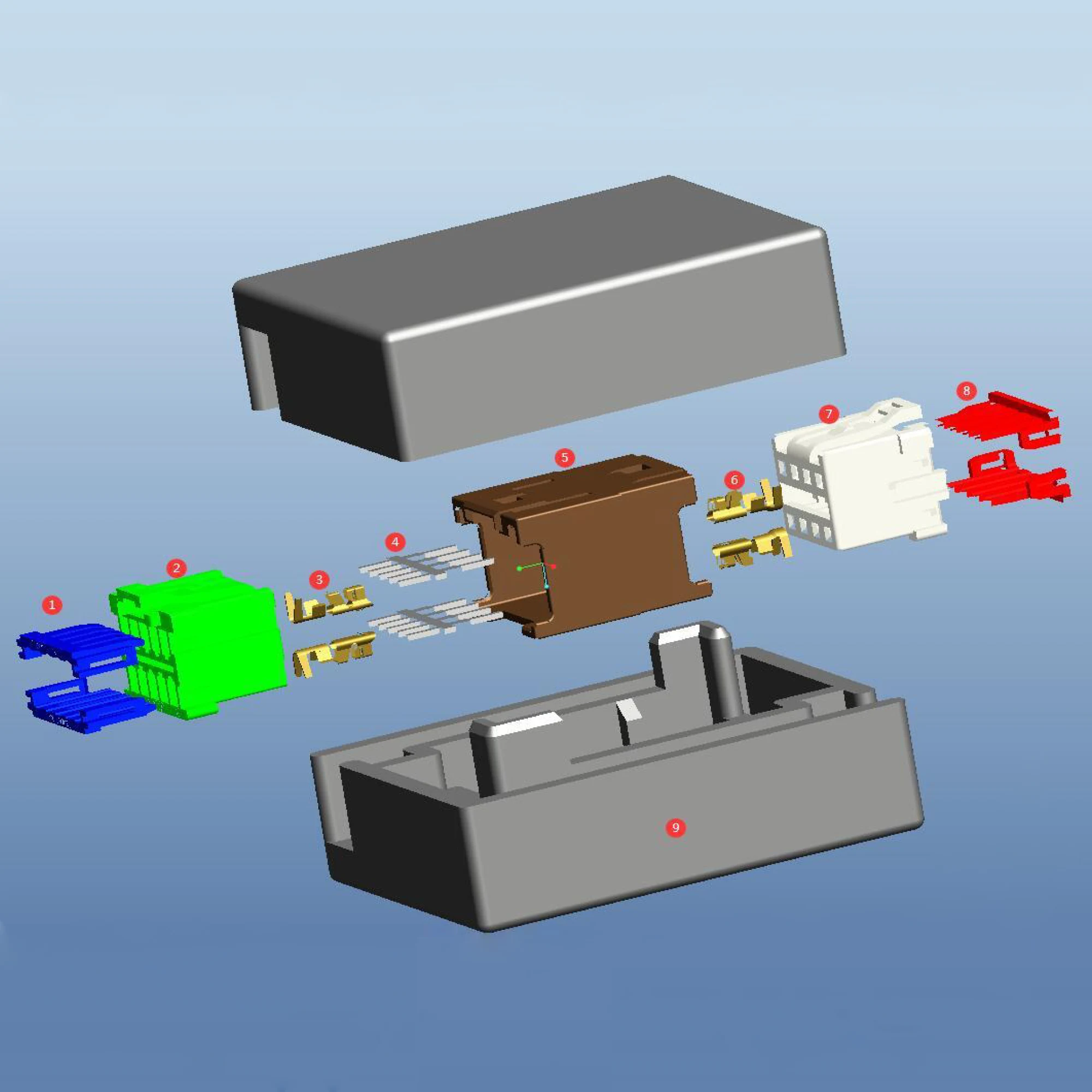
A credible sample package identifies what was actually tested. It should let the buyer distinguish a production-intent sample from a hand-built prototype, and a test report from a general capability statement.
How do traceability and process controls reduce sourcing risk?
Traceability shortens the distance between a discovered problem and a bounded response. For a connector or terminal program, ask whether the supplier can trace the delivered lot back through its material input, production route, inspection/test evidence, rework status where applicable, and shipment record.
Process control matters just as much as the final inspection. Review how tooling is identified and maintained, how setup approval is recorded, how critical characteristics are checked, and how nonconforming material is segregated. TE’s supplier requirements also describe buyer access to relevant quality records and the need for containment when a nonconformance is reported. For a related technical reference, see Terminal Supplier Quality Control Checklist for B2B Buyers.
The practical question is simple: if the buyer sends one lot number and one defect description, can the supplier identify the affected population, stop further movement, explain the evidence, and show what changed? If not, the purchase order should not be the first time this is tested.
When should a desk review become a factory or process audit?
Use a desk review for a lower-risk, well-defined purchase when the documentation and samples are strong. Escalate to a remote or on-site audit when the program has high consequence, a new manufacturing process, a new tool, a long lifecycle, significant volume, a change in sub-supplier, or unresolved evidence gaps.
An audit should follow the material and product flow. Start at incoming verification, then look at storage, tooling/setup, production controls, inspection, nonconformance segregation, rework control, records, and shipment identification. TE’s audit requirements describe system, process, and product audits and a risk-based periodic approach.
Approval does not need to be binary. A buyer can approve a supplier for prototypes, a controlled pilot, or a restricted production scope while specified actions remain open. Record the scope, evidence, owner, review date, and trigger that would require re-approval.
Which ZUCH product route fits the inquiry, and what should go in the RFQ?
For a buyer whose requirement is a terminal-style connection, start with ZUCH’s connector product routes and then the live ZUCH Connecting Terminals catalogue. The catalogue presents product screening attributes including series, material, and crimping range, but those screen-level filters do not replace the detailed drawing and application review.
Do not select a named series from a general article. The more suitable route is to narrow the requirement, review the relevant item documentation, and then compare the requested evidence with the approval plan. Buyers with a home-appliance connection use case can also review the site’s home-appliance connection applications before asking about a product route.
RFQ inputs to send
- Part number or controlled drawing, revision, and mating counterpart.
- Wire/conductor definition and termination method.
- Application conditions and acceptance criteria.
- Required customer, product, or market documentation.
- Sample quantity, validation plan, and inspection responsibility.
- Annual demand range, release pattern, packaging and labeling needs.
- Lot traceability, change-notice, and corrective-action expectations.
Fit Boundary
This checklist fits teams that can define a connector interface and evaluate supplier evidence before release. It is not a substitute for a customer-specific qualification procedure, a regulated-program approval, or an engineering review of safety-critical conditions. A live catalogue entry is a useful starting point, not proof that a particular item is approved for a specific end product. For a related technical reference, see Cable Assembly Specification Checklist: 18 Details Buyers Should Define Before Quoting.
To begin a document-and-sample review, use ZUCH’s sample request route or contact page and provide the RFQ inputs above. That gives the supplier a defined basis to route the request through the product catalogue instead of responding to an underspecified “connector” inquiry.
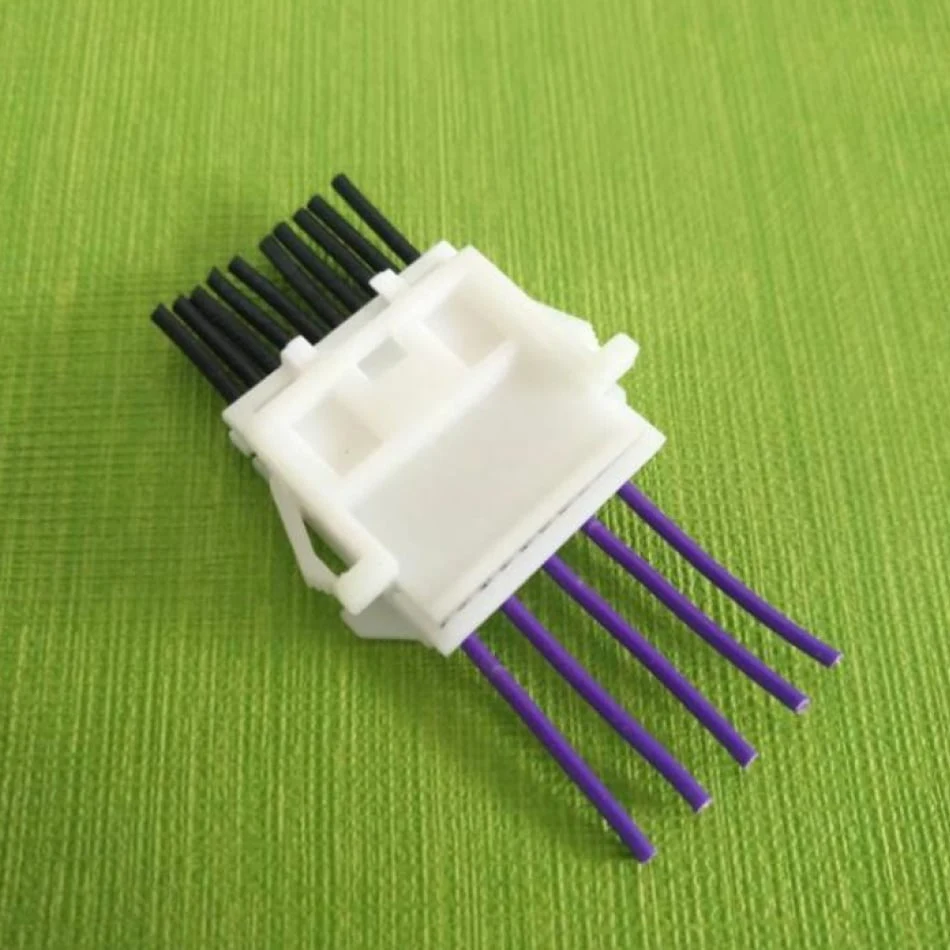
Use a supplier scorecard before comparing connector quotations
A lower unit price is not a supplier qualification method. Buyers comparing connector manufacturers should score the same evidence for every candidate, then record which items are verified, conditional, or still missing. This also prevents a polished catalogue from being mistaken for manufacturing capability.
| Scorecard area |
Buyer evidence |
Decision question |
| Product fit |
Controlled drawing, mating parts, materials and application limits |
Can the supplier quote the exact interface rather than a similar family? |
| Process capability |
Tooling control, inspection plan, sample records and change control |
Can the process hold the critical features through production? |
| Quality system |
Scope of certification plus part-specific records |
Does the system cover the site and process being purchased? |
| Supply continuity |
Capacity, second-source plan, lead-time assumptions and escalation route |
What happens if demand, tooling or a sub-supplier changes? |
| Commercial control |
Revision, packaging, traceability and nonconformance terms |
Can the buyer identify and contain a suspect lot? |
The strongest comparison is evidence-led: the same drawing revision, the same sample request, the same acceptance criteria, and the same questions about material and process changes. Treat an audit as a way to verify open risks, not as a substitute for a controlled product requirement.
For high-consequence or high-volume programs, document the approval boundary. A supplier may be acceptable for a sample or pilot build while production approval remains conditional on validation, traceability and corrective-action closure.
A quality certificate supports review, but does not approve the part
Ask for the certificate scope, legal entity, site and validity, then connect that system-level evidence to the specific connector drawing, material, tooling, inspection and validation records. ISO 9001 can support a supplier-quality review, but it does not prove that a particular connector is interchangeable, compliant or suitable for the buyer’s application.
FAQ
Is an ISO certificate enough to approve a connector manufacturer?
No. Check the certificate scope and site, then review the specific part, material, tooling, inspection, traceability and change-control evidence for the program. A management-system certificate does not prove fit for a particular connector application.
When should a connector buyer request a factory or process audit?
Escalate beyond a desk review when the part or process is new, the program is high consequence or high volume, evidence conflicts, traceability is weak, or a significant site/tool/material change is proposed.
How can buyers compare connector suppliers fairly?
Use the same controlled drawing, sample quantity, acceptance criteria, documentation request and commercial assumptions for every supplier. Record verified evidence and open actions separately from the quoted unit price.
What should I check first when evaluating a connector manufacturer?
Start with the controlled interface, mating condition, conductor, application environment, and acceptance criteria. Supplier evidence only becomes comparable after the buyer locks that requirement.
Is an ISO 9001 certificate enough to approve a supplier?
No. Check the certificate’s site and activity scope, then review part-specific controls, samples, traceability, and the applicable customer or market requirements.
What tests should I request for a connector?
Request the test plan that applies to the offered drawing and intended use. The correct methods and limits depend on the connector family, interface, materials, environment, and product requirements.
How can a buyer verify traceability?
Ask for a lot-record example that links the delivered item to material input, production route, inspection/test evidence, and shipment identification. Test the process with a realistic retrieval request during qualification.
Do I need a factory audit?
Use one when the risk, volume, novelty, lifecycle, or evidence gap justifies it. A desk review may be adequate for a lower-risk, well-defined purchase with strong documents and representative samples.
What should be included in a connector RFQ?
Include the controlled part or drawing, mating counterpart, conductor and termination, application conditions, required evidence, sample plan, demand pattern, and traceability/change-control requirements.
Can I approve a connector from a catalogue listing?
No. A catalogue helps identify a potential product route. Approval requires the detailed documentation and evidence that match the buyer’s actual application and acceptance plan.
Key takeaway
Approve a connector manufacturer against documented product fit, process evidence, traceability, continuity and change control. A catalogue and a certificate are useful inputs, but neither replaces part-specific validation.
References
 Zhejiang ZUCH Technology Co., Ltd.