Zhejiang ZUCH Technology Co., Ltd.
Consider three quotations for a “D-shaped connector” whose photographs appear similar but whose parts cannot share a mating half. One could be a legacy D-sub signal interface, another a molded power housing, and a third a keyed machine-harness shell. This is an illustrative procurement comparison, not a reported buyer case. The mismatch would not necessarily be a supplier quality issue; it would be a category mistake that delays sampling and approval. The D-shaped connector market is best understood through applications, interfaces and evidence, not a single market-size number or the outline alone.
Summary: The phrase D-shaped connector market does not identify one unified standard, product class or certification. “D-shaped” may describe a shell, a keyed profile or a family-specific housing, while contacts, pitch, pin count, signal/power duty, shielding and environmental rating vary widely. Buyers should define the mating interface and application first, then compare drawings, availability, lifecycle support and test evidence. This application-led view is more defensible than quoting unsupported market forecasts or treating every D-shaped part as interchangeable. Retain a verified mating drawing with each quote.
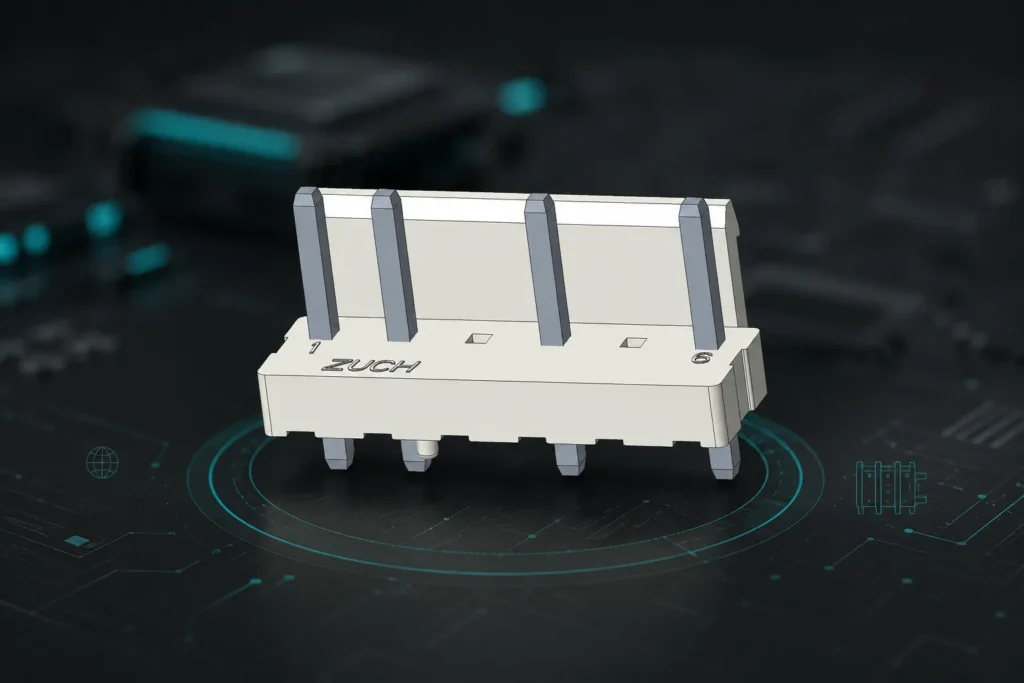
A D profile can help with polarization, orientation and panel identification, but it is not a complete specification. For a specific 25-pin example, see What Is a D-Shaped 25 Pin Connector?. The relevant question is what the interface must carry and how it will be installed, serviced and verified.
A D shape is an outline, not a product category
In the D-shaped connector market, similar outlines do not establish an interchangeable product class.
Connector naming is often inherited from a drawing, legacy catalog or technician vocabulary. A D-sub family, a D-shaped industrial housing and a custom keyed connector can all be described with similar words while having different mating systems. Pin count alone does not establish compatibility; gender, contact arrangement, shell dimensions, keying, termination, locking and electrical limits also matter.
| Buyer lens | What to compare | What not to infer |
|---|---|---|
| Interface | Mating drawing, shell, keying, pinout, gender and retention. | Compatibility from a similar silhouette or pin count. |
| Application | Signal, power, mixed circuit, panel, cable-to-cable or board interface. | Electrical suitability from the name “D-shaped.” |
| Environment | Indoor/outdoor, dust, water, vibration, temperature and chemicals. | Ingress protection from the profile alone. |
| Supply | Lifecycle, tooling, minimum order, documentation and change control. | Long-term availability from one distributor listing. |
Applications and procurement signals matter more than a market-size label
Demand is better segmented by use than by an unsupported global total. Signal interfaces may prioritize shielding, pinout control and serviceability. Industrial power or mixed-contact interfaces may prioritize conductor termination, current path, keying and enclosure integration. Transportation and outdoor equipment add vibration, temperature and contamination questions. Each segment needs a different evidence package.
| Application segment | Useful selection dimensions | RFQ evidence |
|---|---|---|
| Data or control equipment | Signal integrity, shielding, pinout, retention and mating cycles. | Interface drawing, contact specification and relevant test method. |
| Industrial machinery | Vibration, service access, keying, cable routing and enclosure fit. | Mounting drawing, retention and environmental conditions. |
| Power or mixed circuits | Current path, wire size, temperature rise and touch protection. | Contact/termination data and configuration-specific validation. |
| Legacy replacement | Dimensional interchange, availability, tooling and change control. | Original mating sample, drawing, pinout and obsolescence plan. |
Use standards and drawings to define the interface
There is no universal “D-shaped connector standard” that replaces the product drawing. Identify the applicable product, equipment and destination-market requirements through the IEC Webstore and ISO Standards catalog. Where enclosure ingress is claimed, identify the test classification and sample configuration; where signal performance is claimed, identify the method and relevant system conditions.
For North American procurement, review the exact category and conditions of acceptability in UL Resources. A compliance logo or supplier statement should not be treated as proof that every variant, mating combination or end use is covered. Keep the evidence attached to the part number and revision being quoted.
Avoid category confusion in the RFQ
- Send the mating-half drawing or a verified sample; record pinout and orientation.
- State signal, power or mixed duty, wire range, voltage/current and duty cycle.
- Define environment, mounting, vibration, service access and required ingress scope.
- Compare lifecycle, tooling, documentation, change notification and replacement availability.
- Approve a sample using the actual harness, panel and maintenance procedure.
ZUCH can be considered when its documented housing and contact options fit the defined application. The useful commercial comparison is evidence, fit and lifecycle support, not a ranking based on the shape label.
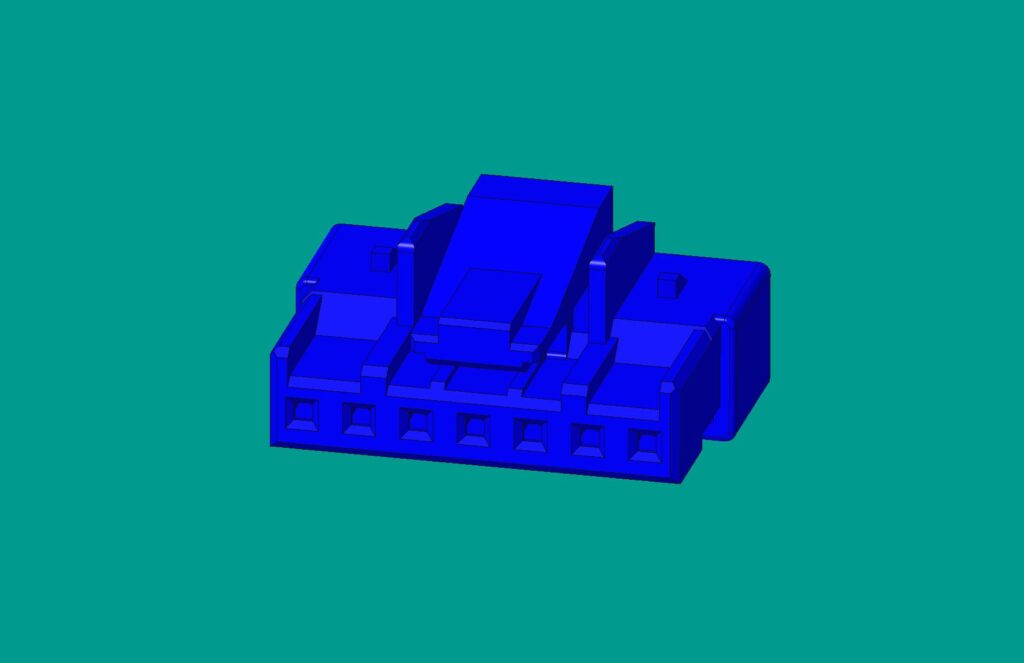
Questions buyers ask before sourcing a D-shaped connector
Is D-shaped connector a universal standard?
No. It is a descriptive term used across different families and applications. Confirm the drawing, mating system, contacts and test scope for the exact part.
Does a 25-pin D-shaped connector mate with any other 25-pin part?
No. Pin count does not establish shell dimensions, gender, keying, pinout or termination compatibility. Use a drawing and verified mating sample.
How should buyers compare the D-shaped connector market?
Segment by application and interface, then compare evidence, supply continuity, lifecycle and total installation risk. Avoid unsupported market-size or growth claims when a source and scope are not available.
Can D-shaped connectors be used outdoors?
Only when the exact assembly and host enclosure have evidence for the intended exposure. Check sealing, cable entry, materials, vibration and maintenance conditions.
What information should be included in an RFQ?
Include mating drawing, pinout, signal or power duty, wire range, envelope, environment, mating cycles, required tests, quantity and change-control expectations.
Is a D-shaped connector the same as a D-sub connector?
No. D-sub is a defined connector family with its own interface conventions, while D-shaped can be a descriptive outline used by different connector families. Confirm the mating drawing, contact arrangement, pitch, keying, termination and environmental requirements before treating two D-shaped parts as related or interchangeable.
References
- IEC 60512-1: Electrical connectors and components — Tests and measurements
- IEC 60512-2-1: Contact resistance test method
- UL 1977: Component connectors for use in data, signal, control and power applications
- CAN in Automation: CAN knowledge and application context
Decision summary for D-shaped connector sourcing
The sound principle is to buy the interface and evidence, not the silhouette. First identify the application, mating geometry, contact duty and environmental boundary; then verify fit with a drawing or sample and confirm the required test or compliance scope. Treat “D-shaped” as a search term that helps find candidates, never as proof of interchangeability, performance or market position. This approach also improves lifecycle decisions because availability, revision control and service access become visible before a redesign is forced. For a defined requirement in the D-shaped connector market, review ZUCH’s product options and ask for the drawings and evidence needed to close the remaining compatibility questions.