At first, picking between a 6-pin rectangular connector or a 2-pin rectangular connector might seem straightforward; one has more pins than the other. In practical electrical/electronic use, though, this decision greatly affects wiring design, signal stability, power delivery, installation area/space, maintenance, cost, and long-term reliability.
When considering how many pins will be needed as an engineer, a purchasing manager, or an equipment manufacturer; you will also want to know the answer to the question ”What type of connector offers me the best means for providing a safe; clean; and scalable electrical interface from my product to the sensor it is connected to?” This guide shows you whether rectangular connectors with 6 pins or 2 pins are suited for your application and provides you with the information necessary to make an informed decision when purchasing connectors for use with your application.
What Is a Rectangular Connector?
An electrical connector that has been designed as a rectangular shape to attach all of the connections in an orderly and secure manner is considered to be a rectangular connector. Because they are safe to use and can be installed properly, oval-shaped electrical connectors have increased reliability and speed when installed over loose wires. Rectangular connector installation is easier than loosening or cutting thin walled wires.
In Industrial Automation, LED Lighting, Automotive Electronics, Power Equipment, Medical Devices, Communication Systems, Consumer Appliances, Battery Packs, Sensors and Control Panels all use Rectangular Connectors. Depending on their Configuration, these Connectors provide Power or Signal Transmission or Both.
The pin configuration specifications of a connector are essential technical measurements for an electrical connector. Usually, a 2-pin configuration is manufactured to connect primary and secondary electrical power supply lines or one step of a circuit operation. However, manufacturers also create 6-pin configurations to connect multiple circuits, power and signal wires together, and provide control functions from one location.
What Is a 2 Pin Rectangular Connector?
Located within a rectangular housing, a 2 pin rectangular connector features two conductive contacts. In most uses of the connector, the two pins are used to supply two different voltages or currents to the device, such as in applications for Line and Neutral or simply as a Signal connection between the connector and the device.
Due to their simplicity, compact size, ease of wiring, and ability to reduce overall cost, this type of connector is widely used. If you only require a standard 2 Pin connection for power input or output applications, then using a two pin connector may prove to be the most efficient method for achieving your desired results. By eliminating excess connections and providing a means of assuring correct wiring, only having two conductors shall significantly reduce the complexity of your system as well.
Some typical uses for this type of device include: LED strip lights, small DC motors, battery powered devices, low voltage power, basic sensors, fans, speakers, small appliances, and simple control circuits.
What Is a 6 Pin Rectangular Connector?
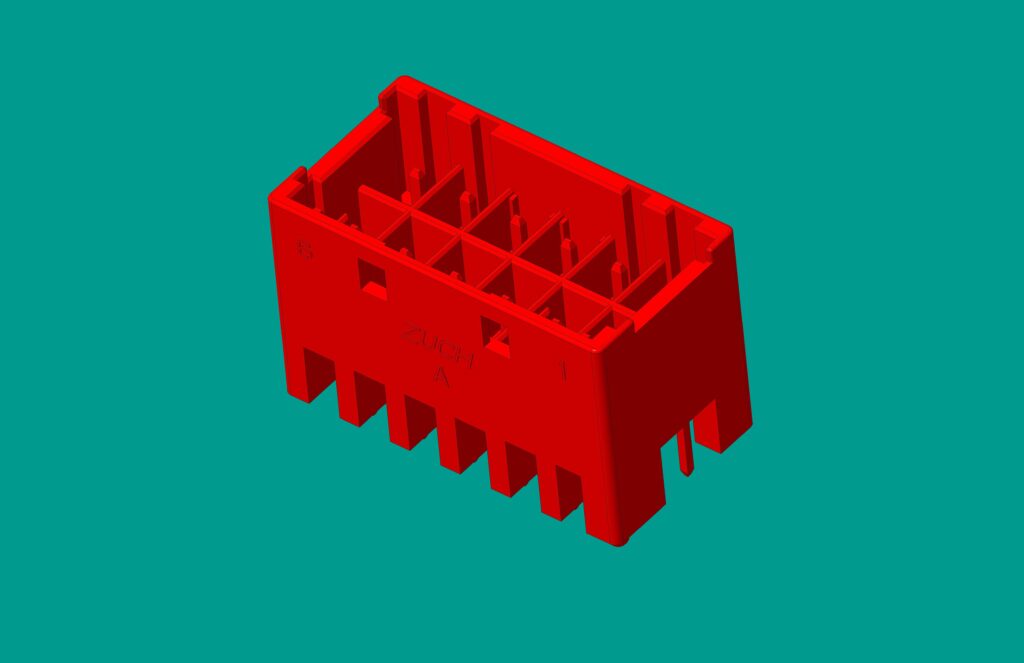
A rectangular connector with 6 pins has a single piece of connecting hardware that has 6 pins providing connection between 6 electrical connections and also has 6 individual signalling wires. This type of connector is used in applications where multiple power lines or many signals or many control lines or many communications lines will be needed as well as applications requiring both power and data.
A multi-wire plug connector offers a larger capacity than using three 2-pin plugs (i.e., one 3-pin connector), in addition, it still keeps the connector small and neat. A multiple pin connector can be used by designers instead of multiple, separate, 2-pin connectors to simplify assembly and reduce cable clutter.
Some examples of where these connectors are commonly used include industrial controllers, robots, vehicles wiring harnesses, low-level lighting systems having the capability of dimming and/or controlling the colour, sensor connections using power and signalling wires in one cable bundle, electronic measuring and tracking devices (ie: voltmeters, ammeters), communication devices (i.e.: telephones), etc., and any electrical devices requiring both power and control through a single point connection.
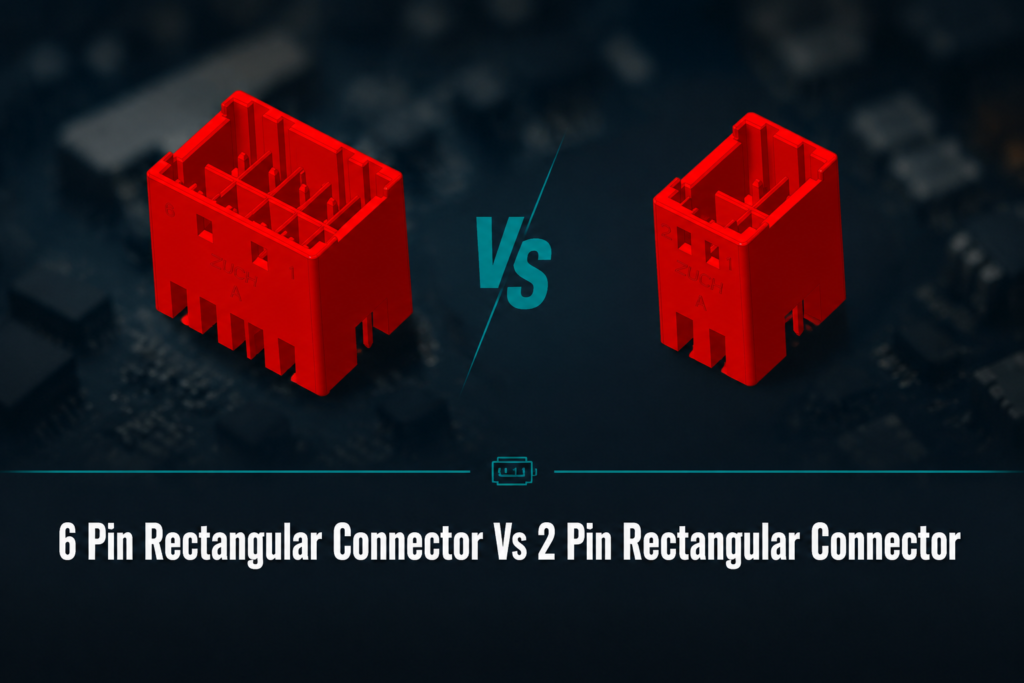
6 Pin Rectangular Connector Vs 2 Pin Rectangular Connector: Key Differences
The primary difference between these types of connectors is not only historical but the differences between the types of contacts they have. The pin count will have an effect on many other aspects when designing your product such as; the total circuit capacity, product layout, installation time, cost, troubleshooting problems, and adding to or expanding your product in the future. A table listing some quick and practical comparisons for buyers or design engineers is provided below.
| Feature |
2 Pin Rectangular Connector |
6 Pin Rectangular Connector |
| Number of contacts |
2 contacts |
6 contacts |
| Best for |
Simple power or two-wire signal |
Power, signal, control, or mixed circuits |
| Size |
Usually smaller |
Larger but still compact for multiple circuits |
| Wiring complexity |
Very simple |
Moderate, depending on pin layout |
| Cost |
Lower |
Higher per unit, but may reduce total connector count |
| Future expansion |
Limited |
Better flexibility |
| Typical applications |
LED lights, batteries, fans, small motors |
Automation, sensors, control modules, automotive harnesses |
When Should You Choose a 2 Pin Rectangular Connector?
Two pins are all that is needed to connect power as well as to connect two wires to form a complete circuit when working with a simple circuit that only requires two wires for the connection. There is no reason to add additional pins to your device if it only requires power input, power output, and/or basic two-wire signals; doing so will only serve to increase both the cost and size of the device without adding any additional performance benefits.
When your design calls for a low-cost and compact, easy-to-assemble and maintain connector, you should consider using a 2-pin connector. Moreover, if you do not anticipate adding any other control or communication signals to the connector after installation, then this could be an appropriate choice as well.
A 12-volt LED light bar uses two (2) wires to connect, a positive (+) and negative (-), with either of them being connected to the appropriate terminal; therefore, it is effective to use two (2) pin rectangular connectors, as they are easy to locate, relatively cheap, readily available, and can be replaced by a technician on-the-go. A six (6) pin rectangular connector will not be a viable option for the above system unless the device has an additional functionality, such as being able to dim or change colors or dim via a feedback sensor.
When Should You Choose a 6 Pin Rectangular Connector?
When you need increased flexibility to wire multiple connections together, a six-pin rectangular connector is an ideal choice. If the equipment uses a combination of power and multiple signal wires (e.g., power, data, alarm), as well as communication lines/safety interlock wires/future expansion, then using a six-pin connector will provide you with a more practical and professional way to do so.
When your goal is to consolidate multiple separate connectors into one, improve cabling organization, or create a more serviceable connection design, a 6-Pin Connector is a good choice. This type of connector also works well in control systems that require multiple functions to be connected and disconnected simultaneously.
A smart light module will likely utilize power, ground, dimming control, color temperature control, data input, and a feedback signal (six total). A six-pin rectangular connector would allow for all of these types of circuits to be routed through a single connector, resulting in cleaner wiring and a much lower probability of mismatched connections being made at the time of installation.
Current Rating
The current rating indicates what current can be safely passed through each pin of a connector. For a connector to deliver power, it must contain enough current capacity so that the connector does not overheat so that the voltage will not drop significantly and the connector will not fail or become damaged. Therefore, do not make the assumption that a six pin connector has more current capacity than a two pin connector. The current capacity of a connector is based on the shape and size of the contact(s), and the materials used in making them, what type of plating it has, housing design and size, and compatibility with the wire gauge used in the connector’s wiring.
Voltage Rating
When selecting a connector, its voltage rating will determine the highest voltage that can safely be supported by that connector. Low-voltage DC applications will typically meet the voltage requirements; however, you will need to verify that you meet the rating with high-power or industrial applications. Therefore, be sure to refer to the connector’s datasheet and other applicable safety standards.
Wire Gauge Compatibility
The wire size must be appropriate for the connector. If the wire size is less than what is required for either a crimp or a terminal, it could lead to poor mechanical retention between components. If a wire is too large in diameter, it may not fit properly inside a connector/housing. Appropriate wire gauge matching leads to maximum performance and reliability via mechanical and electrical attributes.
Contact Material and Plating
The materials used for making contacts are typically made of copper alloy brass (copper and zinc), phosphor bronze (copper, tin, phosphorus), metals that provide high conductivity and low resistance to electrical current, and other similar conductive materials. They can also be electroplated with tin (from approximately.025 in), gold and/or nickel. Tin plated contacts are generally preferred for low-level signal and general-purpose connections; however, gold plated contacts are often chosen due to their reliability in low level signal applications.
Locking Mechanism
To avoid accidental disconnection due to vibration, motion and/or pulling force, a reliable locking device is required. This can be addressed through good latch design/engineering to improve safety and minimize maintenance issues, particularly in automotive, industrial, outdoor and removable equipment applications.
Environmental Protection
If your connector will be exposed to dirt, moisture, chemicals, oil or extreme temperature changes, you may want to consider using sealed or waterproof rectangular connectors. An inspection of the IP rating, operating temperature range, housing material and resistance to both corrosion and UV exposure is recommended if the device is to be utilized outdoors.
Common Applications of 2 Pin and 6 Pin Rectangular Connectors
When sourcing connectors, buyers may consider the type of connector based on its application rather than solely by the number of pins. A two-pin connector will typically be chosen for applications such as DC power cords, LED modules, battery charging ports, small pumps, solenoid valves, fans, audio devices, and compact consumer electronics.
A six-pin connector is frequently employed in industrial sensors, control boards, stepper motors, multi-function LED systems, automotive accessories, power tools and/or test and communications equipment wiring harnesses. The connectors are useful when you want to create a single, removable connection that can contain multiple circuits simultaneously.
Using a 6 pin OEM plug could improve product appearance and speed up your assembly process when designing or manufacturing a product. For example, instead of using several different connectors, worker can use one keyed way for all your connectors, therefore reducing labor time and the chance of making errors while wiring your device together.
How Pin Number Affects Product Design
The layout of a product is influenced by the number of connector pins. Fewer pins typically result in smaller housings, simpler cable assemblies and lower component costs. More pins support more advanced functions; however, they require more planning, clarity in any documentation detailing the pin-out, as well as ensuring a proper electrical separation between power and signal wires.
If an application uses a 6 pin connector, the designer does not have to use all of the pins on the connector. Some designers will reserve unused pins for potential upgrades in the future. For example, if the designer is developing a family of products that share the same housing or wiring harness, this can be of benefit to him/her. However, any unused pin will add cost and possibly require the use of additional space on the connector, so proper justification is required to use this type of approach.
Sensitivity to electrical signals can be affected by how conductive pins are located in their mounting holes. If a high current power pin is close to a low level signal pin, then increased electrical noise could occur from the two pins being improperly located together. Therefore, when designing “sensitive” applications, it would be beneficial to consult the connector manufacturer or look at test data before completing the design.
Installation and Maintenance Considerations
Typically, a 2 pin connector makes installation much less complicated than any alternate method due to only requiring two wires to identify and terminate (which reduces the requirement for training of assembly personnel), as well as simplifying any troubleshooting of failure due to power supply. If there is a power failure for a given device, it is very easy for the technician to test both positive and negative connections.
Wiring a six-pin connector requires extra care. There must be a clear definition of the pinout so that each wire connects to the correct terminal. Color-coded wires, part numbers printed on the housing and wire labels, as well as other forms of identification will help to minimize errors during the assembly process and in the field.
In terms of maintenance, a multi pin connector provides a tremendous convenience to technicians since they can disconnect one plug to remove the module instead of having to detach numerous individual wires. This is one reason why 6 pin rectangular connectors are commonly found in both modular equipment and control systems.
Cost: Is a 6 Pin Connector Always More Expensive?
From a component standpoint, a 6 pin connector typically costs more than a 2 pin connector due to extra terminals, larger housing and possibly having a more complex locking mechanism. However, Total System Cost does not always equal Higher Total System Cost for the system with the 6 pin connector over a comparable system using the 2 pin connector.
In cases where you would normally need to use many 2 pins for each piece of equipment that needs connection via a wire harness, you could use one 6 pin to reduce total number of parts, design complexity, assembly time and inventory control. If you are producing in large quantities, this can result in huge savings.
The total expense of the interconnect system including the cost of a socket, the price of terminals, cable assembly (labour), tooling, testing, error rates, maintenance, etc. should be compared to determine the best option.
FAQs
Can I adapt a 6-pin to an 8-pin connector?
In some instances, this is true; however, depending on the electrical function, pinout configuration, current rating, voltage rating, housing compatibility (including size), etc., this would not apply or work for all situations. Using a 6 to 8 pin adapter will only function given that the necessary circuits are properly mapped out and that the non-functional pins are non-essential for the device operation.
It’s important to never assume that two similarly shaped connectors will be able to work together electrically. Always compare the specifications of the two connectors, including their data sheets, wiring diagrams, and pin assignments, prior to using an adapter with them. If the connector is to be used in a power system, automotive applications, industrial applications, or in safety related circuits, consult with an experienced engineer or supplier of connectors before altering the configuration of either connector.
What are common problems with 6 pin connectors?
Some of the most common reasons for failure include poor crimping, bent pins, contact wear, and more such as loose terminals, oxidation, overheating with too much current, weak locking, moisture ingress and disconnection due to vibration. The majority of the failures are not a result of the 6 pin design but instead due to inadequate selection of connectors, substandard quality of terminals, or poor assembly.
To minimize those types of risk you can use the proper crimping tool, check the pinout prior to use, conduct pull-force test as required, select properly rated connectors and consider the use of sealed housings in harsh environments.
Is a 6 pin rectangular connector better than a 2 pin connector?
Not necessarily. A 6 pin connector may be preferable to use in multi-circuit situations, whereas a 2 pin connector is the better choice if you are only using simple two-wire connections. The best connector will be chosen based on matching the function, size, cost and reliability requirements of the particular project or product.
Can a 2 pin connector carry both power and signal?
It can be achieved, however, typically only in basic circuits or special designs. Typically, when two pins are used to supply power or one pair of output signals to the circuit, a four, six or higher (in pins) connector is typically the most appropriate way to connect power and multiple command or feedback signal lines together.
How do I choose the right connector pin number?
The first step is to count all the conductors required for your application: power, ground, signal, communication, control, shielding, and reserved lines; next, determine future expansion possibilities; how much space do you have available?, what is the estimated cost?; lastly review if you could provide better circuit separation by using multiple connectors for improved safety and/or serviceability.
To summarize, the decision to use either a 6 pin rectangular connector or a 2 pin rectangular connector is based upon factors related to the complexity of the circuit, available real estate, cost, reliability of operation, and anticipated future expansion. For simple power or two-wire signal connections the 2 pin connector is the best choice. Conversely, the 6 pin connector is the preferred option for applications that require multiple function capability within an organized interface through the use of a single connector. By using a connector pin count, electrical rating, material quality and installation environment that corresponds to the actual specifications of your project, there will be fewer failures, easier assembly, and ultimately a more reliable product.
 Zhejiang ZUCH Technology Co., Ltd.