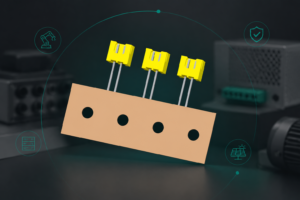
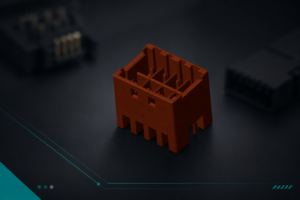
The way technology has grown has made her equipment more compact while often still requiring an increased amount of power then before (and sometimes have multiple functions) creating new challenges for providing connections between equipment/hosts. Flexibility is one of the major advantages of modular rectangular connector systems compared to fixed-pin systems. This means that both the purchaser and engineer have the option to build their own individual interconnect solution using a variety of modules, all within the same rectangular housing. Because of the extreme flexibility, modular rectangular connectors can be used in all sorts of applications including industrial automation, robotics, energy storage, rail transportation, machinery, and medical devices (among others) that require high levels of performance.
There are many options available for purchasing rectangular connectors for new projects or replacing old connectors; this article provides you with information regarding modular design capabilities, important types of specifications, and how to choose an appropriate option for long-term reliability.

What Are Modular Rectangular Connectors?
Rectangular modular connectors are constructed from rectangular housings, which account for most electric connectors used today. Molded plastic inserts are available for interchangeability between an electric connector or device to another application-specific device.
Each module is designed to perform a particular function such as power transfer, control of signals, high-speed digital transfer, coaxial cable connections, pneumatic airline connections and fiber optic connections for optical communication.
With a modular connector system, you can create one compact connector system that can combine different ways of connecting all together instead of using several different, separate connector systems for each circuit. Therefore, when connecting many pieces of equipment, you will have a much smaller installation space and less complexity in the wiring that will result in a more efficient way to maintain the equipment and a much nicer appearance to the equipment.
In the chemical industry, rectangular electrical connectors can be used in a wide range of applications, but they typically fall into four categories: reliable mechanical connections; organization of wires and cables; protection from dust, moisture and vibration; and repeated use.
In addition to these advantages, the rectangular electrical connector provides additional modularity options that increase its versatility. Due to its modularity feature, it can easily be modified to accommodate future technological requirements and enhancements to complex equipment.
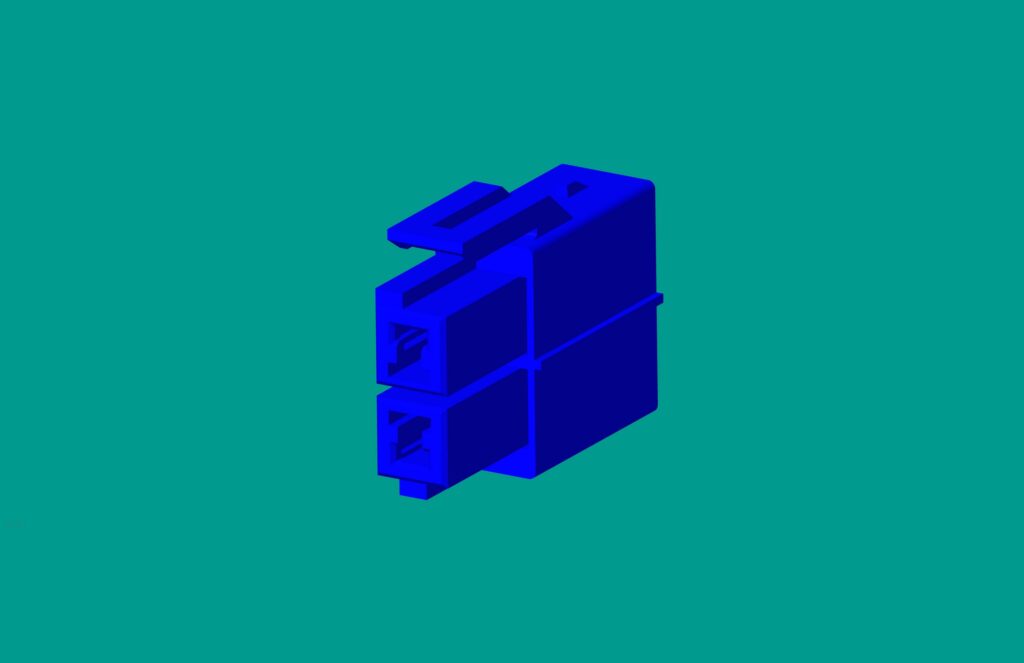
Why Modular Design Matters in Modern Equipment
Traditional connector designs often present engineers with existing layouts from which they must choose connectors from pre-configured pins that may not meet their specifications. This results in many contacts remaining unused, increased wiring crowdedness, oversized connector panels, and multiple connector-to-connector interconnections. The use of modular rectangular connectors provides engineers a much better opportunity to achieve an exact match.
To exemplify, a single piece of equipment may utilize many various types of electrical connections, including three-phase electrical supplies, low-voltage controls, Ethernet communication and earth ground connections. Instead of using multiple various connectors for the different types of electrical connections, it is more efficient to use a single modular rectangular connector that combines these functions. The use of these connectors decreases both assembly times and the potential for wiring errors during installations or removals.
One of the most important advantages of modular connector systems are the non-technical benefits to a buyer, including reduced downtime, simplified maintenance of spare parts, enhanced appearance and less time required to commission the equipment. In an industry where competition is prevalent, the reliability and serviceability of an equipment’s operation can ultimately affect its operating costs; these benefits are therefore practical to buyers.
Common Applications of Modular Rectangular Connectors
The Modular Rectangular Connector (MRC) is a type of rectangular connector used in applications where space, reliability and customization are critical. MRCs are commonly used in industrial automation to connect sensors and actuators to drives, control cabinets and machine modules. MRCs can help to create quick module replacement and orderly wiring of signals through moving systems.
Power distribution, battery control signals, signalling equipment and communication interfaces for renewable energy & storage systems can use rectangular connectors. Rail & transport connectors use modular designs – they usually have to work under harsh conditions and endure vibration/heat/temperature fluctuations. Non-wired connector application of modular designs includes, but aren’t limited to, test equipment, package handling equipment, numerical control machines, medical machines, and communication infrastructure.
Modular rectangular connectors provide a good balance of flexibility and mechanical strength; therefore, they are an excellent choice for use in any situation that requires a secure interface between different types of devices with multiple functions.
Key Components of a Modular Rectangular Connector System
The individual components that make up a standard modular rectangular connector arrangement work together as a single unit. In this example, the housing will provide a mechanical framework and environmental protection for the modular connector and the frame or carrier will hold the modules together for a connection. Individual modular connectors have the actual contacts or functional interfaces located inside them (contacts, terminals, cable glands, hoods, covers and a locking mechanism), but they are not fully integrated into the final modular rectangular connector system until they are assembled together.
Depending on the required strength, shielding, weight, and cost, the housing’s design can be done with one or a combination of materials: metal, plastic, or both. Typically, metal enclosures provide a mechanical protection and protection from electromagnetic radiation, making them ideal in an industrial heavy-duty application. However, plastic enclosures will work well for lightweight/cost sensitive applications where there is moderate to heavy environmental stress applied to the unit.
Important Specifications to Check Before Buying
Making sure your connector has the right contact count is just as important as making sure it meets the electrical, mechanical and environmental specifications for your application. Just because a connector looks right does not mean it has been specified correctly, resulting in overheating, lost signals, intermittent failures or premature failure of the connector.
To begin, I would verify that you have the appropriate rated voltage and rated amperage for each of your systems. There must be enough current carrying capacity in the power contacts to handle the load safely. The signal contacts must provide a stable transmission with low resistance. If high-speed data is being transmitted between systems or if you will be transmitting sensitive signals, you may also need to consider shielding and/or control of impedance.
The rating for long-term use of a given item will depend on both the temperature of the outside environment and the level of corrosion resistance or Grade E certification. If your application involves any exposure to outdoor elements or have extreme Occupational Health and Safety regulations, an enclosure with IP rated seals would typically be essential.
During the engineering design phase of the building construction process, all aspects of the mechanical layout should be reviewed to ensure they will work properly prior to building the facility. Prior to beginning any construction activities, the following items should all be checked: panel cutout dimensions; cable entry; ways to wire the cabinet and available mounting space and access for maintenance. Using a connector that simplifies assembly and inspection will also reduce the total time for assembling that connector and will help expedite assembly over the lifetime of the equipment.
Popular Modular Connector Types
Modular connectors come in various types, which can apply to different system configurations according to their function/purpose. The power modules are designed to supply high current (typically for high current loads like motors) while signal modules would support control wiring and sensors/low voltage circuit wiring. Data Modules will typically assist with communication protocols such as ethernet, usb and coaxial, etc.
Modular systems can have pneumatic modules providing compressed air lines as well as fiber optic modules which allow for fast, non-interfering communication. These modular systems may be combined to allow for the manufacturer to connect multiple services simultaneously through one interface.
Different types of connection methods also vary in their termination styles; screw terminals, crimp contacts, spring terminals, solder contacts and PCB terminations, etc., all have benefits. Crimp contacts are usually the most commonly used connection method in the industrial manufacturing environment due to their ability to maintain consistent quality (if assembled to specifications) when done with the proper tools. Spring terminals can significantly decrease the amount of time needed to wire a field installation; on small electronic devices designed to take up minimal space, PCB mounted connections are very beneficial.
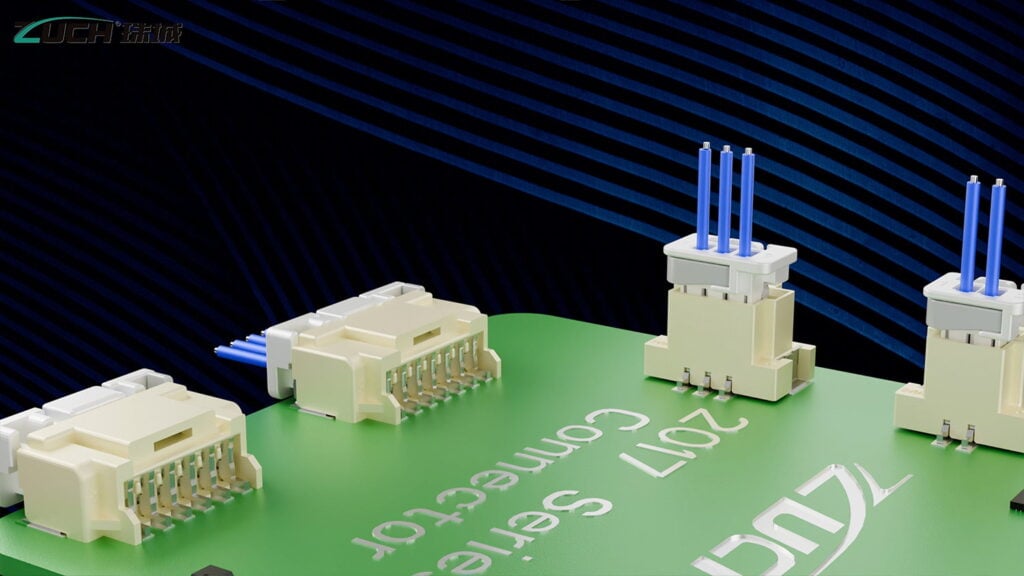
How to Choose the Right Modular Connector System
A wiring diagram will help you to be able to find a modular connector solution that fits your needs. First, do an inventory of the circuits. For each circuit write down the circuit type (e.g., current, voltage), signal type, size of the conductors, any shielding or safety requirements. Once this is done, you will have enough information to determine what circuits should be grouped together based on their performance for your application and/or safety considerations.
You also want to anticipate future growth and have room built into your housing to allow for upgrades, when you do eventually upgrade your equipment, that will save you money later on when you have to redesign your housing.
Rectangular, modular connector systems are beneficial with regard to modular product families since the HW of different models are the same, however, they may have different electrical configurations.
It is similarly important to make sure that any chosen module, frame, housing, contacts, and so forth, are part of the same Compatible Series of Products. Even if the physical appearance of a component, or how the dimensions, locking geometry, or contacts have been changed slightly, can have a negative effect on the component’s performance and/or its safety. Therefore, when replacing a connector, it is essential to compare the replacement to the original connector’s part number, pin configuration, rated values, and mounting dimensions.
To carry out critical projects you will need: Drawings, technical data sheets, material information, test reports, and assembly instructions from the supplier of the connector of choice. A reliable connector supplier can offer you: Selection assistance for connectors, Customization assistance for connectors, Testing samples of connectors, and Supplying connectors for production.
Benefits for OEMs, Engineers, and Procurement Teams
The design of modular rectangular connectors benefits OEMs by providing greater flexibility and opportunity for standardization when developing new products. The modular connector platform can accommodate all variations of one machine type, which will reduce the amount of engineering effort required and provide a more streamlined process for production planning. Therefore, these types of modular connectors are very advantageous to both companies that provide customized solutions and companies that manufacture equipment in small to medium volumes.
Engineers can avoid compromising a design because they do not have to meet any predefined connector layout by using modular designs. Functional modules can be combined based on the actual electrical requirements rather than being constrained by a connector. The benefits include better clarity of wiring, better organization of the panel, and easier access for maintenance.
With a modular system in place, there will be fewer variations of connector styles within the procurement inventory for your team. Rather than having to purchase completely different connector styles, the team will purchase all modules, enclosures, and contacts from one series of connectors—a much more streamlined process. This will allow you (the procurement department) to keep better track of inventory and reduce the likelihood of receiving the wrong component.
Rectangular Connectors vs. Circular Connectors
Both circular connectors and rectangular connectors are frequently utilized in a variety of industries, but each type of connector is designed to provide benefits to different types of applications. Circular connectors are usually small, relatively simple to seal against moisture, and ideal for many cable-to-cable or cable-to-panel applications. Among other things, circular connectors are used for sensor applications, as well as for industrial automation networking and for equipment deployed outdoors.
When using many types of connections or a large number of contacts, rectangular connectors can save space better than round connectors in most applications. Because they are flat, they are easier to mount inside control cabinets, on machine panels, and in modular equipment. Flat and orderly, rectangular connectors provide efficient viewing of wiring for inspecting and maintaining the wiring to help assure that wiring is done properly.
Generally speaking, if the interface between the round cable connection and the round connector has fewer contacts (i.e., fewer than the total number of pins), one would use a round connector to complete the electrical or mechanical connection. When combining electrical power, signal and data connections into one assembly, modular connectors (or modular connector systems, or modular connectors [rectangular]) are frequently chosen as the best choice.
Quality Factors That Affect Long-Term Reliability
Equipment downtime caused by a failed connector has a high price. Other issues with intermittent operation and diagnosing problems are also expensive from a connector failure. For this reason, when assessing a connector’s quality, you shouldn’t just consider price. You should also evaluate the following additional factors: contact material, plating thickness, insulation material, strength of the housing, sealing design, and consistency from the manufacturer.
It is expected that good electrical connections will have a low resistance to current flow, as there are many ways a given connection may be formed. As a result of having excellent oxidation resistance and providing a continuous low level of current, gold plated signal contacts are recommended. Other materials such as silver or other electroplated surfaces may sometimes be acceptable for power connections based on the current rating as well as the costs involved in each of those finishing processes.
For these reasons, it is crucial that the insulating material selected for these applications have an adequate level of dielectric strength, have a Flame rating, and be able to withstand thermal cycles (i.e extreme temperatures). In addition, gaskets used for sealing connections and their cable connectors should provide insulation against vibration, thermal cycles and repetitive opening/closing of the connections, particularly in the form of severe weather conditions. The connector system includes all components of a quality connector system (i.e. connect, disconnect, and reconnect) as part of the entire connection make up.
Installation and Maintenance Tips
To guarantee that a particular connector performs at its rated specifications, the installation must comply with all of the manufacturer’s installation specifications regarding strip length, crimping tool (if applicable), torque value and assembly sequence. If you install a connector improperly (improperly crimped or over-tightened), you will have poor contact, insulator damage, and mechanical stress.
During maintenance check that the connectors do not display any evidence of overheating, corrosion, lose components etc. If the connector is used on machines with high vibration then periodically checking for these conditions can help to reduce the chance of unplanned downtime due to a connector failure. Owners of mission-critical equipment should have a supply of spare modules, contacts, and housings available to reduce the repair time for connector failure.
One other thing that can help is labeling your cables and modules. When they are labeled properly it is much easier to identify each cable and module, which helps technicians reconnect the system more quickly and accurately. This also becomes especially important when there are many similar connectors used on the same machine or in a cabinet.
FAQs
What are the main modular connector types?
There are numerous types of modular connectors, such as power, signal, data (coax), pneumatic, fiber optic, and grounding. The ability to combine multiple modules into a single rectangular enclosure for use in systems creates a custom hybrid connector that can accommodate all of the components for your equipment.
What is a modular connector system?
The modular connector system provides a complete ranged of connection possibilities, uses standardized and interchangeable parts, and can be configured or designed to meet your specific needs. Users can develop their own layouts of connectors based on available layouts; however, each layout can be customized according to both electrical and mechanical requirements or specifications of each particular application.
Are modular rectangular connectors suitable for harsh environments?
Indeed there is a vast range of modular rectangular connectors designed for extremely harsh industrial environments, providing the maximum IP rating, vibration resistant to a specific amount, suitable for operating within wide temperature ranges, will resist corrosion, have rugged locking systems relative to their series and configuration. When making your final decision, always verify specifications in the datasheets provided.
Can one connector carry both power and signal?
Definitely! Modular Rectangular Connectors provide an ideal way to combine Signal and Power contacts into one housing! Effective use of spacing, shielding, grounding, and safety must be adhered to in order to avoid interference or electrical hazards.
How do I know which rectangular electrical connectors are right for my project?
Determine how much electricity you will need by determining current (amps), voltage, wire size, and types of signals / circuits that you require before purchasing your electrical products. Verify that all products have been properly installed according to all installation requirements; including but not limited to (where applicable), the installation mount, cable mounting orientation either horizontal or vertical, cable termination type, and, cable preparations required for future expansions or modifications to existing circuits or equipment. If you have questions about how to install your connectors or their applications, contact the connector vendor and provide them with a wiring diagram of your installation and request guidance on how to create a proper installation.
Modular Rectangular Connectors provide users with a broad range of modular connector solutions for managing today’s complicated electrical connections in a flexible, dependable, and space-efficient manner. Combining power, signal/data, and additional functions into one orderly connector system allows engineers to simplify their designs, better maintain the systems, and provide an upgraded infrastructure for future upgrades. To obtain optimal results with their selection, buyers and OEMs should confirm that the connector configuration is aligned with their actual application needs, assess the various quality specifications of the specified connector system, and select a manufacturer who can provide the necessary technical assistance/backup and reliable supply.
 Zhejiang ZUCH Technology Co., Ltd.